Herodotus of Halicarnassus (c. 484–c. 425 BCE) wrote the Histories, the longest surviving account of the Persian Empire from its rise under Cyrus to Xerxes’ defeat in Greece. He was born a Persian subject and described Persian customs, kings and debates with real curiosity, but he wrote in Greek, for Greeks, about a war Greece had won. Historians now read him alongside the Persian inscriptions and archives, which confirm some of what he says and correct a good deal of it.
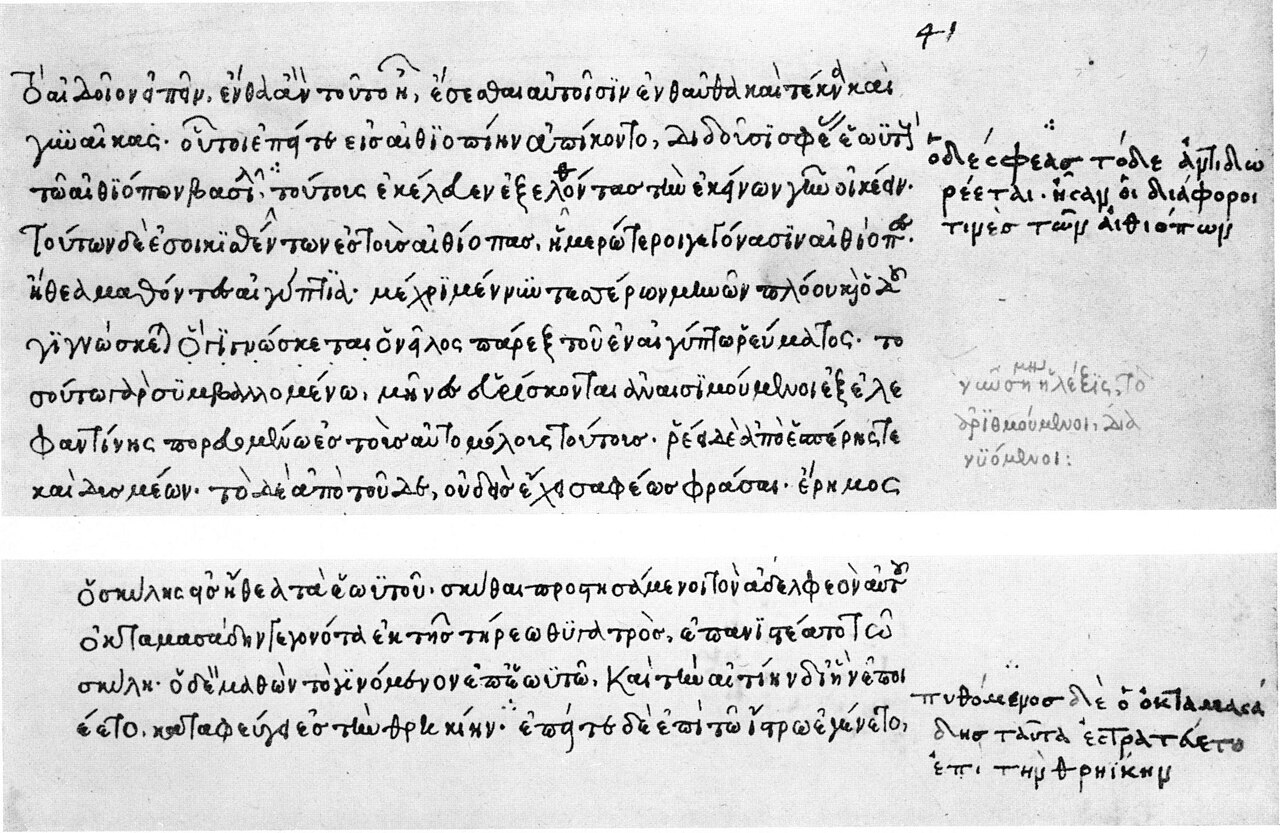

A Persian subject from Halicarnassus
Halicarnassus, modern Bodrum, was a Greek city on the coast of Caria that had been inside the Persian Empire since the 540s BCE. Its ruling family were loyal vassals: Queen Artemisia commanded ships for Xerxes at Salamis when Herodotus was a small child. Herodotus later quarrelled with her successor, the tyrant Lygdamis, left the city and spent his life travelling, in Egypt, the Black Sea, Babylonia by his own account, and the Greek mainland, before settling at Thurii in southern Italy.
He therefore knew Persian rule from the inside. He moved through territories run by satraps, met people who had served the king and claims Persian informants. One possible source he names is Zopyrus, the son of the Persian general Megabyzus, who deserted to Athens. Herodotus finished the Histories in the 420s BCE, when Athens and Persia were no longer at war but still enemies.
What Herodotus says about Persian customs
In Book 1, chapters 131 to 140, Herodotus gives a short description of the Persians, one of the first ethnographies in Western literature. Some of it fits what we know from other evidence, and some does not.
- Religion. The Persians, he says, have no statues, temples or altars, and sacrifice on mountain tops to the whole circle of the sky, as well as to sun, moon, earth, fire, water and winds. This roughly matches the absence of temple buildings in early Achaemenid Persia. But he adds that the Persians call a goddess of love “Mitra”, confusing Mithra, a male god of contracts, with something else entirely.
- Education. Boys from five to twenty learn three things: to ride, to shoot the bow and to tell the truth. Darius’s tomb inscription at Naqsh-e Rostam praises the king as a rider and archer, and the Behistun inscription attacks “the Lie” again and again, so here Herodotus seems well informed.
- Lies and debt. The most shameful thing for a Persian, he says, is to lie, and the next is to owe money, because a debtor is forced to lie.
- Borrowing. No people adopt foreign customs so readily: they wear Median dress and Egyptian breastplates. The mixed court art of Persepolis supports this.
- Burial. He says the Magi expose corpses to birds and dogs before burial, but admits he is not sure about other Persians. His caution is justified: royal practice, as the rock tombs show, was quite different.
- Names. He claims all Persian names end in the same letter, s. That is only true of Persian names as Greeks wrote them, a sign that he did not know the language.
Persian voices in the Histories
Herodotus gives Persians speeches and points of view. The work opens with “learned Persians” blaming the Phoenicians and then the Greeks for the hatred between Europe and Asia. In Book 3 three of the nobles who overthrew the Magus debate whether Persia should be a democracy, an oligarchy or a monarchy, and Darius wins the argument for kingship. Herodotus insists this debate really happened, although he knew Greek readers found it hard to believe; most modern historians treat it as a Greek political discussion in Persian costume.
Xerxes is a complex figure, not a cartoon tyrant. He listens to his uncle Artabanus’ warnings, weeps at Abydos when he reviews his army because none of those men will be alive in a hundred years, and is shown both generous and cruel. One of the most moving passages in Book 9 is a Persian guest at a banquet in Thebes before Plataea, telling his Greek neighbour that he knows the army is doomed and can do nothing about it.
Checking Herodotus against Persian sources
Since the Behistun inscription was deciphered in the 19th century, historians have been able to test Herodotus directly. His version of Darius’s rise follows the same broad outline: a false Bardiya, a conspiracy of seven nobles, the killing of the usurper. He names six conspirators besides Darius, and five match the names Darius himself gives; only one differs. That is a remarkable record for a writer working seventy years later.
Elsewhere the fit is worse. His tribute list of twenty satrapies does not match the lists of lands in Darius’s inscriptions, and his figure of over five million men for Xerxes’ expedition is impossible. His picture of Cambyses as a mad king who killed the sacred Apis bull is contradicted by Egyptian evidence, as the page on Cambyses’ conquest of Egypt explains. The Persepolis tablets confirm road stations and some names but show a working, ration-paying bureaucracy that Herodotus barely hints at.
Barbarian-lover or propagandist
Ancient readers did not all think Herodotus was anti-Persian. Plutarch, writing around 100 CE, attacked him in an essay On the Malice of Herodotus and called him philobarbaros, a “barbarian-lover”, for being too fair to the enemy. Modern critics have taken the opposite line, seeing in him the beginning of a Western habit of picturing Asia as luxurious, despotic and effeminate. Others, such as Detlev Fehling, argued that he invented many of his sources outright.
Since the 1980s a group of scholars led by Heleen Sancisi-Weerdenburg and Amélie Kuhrt, in the Achaemenid History workshops, has tried to write Persian history from Persian, Elamite, Babylonian and Egyptian evidence first, with Greek writers used as a supplement. The result is a more balanced view: Herodotus is indispensable for events, especially in the west, but on how the empire was run he is one witness among many and not the most reliable. For his treatment of the earlier kingdom, see Herodotus and the Medes.
Reading him today
A practical rule used by many historians: trust Herodotus most where he describes what he or his informants could see, less where he reports speeches and motives, and least on numbers. Read him for the Greek wars in the episodes on our Greco-Persian Wars overview, and set his picture of the empire next to the history of the Persian Empire drawn from Persian sources.
Persian words from this page
| هرودوت | Herodot | Herodotus |
| راستی | râsti | truthfulness |
| دروغ | dorugh | lie |
| مغ | mogh | magus (priest) |
| هخامنشی | Hakhâmaneshi | Achaemenid |
| پارس | Pârs | Persis, the Persian homeland |
Sources and further reading
- Herodotus, Histories, especially 1.131–140, 3.61–88 and Book 7.
- Darius I, Behistun inscription, in A. Kuhrt, The Persian Empire: A Corpus of Sources from the Achaemenid Period (2007).
- Plutarch, On the Malice of Herodotus (Moralia).
- Encyclopaedia Iranica, “Greece vi. The image of Persia and Persians in Greek literature”.
- H. Sancisi-Weerdenburg, A. Kuhrt and others (eds), Achaemenid History, vols 1–8 (1987–1994).
- Pierre Briant, From Cyrus to Alexander: A History of the Persian Empire (2002).
Want to learn Persian? Get the free Starter Pack
Get the 14-page printable Starter Pack (all 32 letters, a 7-day reading plan, 100 core words and 20 survival phrases) and a short 5-email course. Free.
More in The Achaemenid Empire (550–330 BCE)
- Achaemenes, Teispes and the Early Persian Kings of Anshan
- Cyrus the Great: Birth, Legends and Rise to Power
- Cyrus Conquers Lydia: Croesus and the Battle of Thymbra
- The Persian Conquest of Ionia and Asia Minor
- Cyrus Takes Babylon (539 BCE)
- The Cyrus Cylinder
- Cyrus and the Return of the Jews
- The Death of Cyrus and the Massagetae
- Pasargadae: Cyrus’s Capital and Tomb
- The Tomb of Cyrus through History
- Cambyses II
- Cambyses Conquers Egypt: The Battle of Pelusium
- Bardiya and Gaumata: The Usurper Question
- Darius the Great Takes the Throne
- The Great Revolts of 522–521 BCE
- The Behistun Inscription
- The Persian Conquest of the Indus Valley
- Darius’s Scythian Campaign
- Darius’s Canal from the Nile to the Red Sea
- Darius’s Reforms: Satrapies, Taxes and Law
- The Royal Road and the Persian Postal System
- The Daric: Achaemenid Coinage and Economy
- The Ionian Revolt (499–493 BCE)
- The Greco-Persian Wars: An Overview
- Mardonius and the First Persian Expedition to Greece (492 BCE)
- The Battle of Marathon (490 BCE)
- The Death of Darius I and the Succession of Xerxes
- The Royal Tombs of Naqsh-e Rostam
- Xerxes I: King of Kings (486–465 BCE)
- Xerxes’ Invasion of Greece (480–479 BCE)
- The Battle of Thermopylae (480 BCE)
- The Battle of Artemisium (480 BCE)
- The Persian Capture of Athens (480–479 BCE)
- The Battle of Salamis (480 BCE)
- The Battle of Plataea and the End of the Invasion (479 BCE)
- The Palace of Darius at Susa
- Building Persepolis: How Darius and Xerxes Built Parsa
- The Persepolis Fortification and Treasury Tablets
- Herodotus and the Persians
- The Apadana Reliefs: Nations Bringing Gifts
- The Achaemenid Paradise Gardens
- The Persian Immortals and the Achaemenid Army
- The Achaemenid Navy
- Religion of the Achaemenid Kings
- Women of the Achaemenid Court
- Old Persian Language and Cuneiform
- Egypt under Persian Rule
- Babylon under Persian Rule
- Artaxerxes I
- The Peace of Callias
- Darius II and the Peloponnesian War
- Famous Satraps of the Persian Empire
- Artaxerxes II Mnemon
- Cyrus the Younger and the Battle of Cunaxa
- The King’s Peace (387 BCE)
- The Great Satraps’ Revolt
- Artaxerxes III and the Reconquest of Egypt
- Darius III, the Last Achaemenid King
- The Battle of the Granicus (334 BCE)
- The Battle of Issus (333 BCE)
- Alexander Takes Tyre, Gaza and Egypt (332 BCE)
- The Battle of Gaugamela (331 BCE)
- Ariobarzanes and the Battle of the Persian Gate
- The Burning of Persepolis (330 BCE)
- The Death of Darius III and Bessus
- The Legacy of the Achaemenid Empire