The Battle of Dara was fought in June 530 CE outside the Roman fortress of Dara, near the Persian frontier city of Nisibis in upper Mesopotamia. A Roman army of about 25,000 under the young general Belisarius, fighting from a line of prepared trenches, defeated a larger Sasanian army sent by Kavad I. It was one of the very few Roman field victories over the Persians in the 6th century, and the most detailed battle description we have from the whole period.
| Date | June 530 CE |
|---|---|
| Place | Outside Dara (Anastasioupolis), near modern Oğuz, Mardin province, Turkey |
| War | The Iberian War, 526–532 |
| Persian commander | Perozes (Firuz), of the Mihran family |
| Roman commanders | Belisarius and Hermogenes |
| Numbers (Procopius) | Romans 25,000; Persians 40,000, reinforced to 50,000 |
| Result | Roman victory; Persian army withdraws to Nisibis |
A fortress the Persians could not accept
Dara was a new city. After the war of 502–506 Emperor Anastasius built it as a fortified base only about 18 kilometres from Nisibis, which had been Persian since 363. The Persians saw this as a breach of earlier agreements not to fortify the border, and Dara remained a grievance for the next seventy years. When war broke out again in 526 over the Caucasian kingdom of Iberia, it soon spread south to the Mesopotamian frontier, where the two empires faced each other across a line of fortified towns. The wider war is described on the Sasanian–Byzantine wars of the 6th century.
The early fighting had gone Persia’s way. In 528 a Roman force trying to build a new fort at Mindouos, near Dara, was beaten, and Belisarius was among its commanders. Two years later Justinian gave him command in the east, aged about 25, with the senior official Hermogenes beside him. Kavad, now old, sent an army under Perozes, whom Procopius calls “the Mirranes”, the Greek form of the Mihran family name, to take Dara.
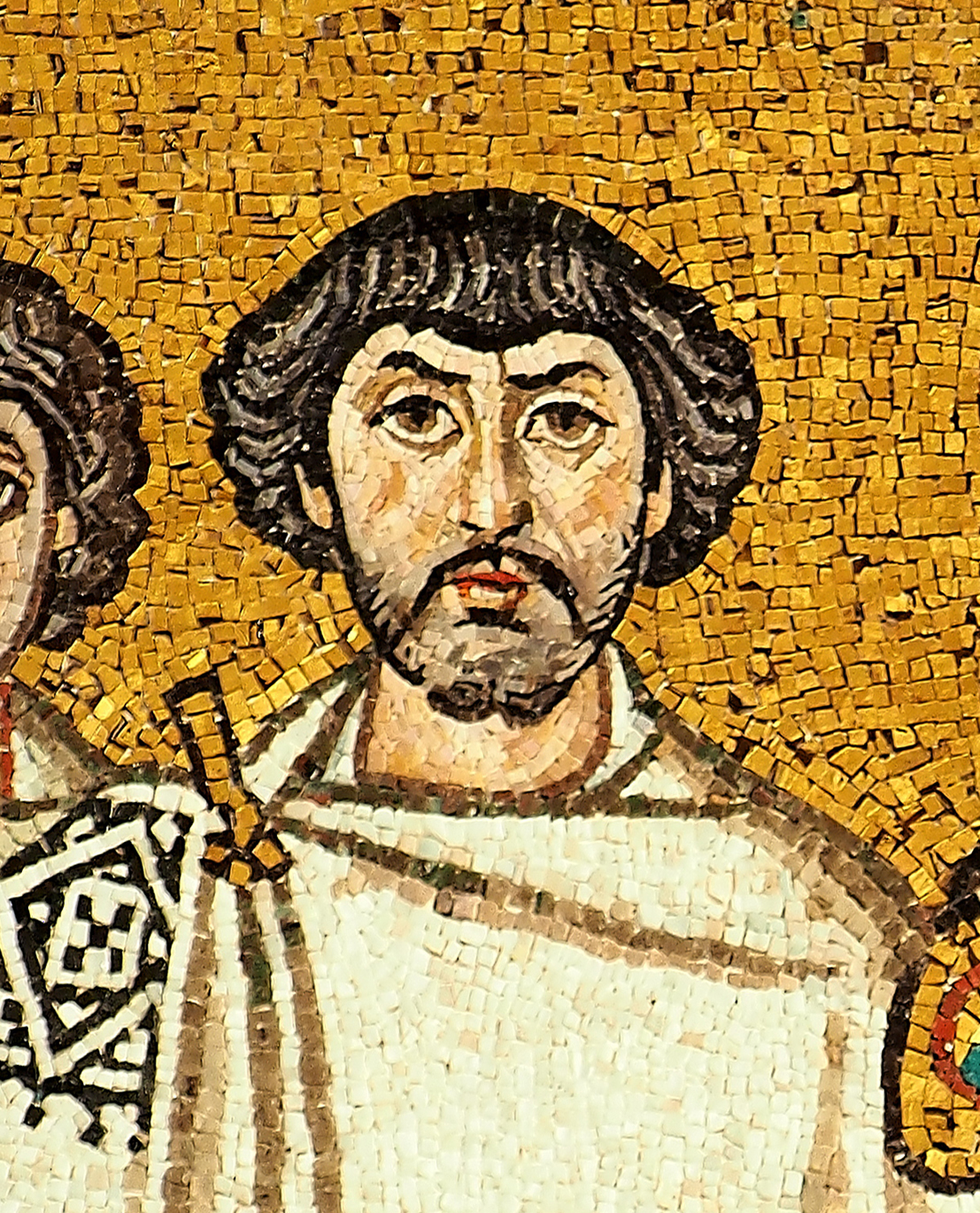

Belisarius digs in
Belisarius chose not to wait behind the walls. He drew up his army a stone’s throw from the city gate, behind a ditch with several crossings, shaped so that the centre was set back and the two wings pushed forward. His infantry stood in the centre, close enough to be covered from the battlements. Cavalry held the wings. At the angles where the ditch turned, he placed small units of Hunnic horse archers, about 600 men under Sunicas and Aigan on one side and under Simmas and Ascan on the other. On the far left, a few hundred Herul horsemen under their leader Pharas hid behind a hill. The idea was simple: let the Persian cavalry charge into a prepared position and hit them in the flank when they were committed.
Three days at Dara
Skirmish and single combat
On the first day the Persians probed the Roman left and were pushed back. Procopius then tells a story that has become famous. A young Persian rider rode out and challenged any Roman to fight him. The man who answered was not a soldier at all but Andreas, a wrestling trainer from the household of the officer Bouzes, who unhorsed and killed him. A second Persian champion came out and Andreas killed him too, to loud cheers from the walls. Some modern scholars, among them Conor Whately, suspect that Procopius shaped this episode for literary effect, and another account of the battle mentions single combat without naming Andreas.
Letters about a bath
The second day brought 10,000 more men from Nisibis, and an exchange of letters. Perozes, according to Procopius, sent word to Belisarius to have a bath ready for him in Dara, because he intended to bathe there the next day. Belisarius wrote back appealing for peace. Perozes replied that the Romans could not be trusted, and both sides prepared to fight. The letters are told in Procopius’ own words and should be read as his reconstruction, but the boast about the bath sounds like a real piece of camp talk.
The battle
On the third day Perozes drew up his army in two lines, so that tired men in front could be replaced by fresh ones from behind. He kept the Immortals, the elite royal cavalry, in reserve. Pityaxes commanded the Persian right and Baresmanas the left. The battle began after midday with an exchange of arrows, which a strong wind made less deadly than usual.
The Persian right charged first and drove back the Roman cavalry on the left. As they pressed forward, Pharas’ Heruls came round the hill and fell on their rear, while the Huns of Sunicas and Aigan struck from the side. The Persian right broke, losing about 3,000 men according to Procopius.
Perozes then sent the Immortals to join Baresmanas in a heavy attack on the Roman right. It nearly worked: the Roman horse there gave way. But the Persian advance opened a gap between the attackers and the rest of their army. Belisarius sent the Huns from the left and his own household cavalry into it. The Persian column was cut in two, Sunicas killed Baresmanas’ standard-bearer and then Baresmanas himself, and the men who had broken through were surrounded. Procopius says about 5,000 Persians died in this last phase. Belisarius kept the pursuit short, aware that the Persians were dangerous when they turned, and the remains of Perozes’ army withdrew to Nisibis.
What the victory changed
Dara was saved, and the same summer another Roman army under Sittas and Dorotheus defeated a Persian invasion of Armenia near Satala. But the war did not turn. In 531 a Persian army under Azarethes, with the Lakhmid king al-Mundhir, struck west into Syria, and at Callinicum on the Euphrates it forced Belisarius to fight and beat him. Kavad died that September, and in 532 his son Khosrow I agreed to the “Eternal Peace”, under which Rome paid 11,000 pounds of gold. Dara stayed Roman, but its commander had to move his headquarters back from the frontier, a sign of how much the fortress still mattered to Persia. Khosrow finally captured it in 573.
Reading Procopius
Almost everything we know about the battle comes from Procopius of Caesarea, who was Belisarius’ legal secretary and probably watched it from the walls. That makes his account vivid and precise about places and units, and also partial. He writes to celebrate his general, his Persian numbers are probably too high, and he says nothing about Persian aims beyond the capture of the city. Historians such as Geoffrey Greatrex accept the outline of the battle while reducing the scale; even on Procopius’ figures, it was a defeat for Persia’s army in the field, not for its war effort. No Persian account of Dara survives.
For Iran’s side of these decades, see Kavad I and the Sasanian army, whose heavy cavalry and reliance on archery explain much of what happened at Dara. The next great event of the wars was Khosrow I’s sack of Antioch in 540.
Persian words from this page
| دارا | Dârâ | Dara, the fortress city |
| نصیبین | Nasibin | Nisibis |
| فیروز | Firuz | Perozes, the Persian commander |
| جاویدان | jâvidân | the Immortals (literally “eternal ones”) |
| خندق | khandagh | trench, ditch |
| قباد | Ghobâd | Kavad I |
Sources and further reading
- Procopius, History of the Wars, Book I, chapters 13–14 (the battle of Dara).
- Geoffrey Greatrex, Rome and Persia at War, 502–532 (Francis Cairns, 1998).
- Geoffrey Greatrex and Samuel N. C. Lieu, The Roman Eastern Frontier and the Persian Wars, Part II: AD 363–630 (Routledge, 2002).
- Conor Whately, Battles and Generals: Combat, Culture, and Didacticism in Procopius’ Wars (Brill, 2016).
- Michael Whitby, “Procopius’ description of Dara”, in The Defence of the Roman and Byzantine East, ed. P. Freeman and D. Kennedy (BAR, 1986).
Want to learn Persian? Get the free Starter Pack
Get the 14-page printable Starter Pack (all 32 letters, a 7-day reading plan, 100 core words and 20 survival phrases) and a short 5-email course. Free.
More in The Sasanian Empire (224–651 CE)
- The Origins of the Sasanian Family
- Ardashir I, Founder of the Sasanian Empire
- Firuzabad: Ardashir’s Round City
- Shapur I, King of Kings of Iran and Non-Iran
- Bishapur: Shapur’s City
- The Battle of Edessa and the Capture of Valerian
- The Ka’ba-ye Zartosht Inscription of Shapur I
- Mani and Manichaeism
- Hormizd I and Bahram I
- Kartir and the Zoroastrian Church
- Bahram II
- Narseh and the Peace of Nisibis
- Shapur II the Great
- Julian’s Invasion of Persia (363)
- Christians in the Sasanian Empire
- Shapur III and the Partition of Armenia
- Yazdegerd I
- Bahram V Gur
- Yazdegerd II
- The Battle of Avarayr (451)
- The Hephthalites and Iran’s Eastern Frontier
- Peroz I and the Hephthalite Disaster
- Kavad I
- Zamasp and Kavad’s Return
- Mazdak and the Mazdakite Movement
- Khosrow I Anushirvan the Just
- The Sasanian–Byzantine Wars of the 6th Century
- The Battle of Dara (530)
- Khosrow I Sacks Antioch (540)
- The Lazic War (541–562)
- The Reforms of Khosrow I
- The Academy of Gondishapur: History and Legend
- Borzuya, Chess and Kalila wa Dimna
- Taq Kasra: The Arch of Ctesiphon
- The Sasanian Conquest of Yemen
- The Sasanians and the Western Turks
- Hormizd IV
- Bahram Chobin’s Rebellion
- Khosrow II Parviz
- The Last Great War: Byzantium and Persia, 602–628
- The Siege of Constantinople (626)
- Heraclius Strikes Back
- Shirin: Queen and Legend
- Shahrbaraz, the General Who Became King
- Civil War and the Queens Boran and Azarmidokht
- Yazdegerd III, the Last Sasanian King
- The Sasanian Army
- Sasanian Society and the Class System
- Zoroastrianism under the Sasanians
- Sasanian Art: Silver, Reliefs and Silk
- The Sasanian Reliefs of Naqsh-e Rostam
- Taq-e Bostan
- Sasanian Cities, Palaces and Bridges
- Middle Persian (Pahlavi) Language and Literature
- Sasanian Coins and Silverwork
- Women in the Sasanian Empire
- Polo, Hunting and Games at the Sasanian Court
- The Sasanian Legacy