Around 570 CE a small Sasanian expedition sailed from the Persian Gulf to southern Arabia, defeated the Aksumite (Ethiopian) rulers of Yemen and put a local prince, Saif ibn Dhi Yazan, on the throne as a client of Khosrow I. Within a few years Yemen became a Persian province, governed by Iranian officials until the coming of Islam. The episode carried Sasanian power to the Red Sea and the Indian Ocean trade routes, and left a community of Persian descent in Yemen known as the Abna.

| Date | First expedition c. 570 CE (some historians prefer the mid-570s); second expedition a few years later |
|---|---|
| King of kings | Khosrow I Anushirvan (531–579) |
| Commander | Wahriz (Persian Vahraz), an elderly officer |
| Opponent | Masruq, son of Abraha, Aksumite ruler of Yemen |
| Result | Aksumites expelled; Yemen a Sasanian client kingdom, then a province |
| End of Persian rule | c. 628–632, when the governor Badhan accepted Islam |
Yemen between two empires
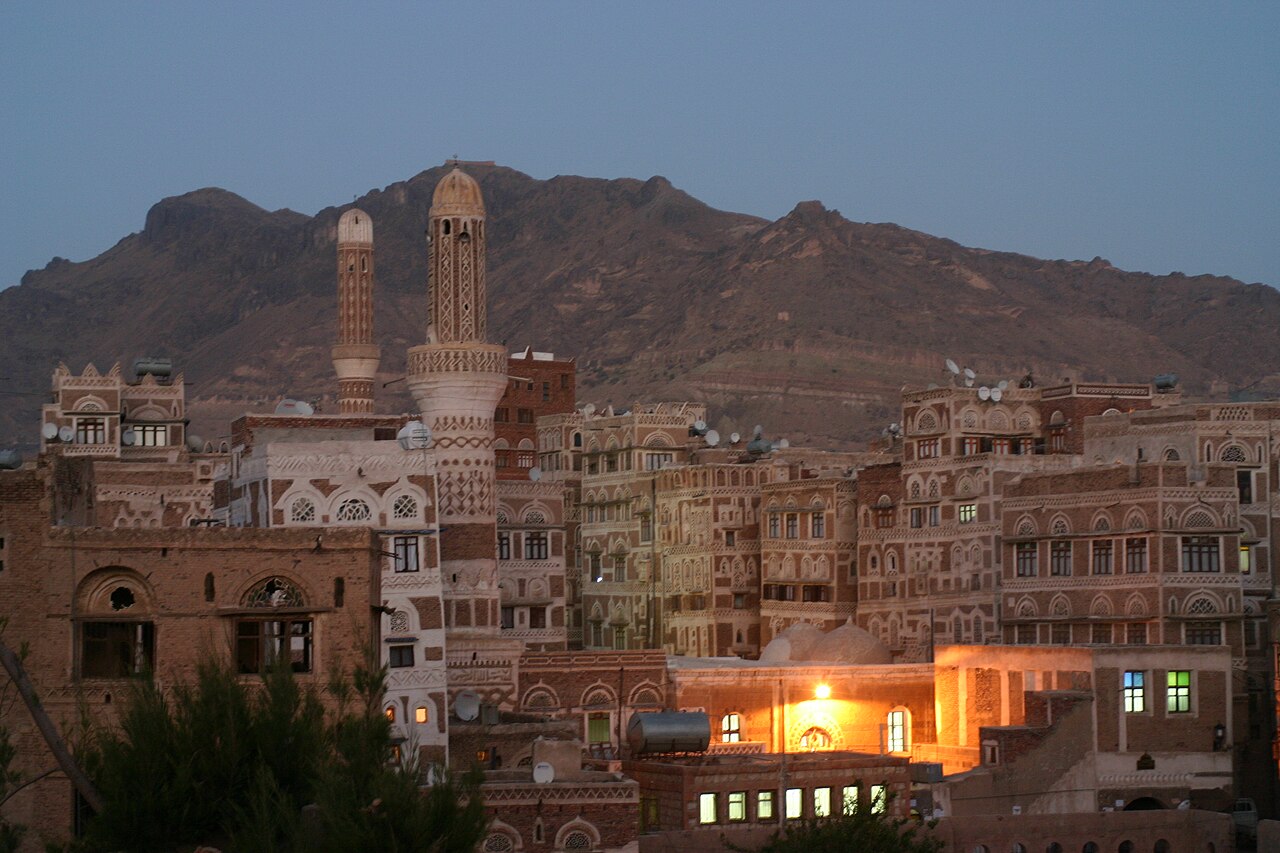
For most of the 6th century, southern Arabia was a prize in the rivalry between Byzantium and Iran. The old Himyarite kingdom had ruled Yemen for centuries from Zafar and San’a. In the 520s its king, Yusuf As’ar, remembered in Arabic tradition as Dhu Nuwas, turned on the Christians of Najran. The Christian kingdom of Aksum, across the Red Sea in what is now Ethiopia and Eritrea, invaded with Byzantine encouragement around 525 and overthrew him.
Aksumite generals then ruled Yemen. The best known is Abraha, who made himself king and built a great church at San’a. Muslim tradition links him with the “Year of the Elephant”, an expedition against Mecca traditionally placed in 570, the year of the Prophet Muhammad’s birth. Modern scholars debate that date, since inscriptions show Abraha active decades earlier. After Abraha his sons Yaksum and then Masruq held power.
For Khosrow I this was an uncomfortable situation. A Christian power friendly to Constantinople controlled the southern end of the Red Sea, the route by which Indian goods could reach the Mediterranean without passing through Iran. The Sasanians already dominated the Persian Gulf through their ports and their Arab clients, the Lakhmids of al-Hira. Yemen would complete the ring.
Saif ibn Dhi Yazan asks for help
The story of what happened next comes mainly from Arabic historians writing in the 9th and 10th centuries, above all al-Tabari, who drew on older Yemeni and Persian traditions. It mixes plausible history with heroic storytelling.
According to Tabari, Saif ibn Dhi Yazan, a member of the old Himyarite nobility, first sought help from the Byzantine emperor and was turned away. He then went to al-Nu’man, the Lakhmid king at al-Hira, who brought him to Khosrow’s court at Ctesiphon. Khosrow at first hesitated to risk an army on a poor and distant land. His counsellors suggested a solution: send the men held in the royal prisons. If they died, nothing was lost; if they won, the king gained a kingdom.
Other traditions describe the force differently, as minor nobles or as soldiers from Daylam on the Caspian, a region famous for its infantry. The figures given are small. Tabari’s version has about 800 men in eight ships, of which two were lost at sea, so that roughly 600 men landed on the coast of Hadramawt or near Aden. The numbers may be literary, but all sources agree that the army was tiny and that its success depended on local support.
Wahriz and the battle against Masruq
The commander was Wahriz, described as an old man of noble family. Wahriz (Middle Persian Wahrez) may be a title rather than a personal name; Byzantine and later sources give him other names, including Boes. He joined forces with Yemenis loyal to Saif and met Masruq’s army.
The famous scene in the Arabic accounts is the duel by arrow. Wahriz’s son was killed in the first fighting. Wahriz then asked to be shown Masruq, who rode an elephant and wore a ruby on his forehead. The old man, his eyebrows tied back from his eyes, shot a single arrow that struck the jewel and killed the king. The Aksumite army broke and fled. Whatever the truth of the details, Masruq died and Aksumite rule in Yemen ended.
Wahriz entered San’a. One tradition says he refused to lower his banner to pass through the city gate and had the gate pulled down. Saif was installed as king, paying tribute to Khosrow, and most of the Persians went home with booty.
From client kingdom to Persian province
The arrangement did not last. Saif kept a guard of Ethiopians, and some of them murdered him a few years later; sources disagree whether this was in 575 or 578. Khosrow sent Wahriz back with a larger army, reported as 4,000 men. This time Yemen was brought under direct Sasanian control. Wahriz governed it himself, and after him a line of Persian governors ruled from San’a, at first through local princes and later in their own name.
The Persian soldiers settled, married Yemeni women and formed a distinct aristocracy. Arabic writers called them the Abna’, “the sons”, short for “sons of the Persians”. They kept their identity for generations and played a part in Yemeni politics well into the Islamic period.
Persian control of Yemen probably weakened after the death of Khosrow I in 579, and especially during the turmoil that followed the fall of Khosrow II in 628. The last governor, Badhan, is remembered in Islamic tradition as having accepted Islam during the Prophet’s lifetime. With him, Sasanian rule over Yemen came to an end, a few years before the Arab armies reached Iran itself. The fall of the empire is told on the pages about why the Sasanian Empire fell.
Why the conquest mattered
In military terms the conquest was a minor affair, but it shows the reach of the Sasanian state in its greatest century. Under Khosrow I, Iran controlled both shores of the Persian Gulf, the approaches to the Red Sea and the overland routes of Mesopotamia. Byzantium’s hope of reaching India through Aksum and Yemen was blocked.
The episode also fed into Arabic literature. Saif ibn Dhi Yazan became the hero of a long popular romance, the Sirat Saif ibn Dhi Yazan, told in coffeehouses for centuries, in which history has almost disappeared beneath magic and adventure. Pre-Islamic Arab poets praised his victory, and the palace of Ghumdan in San’a, where he is said to have ruled, became a symbol of Yemen’s lost glory.
For the wider picture of Khosrow’s reign see Khosrow I Anushirvan the Just, and for his long contest with Byzantium, the Sasanian–Byzantine wars of the 6th century. The Sasanian collapse that ended Persian rule in Yemen is traced through Khosrow II Parviz and the civil wars of 628–632.
Persian words from this page
| یمن | Yaman | Yemen |
| صنعا | San’â | San’a, capital of Yemen |
| وهرز | Vahraz | Wahriz, the Persian commander |
| انوشیروان | Anushirvân | Khosrow I’s title, “of immortal soul” |
| کشتی | keshti | ship |
| فیل | fil | elephant |
Sources and further reading
- al-Tabari, The History of al-Tabari, vol. 5: The Sasanids, the Byzantines, the Lakhmids, and Yemen, trans. C. E. Bosworth (SUNY Press, 1999).
- C. E. Bosworth, “Abna'”, Encyclopaedia Iranica.
- D. T. Potts, “Arabia ii. The Sasanians and Arabia”, Encyclopaedia Iranica.
- Touraj Daryaee, Sasanian Persia: The Rise and Fall of an Empire (I.B. Tauris, 2009).
- Christian Julien Robin, “Arabia and Ethiopia”, in S. F. Johnson (ed.), The Oxford Handbook of Late Antiquity (2012).
Want to learn Persian? Get the free Starter Pack
Get the 14-page printable Starter Pack (all 32 letters, a 7-day reading plan, 100 core words and 20 survival phrases) and a short 5-email course. Free.
More in The Sasanian Empire (224–651 CE)
- The Origins of the Sasanian Family
- Ardashir I, Founder of the Sasanian Empire
- Firuzabad: Ardashir’s Round City
- Shapur I, King of Kings of Iran and Non-Iran
- Bishapur: Shapur’s City
- The Battle of Edessa and the Capture of Valerian
- The Ka’ba-ye Zartosht Inscription of Shapur I
- Mani and Manichaeism
- Hormizd I and Bahram I
- Kartir and the Zoroastrian Church
- Bahram II
- Narseh and the Peace of Nisibis
- Shapur II the Great
- Julian’s Invasion of Persia (363)
- Christians in the Sasanian Empire
- Shapur III and the Partition of Armenia
- Yazdegerd I
- Bahram V Gur
- Yazdegerd II
- The Battle of Avarayr (451)
- The Hephthalites and Iran’s Eastern Frontier
- Peroz I and the Hephthalite Disaster
- Kavad I
- Zamasp and Kavad’s Return
- Mazdak and the Mazdakite Movement
- Khosrow I Anushirvan the Just
- The Sasanian–Byzantine Wars of the 6th Century
- The Battle of Dara (530)
- Khosrow I Sacks Antioch (540)
- The Lazic War (541–562)
- The Reforms of Khosrow I
- The Academy of Gondishapur: History and Legend
- Borzuya, Chess and Kalila wa Dimna
- Taq Kasra: The Arch of Ctesiphon
- The Sasanian Conquest of Yemen
- The Sasanians and the Western Turks
- Hormizd IV
- Bahram Chobin’s Rebellion
- Khosrow II Parviz
- The Last Great War: Byzantium and Persia, 602–628
- The Siege of Constantinople (626)
- Heraclius Strikes Back
- Shirin: Queen and Legend
- Shahrbaraz, the General Who Became King
- Civil War and the Queens Boran and Azarmidokht
- Yazdegerd III, the Last Sasanian King
- The Sasanian Army
- Sasanian Society and the Class System
- Zoroastrianism under the Sasanians
- Sasanian Art: Silver, Reliefs and Silk
- The Sasanian Reliefs of Naqsh-e Rostam
- Taq-e Bostan
- Sasanian Cities, Palaces and Bridges
- Middle Persian (Pahlavi) Language and Literature
- Sasanian Coins and Silverwork
- Women in the Sasanian Empire
- Polo, Hunting and Games at the Sasanian Court
- The Sasanian Legacy