Hormizd IV, son of Khosrow I, ruled the Sasanian Empire from 579 to 590 CE. He inherited a war with Byzantium and fought off a great Turkish invasion in the east, but his hostility to the high nobility and the Zoroastrian priesthood made him powerful enemies. When he humiliated his victorious general Bahram Chobin, the army rebelled, and Hormizd was overthrown, blinded and killed in a palace coup that put his son Khosrow II on the throne.
| Reign | 579–590 CE |
|---|---|
| Father | Khosrow I Anushirvan |
| Mother | A Turkish princess, according to Arabic and Persian sources, hence the epithet Turkzad, “born of a Turk” |
| Middle Persian name | Ohrmazd |
| Wars | Byzantium (572–591); Western Turks (588–589); Khazars and others in the Caucasus |
| End | Deposed and blinded in 590; killed soon after |
| Successor | Khosrow II Parviz |
The heir of a famous father
Hormizd took the throne in 579 at the death of Khosrow I, whose reputation as the “just king” overshadowed everything his son did. The name Hormizd, from the god Ohrmazd (Ahura Mazda), had been borne by three earlier Sasanian kings. Arabic and Persian historians say his mother was the daughter of a Turkish khagan, married to Khosrow as part of the alliance that destroyed the Hephthalites around 560. Writers hostile to Hormizd later used his Turkish blood against him.
He inherited a war with Byzantium that had broken out in 572, when Justin II stopped paying the annual sums agreed in the Fifty Years’ Peace. Peace talks were under way when Khosrow died. Hormizd broke them off, unwilling, the Byzantine sources say, to give up the fortress of Dara, which Khosrow had captured in 573.
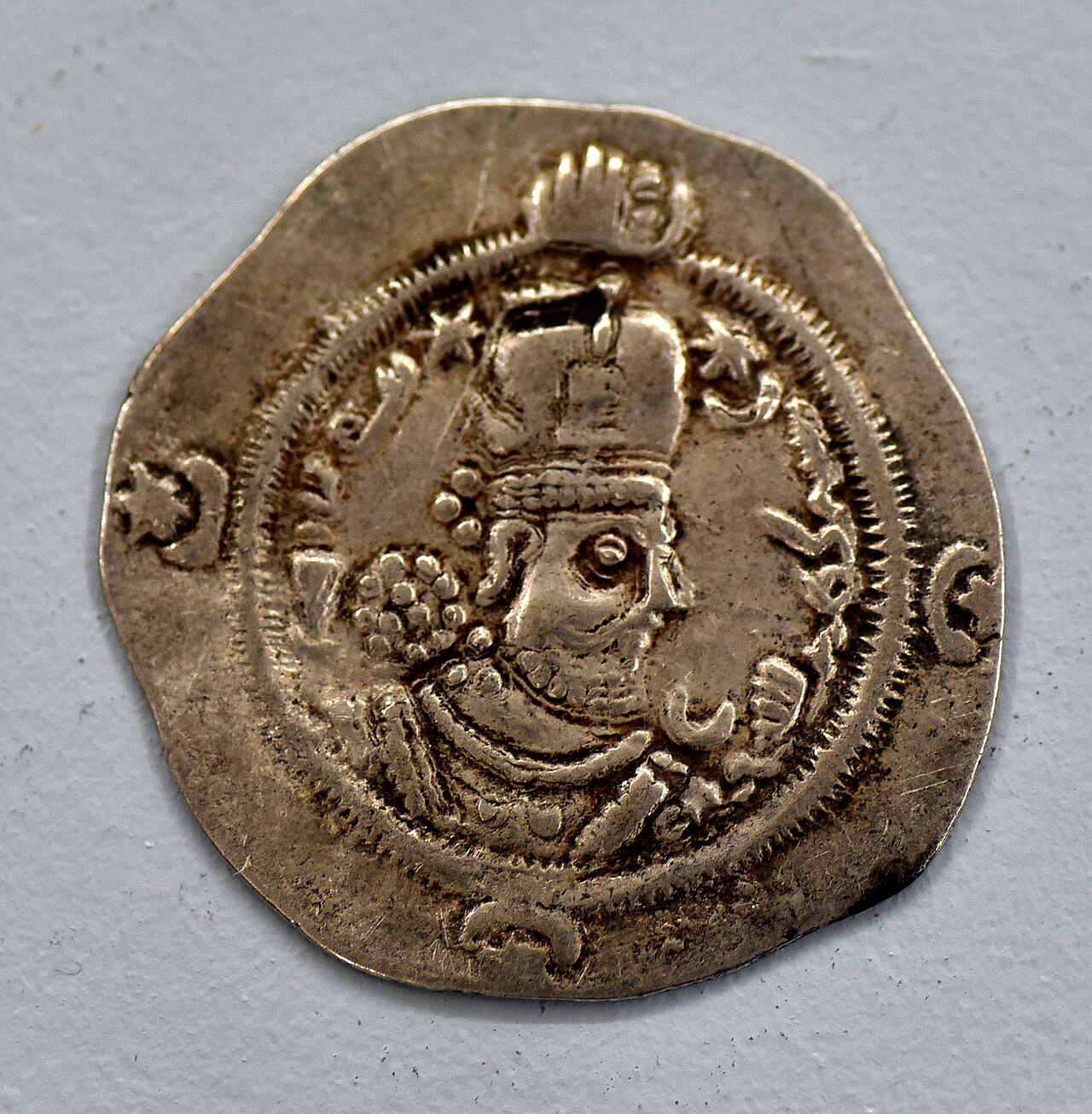

A king against the nobles
The Arabic historians, especially al-Tabari and al-Dinawari, describe Hormizd in two ways at once. He was learned, intelligent and generous to the poor, and he protected weaker subjects against the great families. Tabari says that he had large numbers of nobles and priests put to death, and that his severity made the aristocracy fear and hate him.
The most quoted story concerns the Christians. When the Zoroastrian priests pressed him to act against them, Hormizd is said to have replied that a royal throne cannot stand on its two front legs alone: just as the throne needs four legs, the kingdom needs its Christians and other communities as well as its Zoroastrians. Whether or not he said it, the saying reflects a real policy. Hormizd relied on the lesser nobility, the bureaucracy and the army rather than on the great houses and the clergy, continuing his father’s effort to concentrate power in the crown.
Historians now tend to read his reign as a contest between the king and the old Parthian-descended families such as the Mihran, the Ispahbudhan and others who held the military commands. The crown won many battles in this contest but lost the last one.
War on two fronts
Byzantium
The western war went back and forth in Mesopotamia and Armenia. In 586 a Byzantine army under Philippicus defeated the Persians at Solachon, near Dara, but neither side could follow up its victories. Mutiny in the Byzantine army in 588 gave Persia an opening, and in 589 the Persians took the fortress of Martyropolis through treachery from inside. The war was still undecided when Hormizd fell.
The Turkish invasion of 588
The greater danger came from the east. In 588 a large army of the Western Turks, led by a ruler whom the Persian sources call Saba or Shaba, crossed into Khorasan and advanced towards Herat, while Khazars raided in the Caucasus. Hormizd gave command to Bahram Chobin, a general of the Mihran family from Rey. With a picked force, Bahram defeated the Turks in a battle in the mountains near Herat, and the Turkish ruler was killed, by Bahram’s own arrow according to tradition. In 589 Bahram pushed on to Balkh and beyond the Oxus, taking a vast booty that he sent to Ctesiphon.
The campaign is told at length in the page on Bahram Chobin’s rebellion, and Iran’s dealings with the Turks are the subject of the Sasanians and the Western Turks.
The insult and the revolt
After his eastern triumph, Bahram was sent west to the Caucasus, where in 589 a Byzantine army defeated him near the Araxes river. The defeat was small, but it gave Hormizd, who was already suspicious of the general’s popularity and was told that Bahram had kept too much of the Turkish booty, a reason to act. He dismissed Bahram and, in the best-known version, sent him a woman’s dress and a spindle, implying that he was no man.
Bahram’s troops declared for their general, and the revolt spread. Rather than face the rebels, a group of nobles at court moved first. Its leaders were Vistahm and Vindoe (Bindoe), brothers of Hormizd’s wife and so uncles of his son Khosrow. Early in 590 they deposed Hormizd and had him blinded, the usual way of making a Sasanian prince unfit to rule. Khosrow II was proclaimed king. A few months later Hormizd was killed. The sources differ on how far Khosrow was involved; Byzantine writers blamed the uncles, while Khosrow himself later had both of them put to death.
How historians judge Hormizd IV
Hormizd suffers from his sources. Byzantine historians such as Theophylact Simocatta saw him as cruel and arrogant; the Persian tradition, shaped at the courts of his son and grandson, preferred to remember the dynasty’s victims and its heroes. Modern scholars see a capable ruler who tried to keep the centralising reforms of Khosrow I going and to rule without the great families, and whose failure opened the way to the crisis of the next forty years. The coup of 590 was the first of several in which nobles and generals made and unmade kings, a pattern that ended in the civil wars after 628.
In Ferdowsi’s Shahnameh the reign of Hormizd is dominated by the story of Bahram Chobin, and the king appears as a man who begins well and turns suspicious and violent. The reign of Khosrow II continues the story.
Persian words from this page
| هرمز | Hormoz | Hormizd |
| ترکزاد | Torkzâd | “born of a Turk” |
| بهرام چوبین | Bahrâm Chubin | Bahram Chobin |
| تخت | takht | throne |
| هرات | Herât | Herat |
| بلخ | Balkh | Balkh |
Sources and further reading
- al-Tabari, The History of al-Tabari, vol. 5, trans. C. E. Bosworth (SUNY Press, 1999).
- Theophylact Simocatta, History, trans. Michael and Mary Whitby (Oxford, 1986).
- A. Shapur Shahbazi, “Hormozd IV”, Encyclopaedia Iranica.
- Parvaneh Pourshariati, Decline and Fall of the Sasanian Empire (I.B. Tauris, 2008).
- Touraj Daryaee, Sasanian Persia: The Rise and Fall of an Empire (I.B. Tauris, 2009).
Want to learn Persian? Get the free Starter Pack
Get the 14-page printable Starter Pack (all 32 letters, a 7-day reading plan, 100 core words and 20 survival phrases) and a short 5-email course. Free.
More in The Sasanian Empire (224–651 CE)
- The Origins of the Sasanian Family
- Ardashir I, Founder of the Sasanian Empire
- Firuzabad: Ardashir’s Round City
- Shapur I, King of Kings of Iran and Non-Iran
- Bishapur: Shapur’s City
- The Battle of Edessa and the Capture of Valerian
- The Ka’ba-ye Zartosht Inscription of Shapur I
- Mani and Manichaeism
- Hormizd I and Bahram I
- Kartir and the Zoroastrian Church
- Bahram II
- Narseh and the Peace of Nisibis
- Shapur II the Great
- Julian’s Invasion of Persia (363)
- Christians in the Sasanian Empire
- Shapur III and the Partition of Armenia
- Yazdegerd I
- Bahram V Gur
- Yazdegerd II
- The Battle of Avarayr (451)
- The Hephthalites and Iran’s Eastern Frontier
- Peroz I and the Hephthalite Disaster
- Kavad I
- Zamasp and Kavad’s Return
- Mazdak and the Mazdakite Movement
- Khosrow I Anushirvan the Just
- The Sasanian–Byzantine Wars of the 6th Century
- The Battle of Dara (530)
- Khosrow I Sacks Antioch (540)
- The Lazic War (541–562)
- The Reforms of Khosrow I
- The Academy of Gondishapur: History and Legend
- Borzuya, Chess and Kalila wa Dimna
- Taq Kasra: The Arch of Ctesiphon
- The Sasanian Conquest of Yemen
- The Sasanians and the Western Turks
- Hormizd IV
- Bahram Chobin’s Rebellion
- Khosrow II Parviz
- The Last Great War: Byzantium and Persia, 602–628
- The Siege of Constantinople (626)
- Heraclius Strikes Back
- Shirin: Queen and Legend
- Shahrbaraz, the General Who Became King
- Civil War and the Queens Boran and Azarmidokht
- Yazdegerd III, the Last Sasanian King
- The Sasanian Army
- Sasanian Society and the Class System
- Zoroastrianism under the Sasanians
- Sasanian Art: Silver, Reliefs and Silk
- The Sasanian Reliefs of Naqsh-e Rostam
- Taq-e Bostan
- Sasanian Cities, Palaces and Bridges
- Middle Persian (Pahlavi) Language and Literature
- Sasanian Coins and Silverwork
- Women in the Sasanian Empire
- Polo, Hunting and Games at the Sasanian Court
- The Sasanian Legacy