Narseh, a younger son of Shapur I, seized the Sasanian throne in 293 CE and recorded his victory over his rivals in the Paikuli inscription, the main source for Sasanian politics at the end of the third century. His war with Rome ended in disaster: defeated by the Caesar Galerius in Armenia in 298, with his wives and children taken prisoner, he accepted the Peace of Nisibis in 299, which gave Rome lands east of the Tigris and kept the frontier quiet for nearly forty years.
| Reign | 293 to c. 302/303 CE |
|---|---|
| Father | Shapur I |
| Earlier posts | King of the Sakas (Sistan) under Shapur I; later king of Armenia |
| Rival deposed | His great-nephew Bahram III (293) |
| Main inscription | Paikuli, Middle Persian and Parthian, in Iraqi Kurdistan |
| War with Rome | Victory near Callinicum and Carrhae (c. 296/297); defeat in Armenia, near Satala (298) |
| Treaty | Peace of Nisibis, 299 |
| Successor | His son Hormizd II |
A son of Shapur passed over
When Shapur I died around 270, he had several adult sons. Narseh, who had ruled Sistan, Turan and Sind as “king of the Sakas”, was not chosen. His brothers Hormizd I and Bahram I reigned in turn, and then the throne passed to Bahram I’s son Bahram II, who ruled from 274 to 293 with the support of the high priest Kartir. Narseh was by then king of Armenia, the most important frontier province facing Rome.
The Paikuli revolt of 293
On the death of Bahram II in 293, a powerful noble named Wahnam proclaimed Bahram II’s son, the young Bahram III, as king of kings. A group of nobles opposed him and called on Narseh. Narseh marched south from Armenia. At the Paikuli pass, on the road from Armenia into Mesopotamia, the nobles who supported him came to meet him and acknowledged him as ruler. Wahnam was captured and executed, and Bahram III disappears from history after a reign of about four months.
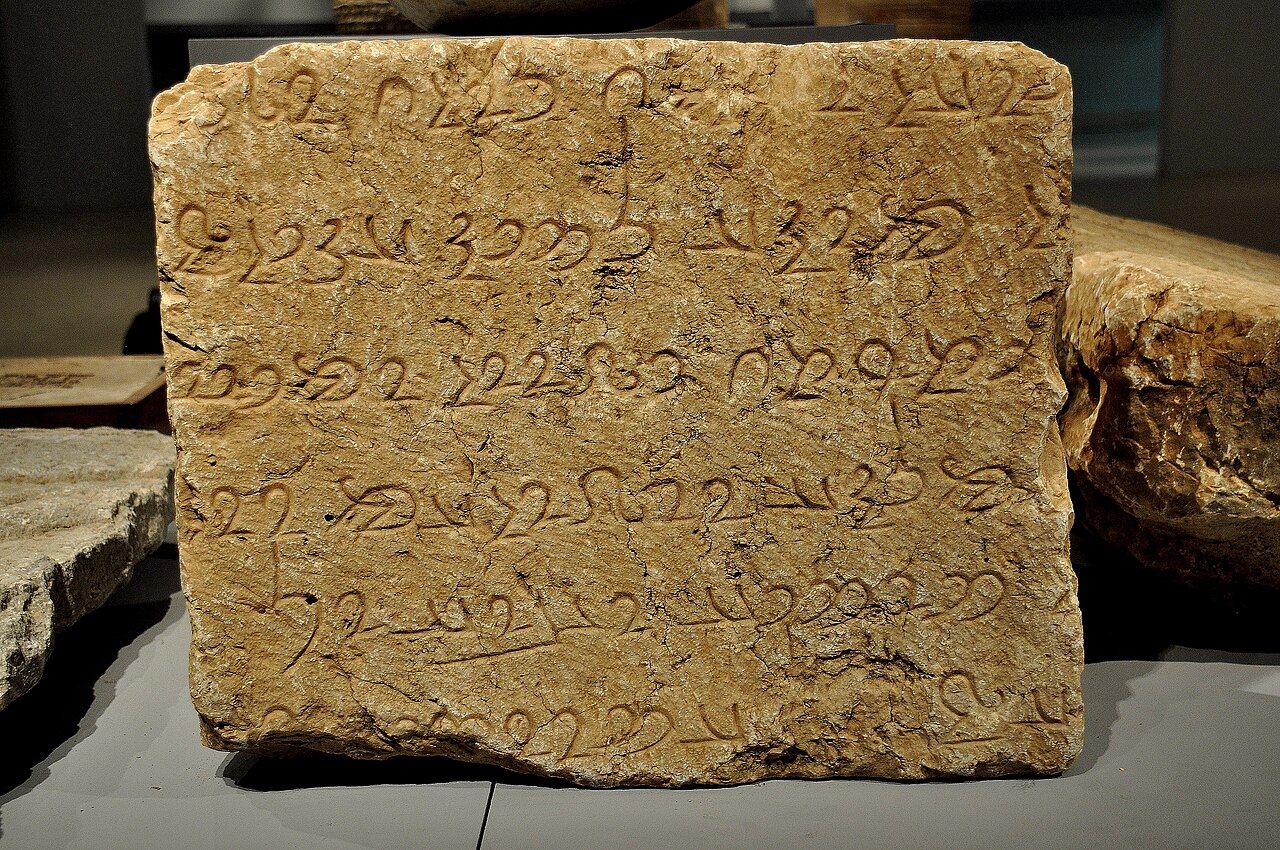
To mark the place where his kingship was recognised, Narseh built a square stone tower at Paikuli, faced with blocks carrying a long inscription in Middle Persian and Parthian. The text tells the story of the revolt from Narseh’s point of view and lists the nobles and vassal kings who supported him, from Iranian lords to the rulers of Armenia and the Arab king of al-Hira. It is a rare look at the network of loyalties that held the Sasanian state together.

Rediscovering Paikuli
The ruined tower lies in the hills south-west of Sulaymaniyah in what is now Iraqi Kurdistan. Henry Rawlinson visited the site in the 1840s, and Ernst Herzfeld recorded and published the blocks in 1924. Because the tower had collapsed, the inscription had to be reassembled like a jigsaw from scattered stones, and many blocks are lost. The standard edition is by Helmut Humbach and Prods Oktor Skjærvø (1978–83). Several inscribed blocks are now displayed in the Sulaymaniyah Museum.
Narseh’s image of kingship
Narseh’s other great monument is his investiture relief at Naqsh-e Rostam, where he receives the ring of kingship from a goddess, almost certainly Anahita, rather than from Ahura Mazda as in his father’s and grandfather’s reliefs. Coupled with the fall from view of Kartir, who appears for the last time among Narseh’s supporters at Paikuli, this has led some historians to suggest that Narseh moved away from the strict religious line of the previous reigns. The evidence is suggestive rather than conclusive.
War with Rome
By the 290s Rome was led by the Tetrarchy, a team of four emperors under Diocletian. Rome had re-established its influence in Armenia, placing the Arsacid prince Tiridates III on the throne. Narseh, who had ruled Armenia himself, regarded this as a challenge.
Victory, then defeat
In 296 Narseh invaded Roman territory. Somewhere between Callinicum and Carrhae in northern Mesopotamia he defeated the Caesar Galerius, Diocletian’s junior colleague. Roman sources say Diocletian made Galerius walk in front of his carriage in his purple robes as a public humiliation, although some historians doubt the story.
Galerius came back in 298 with a new army, mostly drawn from the Danube provinces, and attacked through the mountains of Armenia, where the terrain favoured infantry over Persian cavalry. Near Satala he surprised Narseh’s camp. The king escaped wounded, but his treasury, his wives, his sisters and his children were captured. Galerius then advanced into Mesopotamia and may have reached Ctesiphon.
The Peace of Nisibis
Narseh sent an envoy, Apharban, to ask for peace and the return of his family. The sixth-century historian Peter the Patrician, whose account of the negotiations survives in fragments, reports Apharban’s argument that Rome and Persia were like two eyes of the world, each needing the other. Galerius answered angrily by recalling the fate of Valerian. In 299 Diocletian and Galerius met at Nisibis and sent the official Sicorius Probus to Narseh in Media with Rome’s terms. Narseh accepted.
According to Peter the Patrician’s summary, the terms were:
- Persia gave up five regions east and north of the Tigris (Peter names Ingilene, Sophene, Arzanene, Corduene and Zabdicene; other sources give slightly different lists).
- The Tigris became the frontier in the region.
- Armenia’s border was extended to the fortress of Zintha in Media.
- Rome gained the right to appoint the kings of Iberia (eastern Georgia).
- Nisibis was made the only legal point of trade between the two empires.
Narseh’s family was returned. The treaty was the most favourable that Rome ever obtained from a Sasanian king. The victory was celebrated on the Arch of Galerius at Thessaloniki in Greece, where carved panels show the campaign and the Persian royal women in captivity.
Consequences
The peace held for almost four decades, a long calm in a relationship usually marked by war. But it left a grievance. Narseh’s grandson Shapur II spent much of his long reign trying to reverse it, and finally did so in the treaty forced on the emperor Jovian after Julian’s invasion of 363. Armenia, where Narseh had begun his career, remained the main point of conflict.
Narseh died around 302 or 303 and was succeeded by his son Hormizd II. For the earlier phase of the Roman wars, see The Battle of Edessa; for the long view, Persia and Rome: Seven Centuries of Rivalry.
- 293 Death of Bahram II; Narseh deposes Bahram III after the nobles recognise him at Paikuli
- 296 Narseh defeats Galerius between Callinicum and Carrhae
- 298 Galerius defeats Narseh in Armenia and captures his family
- 299 Peace of Nisibis
- c. 302/303 Death of Narseh; accession of Hormizd II
Persian words from this page
| نرسه | Narse | Narseh |
| پایکولی | Pâykuli | Paikuli |
| نصیبین | Nasibin | Nisibis |
| ارمنستان | Armanestân | Armenia |
| دجله | Dejle | the Tigris |
| صلح | solh | peace |
Sources and further reading
- Helmut Humbach and Prods O. Skjærvø, The Sassanian Inscription of Paikuli, 3 parts (Wiesbaden, 1978–1983).
- Ernst Herzfeld, Paikuli: Monument and Inscription of the Early History of the Sasanian Empire (Berlin, 1924).
- Peter the Patrician, fragments on the peace of 299, translated in Dodgeon and Lieu, The Roman Eastern Frontier and the Persian Wars, AD 226–363 (Routledge, 1991).
- Encyclopaedia Iranica, “Narseh” and “Paikuli”.
- Beate Dignas and Engelbert Winter, Rome and Persia in Late Antiquity: Neighbours and Rivals (Cambridge University Press, 2007).
Want to learn Persian? Get the free Starter Pack
Get the 14-page printable Starter Pack (all 32 letters, a 7-day reading plan, 100 core words and 20 survival phrases) and a short 5-email course. Free.
More in The Sasanian Empire (224–651 CE)
- The Origins of the Sasanian Family
- Ardashir I, Founder of the Sasanian Empire
- Firuzabad: Ardashir’s Round City
- Shapur I, King of Kings of Iran and Non-Iran
- Bishapur: Shapur’s City
- The Battle of Edessa and the Capture of Valerian
- The Ka’ba-ye Zartosht Inscription of Shapur I
- Mani and Manichaeism
- Hormizd I and Bahram I
- Kartir and the Zoroastrian Church
- Bahram II
- Narseh and the Peace of Nisibis
- Shapur II the Great
- Julian’s Invasion of Persia (363)
- Christians in the Sasanian Empire
- Shapur III and the Partition of Armenia
- Yazdegerd I
- Bahram V Gur
- Yazdegerd II
- The Battle of Avarayr (451)
- The Hephthalites and Iran’s Eastern Frontier
- Peroz I and the Hephthalite Disaster
- Kavad I
- Zamasp and Kavad’s Return
- Mazdak and the Mazdakite Movement
- Khosrow I Anushirvan the Just
- The Sasanian–Byzantine Wars of the 6th Century
- The Battle of Dara (530)
- Khosrow I Sacks Antioch (540)
- The Lazic War (541–562)
- The Reforms of Khosrow I
- The Academy of Gondishapur: History and Legend
- Borzuya, Chess and Kalila wa Dimna
- Taq Kasra: The Arch of Ctesiphon
- The Sasanian Conquest of Yemen
- The Sasanians and the Western Turks
- Hormizd IV
- Bahram Chobin’s Rebellion
- Khosrow II Parviz
- The Last Great War: Byzantium and Persia, 602–628
- The Siege of Constantinople (626)
- Heraclius Strikes Back
- Shirin: Queen and Legend
- Shahrbaraz, the General Who Became King
- Civil War and the Queens Boran and Azarmidokht
- Yazdegerd III, the Last Sasanian King
- The Sasanian Army
- Sasanian Society and the Class System
- Zoroastrianism under the Sasanians
- Sasanian Art: Silver, Reliefs and Silk
- The Sasanian Reliefs of Naqsh-e Rostam
- Taq-e Bostan
- Sasanian Cities, Palaces and Bridges
- Middle Persian (Pahlavi) Language and Literature
- Sasanian Coins and Silverwork
- Women in the Sasanian Empire
- Polo, Hunting and Games at the Sasanian Court
- The Sasanian Legacy