Women in the Sasanian Empire (224–651 CE) lived under a Zoroastrian family law that placed most of them under a male guardian, yet gave them real rights over property and a defined place in the household. At the top of society, queens and princesses held titles, endowed fire temples, appear on rock reliefs, and in 630–631 two daughters of Khosrow II, Boran and Azarmidokht, ruled as queens in their own right. Most of what we know comes from royal inscriptions, a law book compiled around 620 and the stories of later writers.
| Key legal source | Madayan i Hazar Dadestan (“Book of a Thousand Judgements”), c. 620 |
|---|---|
| Royal title | “Queen of queens” (Middle Persian bāmbišnān bāmbišn) |
| Ruling queens | Boran (630–631), Azarmidokht (631) |
| Royal women on monuments | Reliefs of Bahram II; the Ka’ba-ye Zartosht inscription of Shapur I |
| Later legend | Shirin, Gordiya and the women of the Shahnameh |
Queens in stone and inscriptions
The earliest named Sasanian women appear in Shapur I’s great inscription on the Ka’ba-ye Zartosht at Naqsh-e Rostam, from the 260s. Among the pious foundations it lists are fires established for the souls of members of the royal family, including Shapur’s daughter Adur-Anahid, who bears the title “queen of queens”, and other queens and princesses. The title did not mean that she ruled; it marked the first lady of the court, and the inscription shows that royal women had their own households, estates and religious endowments (see the Ka’ba-ye Zartosht inscription).
A generation later Bahram II (r. 274–293) put women into his rock reliefs as no other Sasanian king did. At Naqsh-e Rostam he is shown with his family and courtiers, and at Sar Mashhad in Fars he is seen defending a woman, usually identified as his queen, against lions. His coins show the queen’s bust facing his own, and sometimes a prince as well. Historians read this as a statement about the dynasty: the king’s wife and heir were part of the image of royal power.
Women of the court
Royal women could hold real power in a crisis. al-Tabari records that when Yazdegerd II died in 457, his widow Denag governed from Ctesiphon while her sons Hormizd III and Peroz fought for the throne. Other queens owed their influence to their husbands’ favour. The best known is Shirin, the Christian wife of Khosrow II, whose role in church politics is recorded by contemporary Armenian and Byzantine writers, and who later became the heroine of Persian romance (see Shirin: queen and legend).
The Shahnameh and the Arabic histories add women of the nobility whose stories mix memory and legend. Gordiya, the sister of the rebel Bahram Chobin, appears as a warrior who later married Khosrow II. Such figures cannot be checked against contemporary sources, but they show that Persian tradition had a place for women who rode, fought and advised kings.
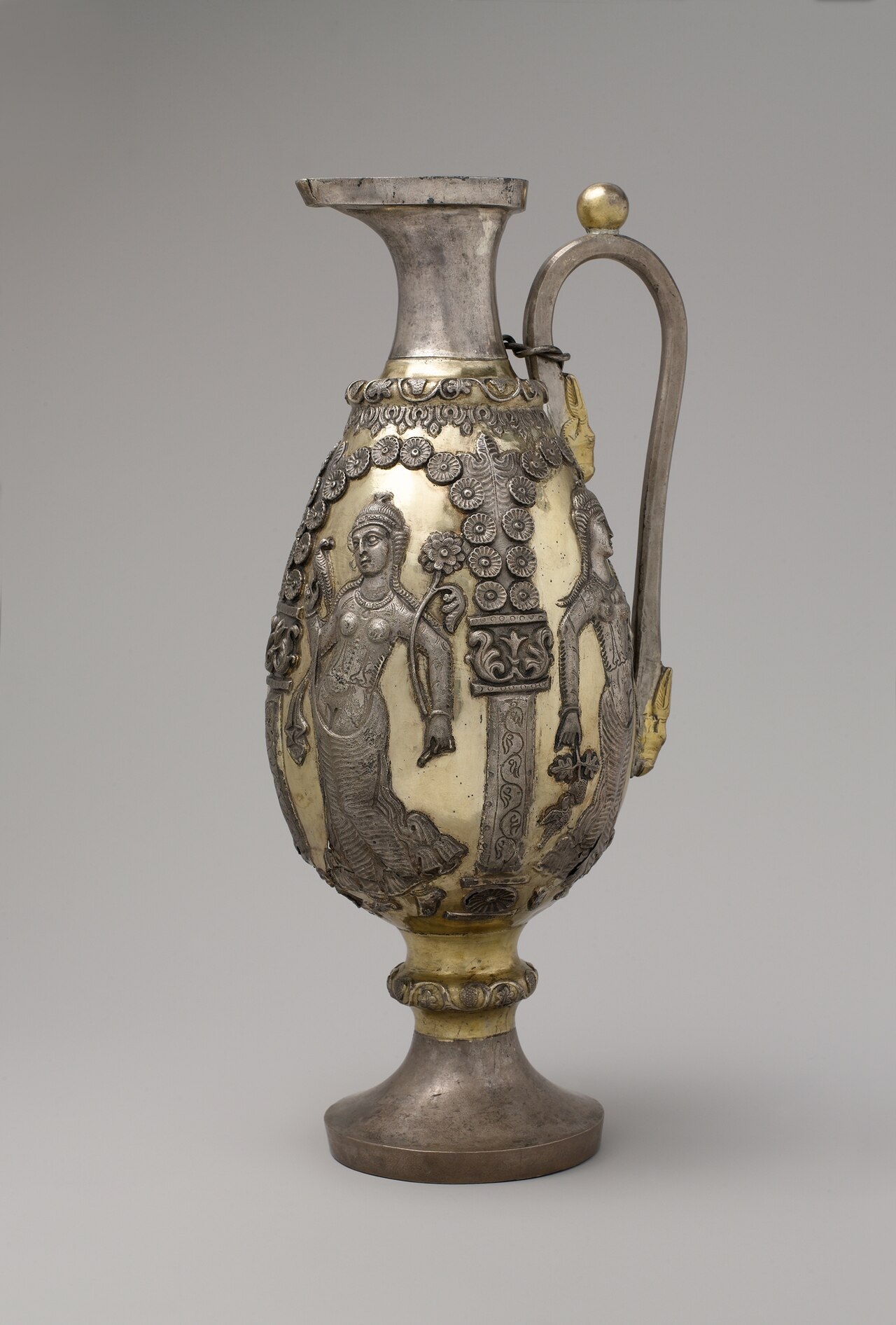

Boran and Azarmidokht
The clearest sign of what was possible came at the end. After the murder of the usurper Shahrbaraz in 630, with no adult male of the royal house left alive, the nobles placed Khosrow II’s daughter Boran on the throne. She struck coins in her own name with her own crowned portrait, sought peace with Byzantium and tried to restore order before she died or was removed in 631. Her sister Azarmidokht followed, and according to al-Tabari had a noble suitor, Farrukh Hormizd, killed when he tried to force her to marry him; his son Rostam then took revenge. Their reigns are told on civil war and the queens Boran and Azarmidokht. Their accession shows that in Sasanian thinking the royal blood mattered more than the sex of the ruler, at least when there was no prince to choose.
Marriage and the law
For ordinary women the law mattered more than queens. The Madayan i Hazar Dadestan, a collection of legal decisions compiled by the jurist Farroxmard i Wahraman around 620, deals at length with marriage, guardianship and inheritance. The scholar who has done most to explain these cases, Maria Macuch, shows a legal system in which the household and its continuation were the central concern.
Guardians and wives
A woman was normally under the authority of a guardian, first her father and then her husband. The fullest form of marriage, called pādixšāyīhā, gave the wife the status of an authorised wife, and her children were her husband’s heirs. Other unions gave fewer rights. A husband could, during his lifetime, make his wife her own guardian, and a widow who was not under anyone’s authority could arrange her own future. Women could own property, receive gifts and inherit, and the Madayan includes cases in which women appear as parties to transactions and disputes over estates.
Producing an heir
The system’s strangest feature, to modern eyes, was its concern that no man’s line should die out. If a man died without a son, a woman of his family, often his widow or daughter, could be required to enter a substitute marriage (stūrīh) with another man, so that a son born of it would count as the dead man’s heir. A widow in this position was called čakar. The law treated this as a duty, and the Pahlavi religious texts counted ending such a marriage before an heir was born as a grave sin. These rules served the household and the property it held as much as the women themselves, and they are best understood alongside the wider class system described on Sasanian society and the class system.
Religion and daily life
Zoroastrian purity laws weighed heavily on women. During menstruation and after childbirth they were considered impure and had to stay apart from fire, water and the rest of the household, rules laid down in detail in the priestly literature. The same priestly tradition, in the text known as the Herbedestan, discussed whether women could study the scriptures, and accepted that in some circumstances they might. Most women, of course, appear in no text at all: they worked in the fields and households of a mainly rural empire.
Christian and Jewish women lived under their own communities’ rules, and some appear in their records. The Syriac Acts of the Persian Martyrs tell of Tarbo, sister of the bishop Simeon bar Sabbae, executed under Shapur II in the 340s after being accused of using sorcery to make the queen ill. The story belongs to martyr literature, but it is one of the few detailed accounts of a non-royal woman from the period (see Christians in the Sasanian Empire).
How historians read the evidence
The sources are uneven. Royal inscriptions describe only the court; the Madayan records legal problems, which are not the same as everyday life; the Arabic and Persian histories were written centuries later; and the hostile accounts of the Mazdakite movement, which accused it of making women common property, tell us more about the fears of the nobility than about Mazdak’s teaching. Historians such as Touraj Daryaee and Maria Macuch have stressed that, within these limits, Sasanian women had more legal standing than the stereotype of a secluded “Oriental” harem suggests, while remaining subject to a guardianship that defined their adult lives.
Persian words from this page
| زن | zan | woman, wife |
| ملکه | malakeh | queen |
| دختر | dokhtar | daughter, girl |
| پوراندخت | Purândokht | Boran |
| آزرمیدخت | Âzarmidokht | Azarmidokht |
| شیرین | Shirin | Shirin, Khosrow II’s queen |
| گردیه | Gordiyeh | Gordiya, sister of Bahram Chobin |
Sources and further reading
- Farroxmard i Wahraman, The Book of a Thousand Judgements (A Sasanian Law-Book), trans. Anahit Perikhanian (Mazda Publishers, 1997).
- Maria Macuch, articles in Encyclopaedia Iranica, including “Inheritance i. In the Sasanian period” and “Čakar”.
- al-Tabari, The History of al-Tabari, vol. 5, trans. C. E. Bosworth (SUNY Press, 1999).
- Touraj Daryaee, Sasanian Persia: The Rise and Fall of an Empire (I.B. Tauris, 2009).
- Sebastian Brock and Susan Ashbrook Harvey, Holy Women of the Syrian Orient (University of California Press, 1987), for Tarbo and other martyrs.
Want to learn Persian? Get the free Starter Pack
Get the 14-page printable Starter Pack (all 32 letters, a 7-day reading plan, 100 core words and 20 survival phrases) and a short 5-email course. Free.
More in The Sasanian Empire (224–651 CE)
- The Origins of the Sasanian Family
- Ardashir I, Founder of the Sasanian Empire
- Firuzabad: Ardashir’s Round City
- Shapur I, King of Kings of Iran and Non-Iran
- Bishapur: Shapur’s City
- The Battle of Edessa and the Capture of Valerian
- The Ka’ba-ye Zartosht Inscription of Shapur I
- Mani and Manichaeism
- Hormizd I and Bahram I
- Kartir and the Zoroastrian Church
- Bahram II
- Narseh and the Peace of Nisibis
- Shapur II the Great
- Julian’s Invasion of Persia (363)
- Christians in the Sasanian Empire
- Shapur III and the Partition of Armenia
- Yazdegerd I
- Bahram V Gur
- Yazdegerd II
- The Battle of Avarayr (451)
- The Hephthalites and Iran’s Eastern Frontier
- Peroz I and the Hephthalite Disaster
- Kavad I
- Zamasp and Kavad’s Return
- Mazdak and the Mazdakite Movement
- Khosrow I Anushirvan the Just
- The Sasanian–Byzantine Wars of the 6th Century
- The Battle of Dara (530)
- Khosrow I Sacks Antioch (540)
- The Lazic War (541–562)
- The Reforms of Khosrow I
- The Academy of Gondishapur: History and Legend
- Borzuya, Chess and Kalila wa Dimna
- Taq Kasra: The Arch of Ctesiphon
- The Sasanian Conquest of Yemen
- The Sasanians and the Western Turks
- Hormizd IV
- Bahram Chobin’s Rebellion
- Khosrow II Parviz
- The Last Great War: Byzantium and Persia, 602–628
- The Siege of Constantinople (626)
- Heraclius Strikes Back
- Shirin: Queen and Legend
- Shahrbaraz, the General Who Became King
- Civil War and the Queens Boran and Azarmidokht
- Yazdegerd III, the Last Sasanian King
- The Sasanian Army
- Sasanian Society and the Class System
- Zoroastrianism under the Sasanians
- Sasanian Art: Silver, Reliefs and Silk
- The Sasanian Reliefs of Naqsh-e Rostam
- Taq-e Bostan
- Sasanian Cities, Palaces and Bridges
- Middle Persian (Pahlavi) Language and Literature
- Sasanian Coins and Silverwork
- Women in the Sasanian Empire
- Polo, Hunting and Games at the Sasanian Court
- The Sasanian Legacy