Between 502 and 562 CE the Sasanian Empire and Byzantium fought four wars, broken by truces and two peace treaties that were meant to last for ever and for fifty years. The fighting ran from Mesopotamia to the Caucasus and Syria, and included Belisarius’ victory at Dara in 530, Khosrow I’s sack of Antioch in 540 and the long struggle for Lazica on the Black Sea. Neither side gained a decisive advantage, but the wars drained both empires in the century before the rise of Islam.
| Period | 502–562 CE, renewed in 572 |
|---|---|
| Persian kings | Kavad I (to 531), Khosrow I |
| Roman emperors | Anastasius I, Justin I, Justinian I |
| Main theatres | Upper Mesopotamia, Armenia, Syria, Lazica and Iberia in the Caucasus |
| Treaties | “Eternal Peace” 532; Fifty Years’ Peace 562 |
| Main sources | Procopius, Wars; the Chronicle of Pseudo-Joshua the Stylite; Malalas; Menander Protector |
What the empires fought over
The issues were old ones. Each empire wanted to control Armenia and the small Christian kingdoms of the Caucasus, Iberia and Lazica. Persia argued that Rome should share the cost of guarding the Caucasus passes against steppe peoples, since those raiders threatened both empires; Rome saw the payments Persia demanded as tribute. Both sides built fortresses along the frontier in Mesopotamia and accused the other of breaking treaties by doing so. Arab allies, the Lakhmids for Persia and the Ghassanids for Rome, fought their own wars in the desert. And the kings of the 6th century needed money, which a raid into rich Roman Syria could provide.
The Anastasian War, 502–506
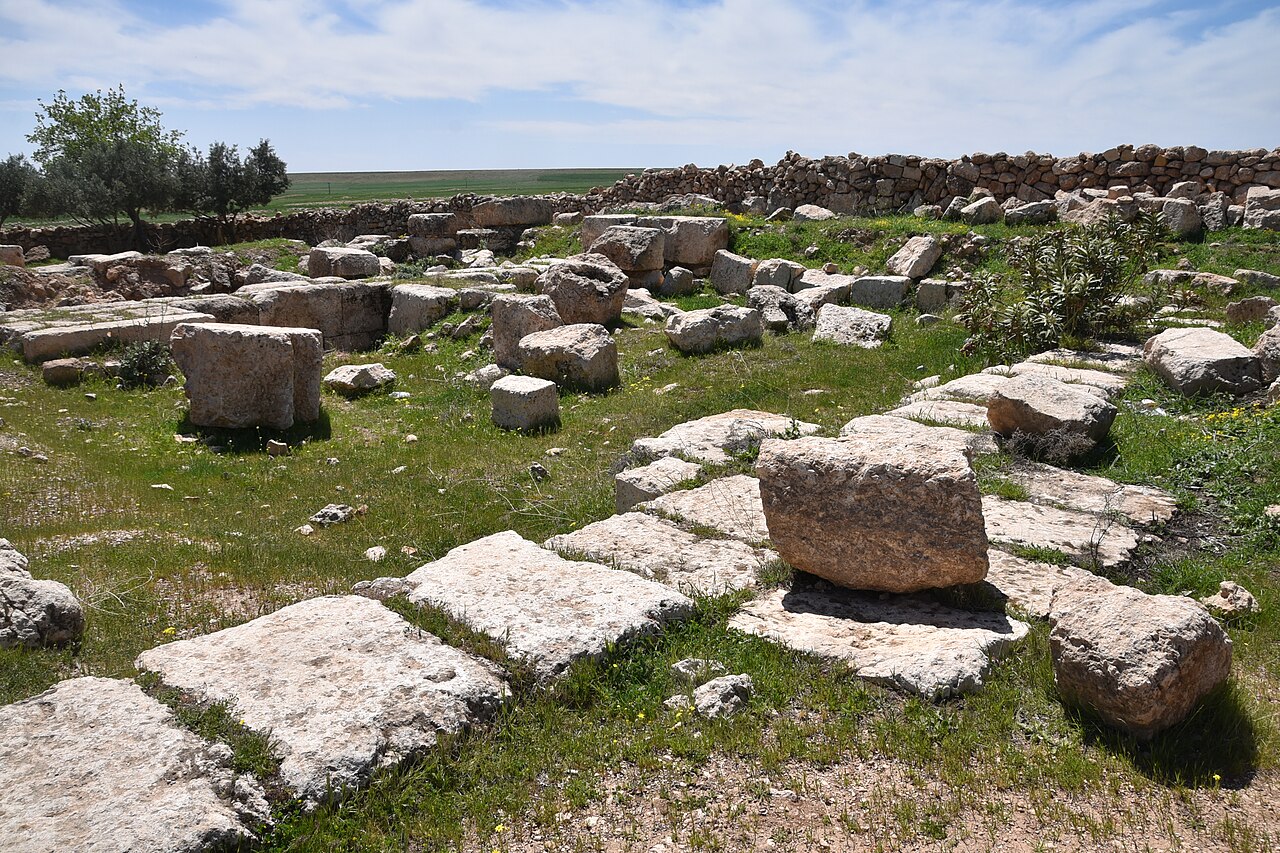
Kavad I had regained his throne with a Hephthalite army and owed his allies a great deal. When Emperor Anastasius refused him money in 502, Kavad invaded. He captured Theodosiopolis in Armenia and besieged Amida on the upper Tigris, which fell in January 503 after a winter siege. The Syriac chronicle known as Pseudo-Joshua the Stylite, written in nearby Edessa, gives a vivid local account of the war, the famine and the soldiers on both sides. A truce was agreed in 506, and Rome bought back Amida. Anastasius then built a new fortress, Dara, only a few miles from Persian Nisibis.

The Iberian War, 526–532
The next war began in the Caucasus. Kavad pressed the king of Iberia, Gurgen, to adopt Zoroastrian burial practices, and Gurgen turned to Rome for protection. Fighting spread to Mesopotamia. In 530, outside the walls of Dara, the young Roman general Belisarius defeated a larger Persian army by fighting from a line of prepared trenches; it was one of the few Roman field victories over Persia in the period (see The Battle of Dara). The following year, at Callinicum on the Euphrates, a Persian army under Azarethes with Lakhmid allies forced Belisarius to fight on Easter Saturday and won a costly victory.
Kavad died in September 531. His son Khosrow I, needing time to secure his throne, made peace with Justinian in 532. Under this “Eternal Peace” Rome paid 11,000 pounds of gold, officially as a contribution to the defence of the Caucasus, and the two sides returned their conquests.
Khosrow’s invasion of Syria, 540–545
The Eternal Peace lasted eight years. By 540 Justinian’s armies were busy reconquering North Africa and Italy, and envoys from the Ostrogoths and from Armenia urged Khosrow to strike. He accused Rome of trying to win over the Lakhmid king and his Arab rivals, and in spring 540 marched up the Euphrates into Syria. He extracted payments from Sura, Beroea (Aleppo) and other towns, and in June took Antioch, the third city of the Roman world. The city was plundered and burned and many of its people were taken to Iran, where Khosrow built a new city for them near Ctesiphon, Weh-Antiok-Khusraw, “Khosrow’s better than Antioch”. He bathed in the Mediterranean at Seleucia and returned with vast booty (see Khosrow I Sacks Antioch).
Belisarius was sent east, the plague that struck the Roman empire in 542 affected both armies, and in 544 Khosrow besieged Edessa without success. A five-year truce was agreed in 545, for which Rome again paid gold. It did not cover the Caucasus.
The Lazic War, 541–562
Lazica, on the eastern shore of the Black Sea in what is now western Georgia, was a Roman client kingdom. In 541 its king, angry at Roman officials, invited Khosrow in, and a Persian army took the coastal fortress of Petra. For Persia, Lazica offered a route to the Black Sea; for Rome, a Persian fleet there would have been a threat to Constantinople. The Lazi soon turned against the Persians, and for twenty years Roman and Persian forces fought in the forests and river valleys of the region. The Romans retook Petra in 551, the Persians held on elsewhere, and a truce in 557 ended most of the fighting. The war is told in more detail on The Lazic War.
The Fifty Years’ Peace, 562
In 561–562 the Roman envoy Peter the Patrician and the Persian official known in Greek as Yazdgushnasp negotiated a treaty whose terms survive in fragments of the historian Menander Protector. Persia gave up Lazica. Rome agreed to pay 30,000 gold coins a year, with several years’ payments in advance. Trade between the two empires was to pass only through named customs towns, among them Nisibis and Dara. Christians in Persia were allowed to worship and bury their dead, provided they did not seek converts among Zoroastrians. Disputes between Arab allies were to be settled under the treaty.
The peace lasted ten years. In 572 Justin II stopped the payments and backed a revolt in Persian Armenia, and Khosrow responded by taking Dara itself in 573. That war would continue into the reigns of Hormizd IV and Khosrow II.
- 502–503 Kavad invades; Amida falls
- 506 Truce; Rome then builds Dara
- 526 War over Iberia
- 530 Battle of Dara, a Roman victory
- 531 Battle of Callinicum, a Persian victory; death of Kavad
- 532 “Eternal Peace”
- 540 Khosrow I sacks Antioch
- 541 Persians take Petra in Lazica
- 544 Failed Persian siege of Edessa
- 545 Five-year truce in Mesopotamia
- 562 Fifty Years’ Peace
- 572–573 War renewed; Khosrow takes Dara
How historians judge the wars
Most of what we know comes from the Roman side, above all from Procopius, who served on Belisarius’ staff and wrote as an eyewitness of some campaigns. His account is detailed but partisan, and his numbers for Persian armies are often thought to be inflated. Persian sources, preserved by al-Tabari and in the Shahnameh, remember the period chiefly as one of Khosrow’s triumphs. Modern historians such as Geoffrey Greatrex stress that neither empire was trying to destroy the other. These were wars of pressure and prestige, fought for money, client kingdoms and strong points on the frontier. The pattern changed only in 602, when the last war between them became a struggle for survival (see The Last Great War). For the long view, see Persia and Rome: Seven Centuries of Rivalry.
Persian words from this page
| روم | Rum | Rome, Byzantium |
| جنگ | jang | war |
| صلح | solh | peace |
| انطاکیه | Antâkiyeh | Antioch |
| نصیبین | Nasibin | Nisibis |
| قفقاز | Ghafghâz | the Caucasus |
Sources and further reading
- Procopius, History of the Wars, Books 1–2 (Persian Wars) and Book 8.
- The Chronicle of Pseudo-Joshua the Stylite, trans. F. R. Trombley and J. W. Watt (Liverpool University Press, 2000).
- R. C. Blockley, The History of Menander the Guardsman (Francis Cairns, 1985), for the treaty of 562.
- Geoffrey Greatrex, Rome and Persia at War, 502–532 (Francis Cairns, 1998).
- Geoffrey Greatrex and Samuel N. C. Lieu, The Roman Eastern Frontier and the Persian Wars, Part II: AD 363–630 (Routledge, 2002).
Want to learn Persian? Get the free Starter Pack
Get the 14-page printable Starter Pack (all 32 letters, a 7-day reading plan, 100 core words and 20 survival phrases) and a short 5-email course. Free.
More in The Sasanian Empire (224–651 CE)
- The Origins of the Sasanian Family
- Ardashir I, Founder of the Sasanian Empire
- Firuzabad: Ardashir’s Round City
- Shapur I, King of Kings of Iran and Non-Iran
- Bishapur: Shapur’s City
- The Battle of Edessa and the Capture of Valerian
- The Ka’ba-ye Zartosht Inscription of Shapur I
- Mani and Manichaeism
- Hormizd I and Bahram I
- Kartir and the Zoroastrian Church
- Bahram II
- Narseh and the Peace of Nisibis
- Shapur II the Great
- Julian’s Invasion of Persia (363)
- Christians in the Sasanian Empire
- Shapur III and the Partition of Armenia
- Yazdegerd I
- Bahram V Gur
- Yazdegerd II
- The Battle of Avarayr (451)
- The Hephthalites and Iran’s Eastern Frontier
- Peroz I and the Hephthalite Disaster
- Kavad I
- Zamasp and Kavad’s Return
- Mazdak and the Mazdakite Movement
- Khosrow I Anushirvan the Just
- The Sasanian–Byzantine Wars of the 6th Century
- The Battle of Dara (530)
- Khosrow I Sacks Antioch (540)
- The Lazic War (541–562)
- The Reforms of Khosrow I
- The Academy of Gondishapur: History and Legend
- Borzuya, Chess and Kalila wa Dimna
- Taq Kasra: The Arch of Ctesiphon
- The Sasanian Conquest of Yemen
- The Sasanians and the Western Turks
- Hormizd IV
- Bahram Chobin’s Rebellion
- Khosrow II Parviz
- The Last Great War: Byzantium and Persia, 602–628
- The Siege of Constantinople (626)
- Heraclius Strikes Back
- Shirin: Queen and Legend
- Shahrbaraz, the General Who Became King
- Civil War and the Queens Boran and Azarmidokht
- Yazdegerd III, the Last Sasanian King
- The Sasanian Army
- Sasanian Society and the Class System
- Zoroastrianism under the Sasanians
- Sasanian Art: Silver, Reliefs and Silk
- The Sasanian Reliefs of Naqsh-e Rostam
- Taq-e Bostan
- Sasanian Cities, Palaces and Bridges
- Middle Persian (Pahlavi) Language and Literature
- Sasanian Coins and Silverwork
- Women in the Sasanian Empire
- Polo, Hunting and Games at the Sasanian Court
- The Sasanian Legacy