Zamasp (Jamasp), a younger son of Peroz I, was placed on the Sasanian throne in 496 CE by nobles and priests who had deposed his brother Kavad I. Two or three years later Kavad escaped from prison, came back from the east with a Hephthalite army and took the crown again without a battle. The short episode decided who would hold power in Iran for the next century: Kavad’s line, not the great noble houses.
| Reign of Zamasp | 496 to 498 or 499 CE |
|---|---|
| Father | Peroz I (r. 459–484) |
| Deposed king | Kavad I, his brother, first reign 488–496 |
| Kavad’s prison | The “Castle of Oblivion”, probably in Khuzestan |
| Outcome | Kavad restored c. 498/499; Zamasp abdicates and is spared |
| Main sources | Procopius, Wars I.5–6; Pseudo-Joshua the Stylite; al-Tabari |

A crown in the gift of the nobles
After Peroz died fighting the Hephthalites in 484, the Sasanian kings were weak and the great families were strong. Peroz’s brother Balash was removed in 488, and Kavad, a young son of Peroz who had spent time as a hostage at the Hephthalite court, was put in his place by Sukhra of the House of Karen, the most powerful man in the empire. Kavad broke free of his patron around 493, with the help of Shapur of Ray of the Mihran family, and had Sukhra killed. That was the first sign that he meant to rule rather than reign.
By 496 Kavad had also become identified with the teachings of Mazdak, which questioned the wealth and privileges of the nobility and, in the hostile accounts that survive, their control of women and households. How far Kavad really supported Mazdak is still argued over; the story is told on Mazdak and the Mazdakite movement. For the nobles and the Zoroastrian priests the result was the same. They seized Kavad and chose a brother in his place, Zamasp, whom they expected to be easier to manage.
The council and the Castle of Oblivion
Procopius, writing at Constantinople in the 550s, gives the fullest account of what happened next, though he confuses the new king’s name and calls him Blases (the name of the earlier king Balash). The nobles met to decide what to do with Kavad. Gushnaspdad, holder of the office of kanarang (the military governor of the north-east), argued that the deposed king should be killed at once and would not stop being a danger while he lived. The council would not shed royal blood and sent Kavad instead to a fortress that Procopius calls the “Castle of Oblivion”, where state prisoners were held and where, he says, it was forbidden even to mention their names.
Procopius uses the castle to tell an older story about an Armenian king, Arsaces, who was held there in the 4th century. Its exact site is unknown, though modern scholars usually place it in Khuzestan in south-western Iran.
Two years of Zamasp
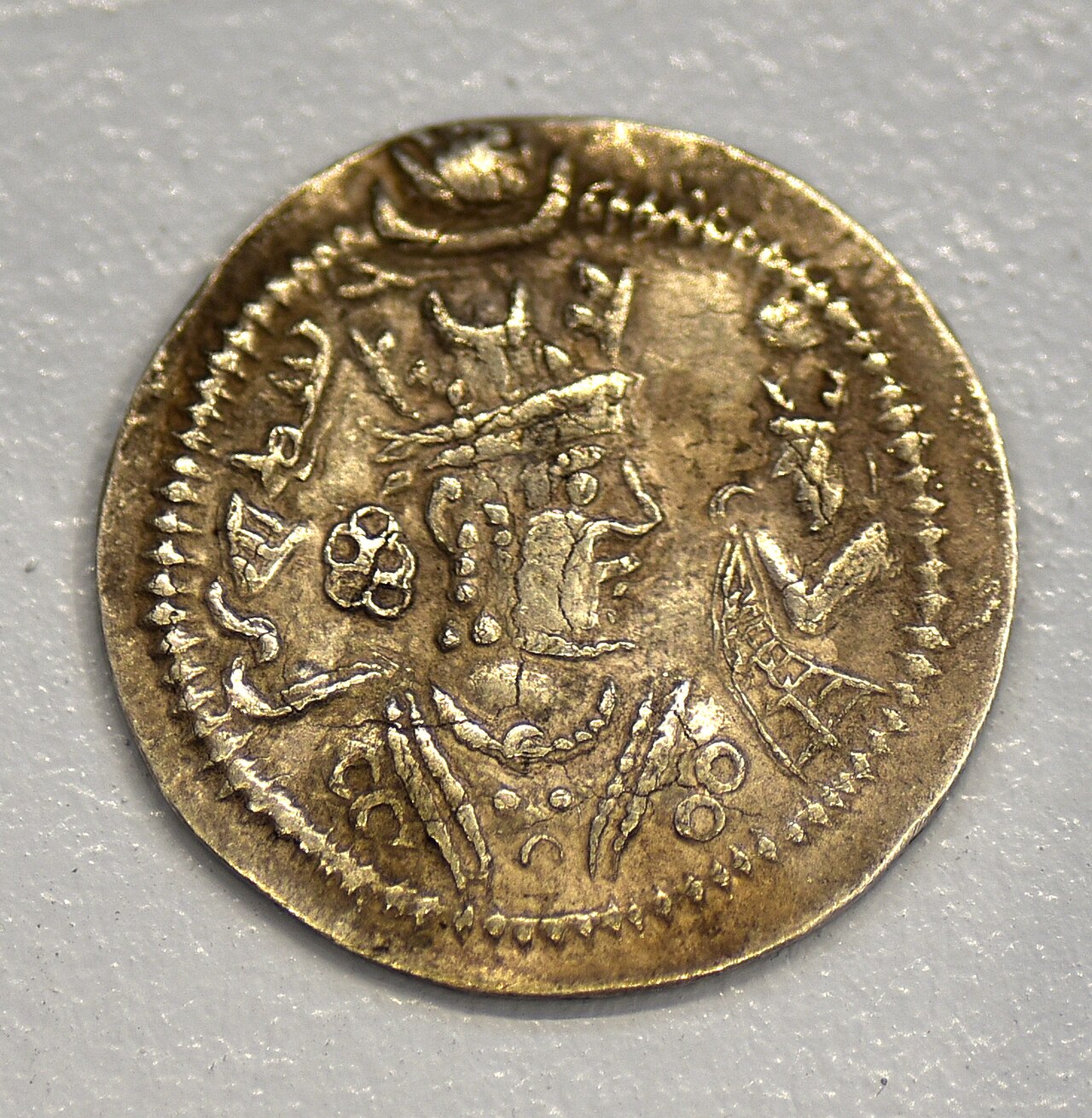
Very little is known about Zamasp’s own government. He struck silver drachms in his own name at the usual mints, and they show a king with a crown of his own design, as every Sasanian ruler had (see Sasanian coins and silverwork). The Arabic and Persian historians who drew on the lost Sasanian royal chronicle remember him as mild and well meaning. The Syriac chronicle of Pseudo-Joshua the Stylite, written at Edessa within a few years of the events, records the change of king but is more interested in what it meant for the Roman frontier.
The silence probably reflects reality. Zamasp was a king chosen by others, and the men who chose him held the real power. His reign is best understood as a brief return to the arrangement of the 480s, when the nobles made and unmade kings.
The escape
Kavad did not stay forgotten. Procopius says his wife was allowed to visit him, and that one evening they changed clothes: Kavad walked out past the guards dressed as a woman while she stayed behind in his place. The Persian tradition preserved by al-Tabari tells a different version in which Kavad’s sister is the heroine. Both versions agree that a loyal nobleman, Siyavush (in Greek, Seoses), helped him on his way east.
Kavad headed for the Hephthalites, the power that had killed his father and that he knew from his years as a hostage. Their king gave him a daughter in marriage and, more important, an army. Kavad would owe them money for years afterwards, which is one reason he soon went to war with Rome to raise silver.
A return without a battle
Around 498 or 499 Kavad crossed back into Iran. On the way, according to Procopius, he promised that the first Persian of standing to join him would be rewarded with high office. The first to come was a man named Adergoudounbades, from the same family as Gushnaspdad. Zarmihr, the son of the executed Sukhra, also took Kavad’s side, a sign that the great houses were divided.
No battle was fought. Zamasp gave up the throne, and the nobles and priests who had made him king accepted Kavad back rather than risk a civil war with a Hephthalite army in the country. Kavad then settled his accounts. Gushnaspdad, who had wanted him killed, was executed, and the office of kanarang went to Adergoudounbades. Siyavush rose to become commander of the army and remained one of the most powerful men at court until his fall in the 520s.
The fate of Zamasp
Here the sources part company. Procopius says that the deposed king was blinded, the usual Sasanian way of making a prince unfit to rule, and kept under guard. The Persian and Arabic tradition says Kavad pardoned his brother. Modern historians usually say that Zamasp was spared, perhaps blinded. Either way, his survival was unusual: Sasanian rivals for the throne seldom lived long.
A later tradition from Tabaristan, recorded by the historian Ibn Isfandiyar in the early 13th century, gives Zamasp a second life. It says he went to Armenia, fought the Khazars, and that his descendants ruled in Gilan and Tabaristan as the Dabuyid and Paduspanid dynasties, which held out against the caliphs into the 8th century and beyond. The genealogy served the pride of those local dynasties and cannot be checked, but it shows how long the memory of Zamasp lasted on the Caspian coast.
Why the episode matters
Kavad’s second reign lasted more than thirty years, until 531. He came back owing his crown to a foreign army and to a few loyal men, not to the nobles as a body, and he used that freedom. He crushed the Mazdakites at the end of his reign, set the succession on his son Khosrow, and began the land survey and tax reform that Khosrow completed. Historians such as Touraj Daryaee see the years 496 to 499 as the turning point at which the Sasanian crown began to recover from the disasters of the 480s. The fuller story of Kavad’s two reigns, his wars with Rome and his succession is on the page on Kavad I, and its sequel on the reforms of Khosrow I.
- 484 Peroz killed by the Hephthalites
- 488 Balash deposed; Kavad made king
- c. 493 Kavad has Sukhra killed
- 496 Kavad deposed and imprisoned; Zamasp king
- c. 498/499 Kavad returns with a Hephthalite army; Zamasp abdicates
- 502 Kavad invades the Roman empire
Persian words from this page
| جاماسپ | Jâmâsp | Zamasp, the king |
| قباد | Ghobâd | Kavad |
| پیروز | Piruz | Peroz, their father |
| سوخرا | Sukhrâ | Sukhra of the House of Karen |
| سیاوش | Siyâvash | Siyavush, Kavad’s helper |
| زندان | zendân | prison |
Sources and further reading
- Procopius, History of the Wars, Book I, chapters 5–6 (the deposition, the Castle of Oblivion and Kavad’s return).
- The Chronicle of Pseudo-Joshua the Stylite, trans. Frank R. Trombley and John W. Watt (Liverpool University Press, 2000).
- al-Tabari, The History of al-Tabari, vol. 5: The Sasanids, the Byzantines, the Lakhmids, and Yemen, trans. C. E. Bosworth (SUNY Press, 1999).
- Encyclopaedia Iranica, “Jāmāsp i. Reign” and “Kawād I”.
- Touraj Daryaee, Sasanian Persia: The Rise and Fall of an Empire (I.B. Tauris, 2009).
- Parvaneh Pourshariati, Decline and Fall of the Sasanian Empire (I.B. Tauris, 2008).
Want to learn Persian? Get the free Starter Pack
Get the 14-page printable Starter Pack (all 32 letters, a 7-day reading plan, 100 core words and 20 survival phrases) and a short 5-email course. Free.
More in The Sasanian Empire (224–651 CE)
- The Origins of the Sasanian Family
- Ardashir I, Founder of the Sasanian Empire
- Firuzabad: Ardashir’s Round City
- Shapur I, King of Kings of Iran and Non-Iran
- Bishapur: Shapur’s City
- The Battle of Edessa and the Capture of Valerian
- The Ka’ba-ye Zartosht Inscription of Shapur I
- Mani and Manichaeism
- Hormizd I and Bahram I
- Kartir and the Zoroastrian Church
- Bahram II
- Narseh and the Peace of Nisibis
- Shapur II the Great
- Julian’s Invasion of Persia (363)
- Christians in the Sasanian Empire
- Shapur III and the Partition of Armenia
- Yazdegerd I
- Bahram V Gur
- Yazdegerd II
- The Battle of Avarayr (451)
- The Hephthalites and Iran’s Eastern Frontier
- Peroz I and the Hephthalite Disaster
- Kavad I
- Zamasp and Kavad’s Return
- Mazdak and the Mazdakite Movement
- Khosrow I Anushirvan the Just
- The Sasanian–Byzantine Wars of the 6th Century
- The Battle of Dara (530)
- Khosrow I Sacks Antioch (540)
- The Lazic War (541–562)
- The Reforms of Khosrow I
- The Academy of Gondishapur: History and Legend
- Borzuya, Chess and Kalila wa Dimna
- Taq Kasra: The Arch of Ctesiphon
- The Sasanian Conquest of Yemen
- The Sasanians and the Western Turks
- Hormizd IV
- Bahram Chobin’s Rebellion
- Khosrow II Parviz
- The Last Great War: Byzantium and Persia, 602–628
- The Siege of Constantinople (626)
- Heraclius Strikes Back
- Shirin: Queen and Legend
- Shahrbaraz, the General Who Became King
- Civil War and the Queens Boran and Azarmidokht
- Yazdegerd III, the Last Sasanian King
- The Sasanian Army
- Sasanian Society and the Class System
- Zoroastrianism under the Sasanians
- Sasanian Art: Silver, Reliefs and Silk
- The Sasanian Reliefs of Naqsh-e Rostam
- Taq-e Bostan
- Sasanian Cities, Palaces and Bridges
- Middle Persian (Pahlavi) Language and Literature
- Sasanian Coins and Silverwork
- Women in the Sasanian Empire
- Polo, Hunting and Games at the Sasanian Court
- The Sasanian Legacy