In June 540 CE the Sasanian king Khosrow I broke the “Eternal Peace” with Byzantium, marched up the Euphrates and captured Antioch, one of the three great cities of the Roman world. His army plundered and burned it and carried thousands of its people to Iran, where Khosrow settled them in a new city near Ctesiphon called Weh-Antiok-Khusraw, “Khosrow’s better than Antioch”. The raid showed how open the Roman East was while Justinian’s armies were busy in Italy and Africa.
| Date | Spring to autumn 540 CE; Antioch taken in June |
|---|---|
| Persian king | Khosrow I Anushirvan (r. 531–579) |
| Roman emperor | Justinian I |
| Route | Up the Euphrates to Sura, Hierapolis, Beroea (Aleppo), Antioch; home by Apamea, Chalcis and Edessa |
| New city | Weh-Antiok-Khusraw, later known in Arabic as al-Rumiya, near Ctesiphon |
| Main source | Procopius, Wars II.5–14 |

Why Khosrow struck in 540
The peace of 532 had suited Khosrow while he secured his throne and dealt with rivals at home. By 539 the balance had changed. Justinian’s generals had conquered the Vandal kingdom in North Africa and were fighting the Ostrogoths in Italy, and the eastern frontier was thinly held. Envoys from the Ostrogothic king Witigis and from discontented Armenians reached Ctesiphon and urged Khosrow to act before Justinian grew too strong. Khosrow also accused the Romans of trying to win over his Arab client, the Lakhmid king al-Mundhir. Procopius, our main source, presents these grievances as pretexts, but he also admits that Justinian’s ambitions in the west gave Khosrow good reason for alarm.
Khosrow’s aim was not conquest. He wanted money and prestige, and he wanted to show Justinian that the price of peace in the east had gone up. The background is on the Sasanian–Byzantine wars of the 6th century.
The march up the Euphrates
Instead of attacking the strong fortresses of Mesopotamia, such as Dara, Khosrow led his army up the right bank of the Euphrates in spring 540. The first town in his path, Sura, resisted and was stormed, burned and its people enslaved. After that the cities of Syria understood the choice in front of them. Hierapolis paid 2,000 pounds of silver to be left alone. Megas, bishop of Beroea (Aleppo), went to Khosrow to plead for the province and agreed that Khosrow would leave the Roman East for 1,000 pounds of gold, but Justinian’s envoys forbade the payment. Beroea could not raise what Khosrow demanded, and its people retreated into the citadel while the lower town burned.
The fall of Antioch
Antioch had already suffered a great fire in 525 and a terrible earthquake in 526, and its walls had been rebuilt in haste. Justinian’s cousin Germanus had come to organise its defence, judged it hopeless and withdrew to Cilicia; the patriarch Ephraem left too. About 6,000 soldiers arrived from Lebanon under the commanders Theoctistus and Molatzes. When envoys came out to talk terms, crowds on the walls jeered at Khosrow, and talks broke down.
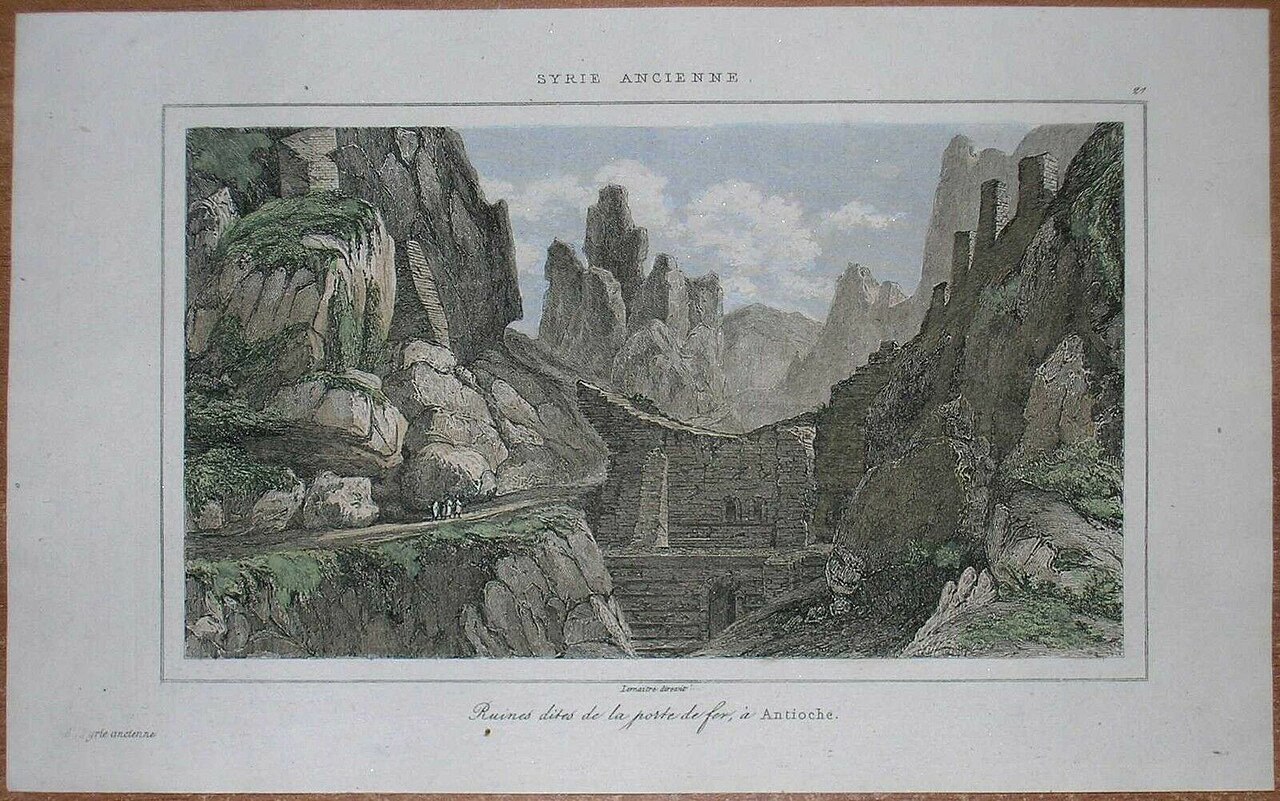
The Persians attacked where the walls ran over the high ground of Mount Silpius. Procopius says a section of the defences there was badly designed, too wide for the defenders to hold, and that when a wooden platform collapsed, panic spread. The Roman soldiers left the city by the gate towards Daphne and escaped. The young men of the circus factions fought on in the streets for a time, but the city was taken. Khosrow had the churches stripped of their gold and silver and the city burned. Procopius says the great church was spared; much of the rest was destroyed.
Bathing in the Mediterranean
From Antioch Khosrow went down to Seleucia Pieria, Antioch’s port, and bathed alone in the sea, offering a sacrifice to the sun. No Persian king had stood on the shore of the Mediterranean since the Achaemenids, and the gesture was meant to be seen. He visited the suburb of Daphne, then turned south to Apamea. There, Procopius says, he asked to watch chariot races in the hippodrome and, knowing that Justinian supported the Blue faction, made sure that the Green charioteer won.
The bishop of Apamea, Thomas, showed him the city’s relic of the True Cross, and Khosrow left it in the city. On the way home he collected payments from Chalcis, Edessa and other towns, accepted a promise of money from Justinian’s envoys in return for a truce, and then attacked Dara anyway on his way back, without success. Procopius records the visit to Carrhae (Harran), whose largely pagan population Khosrow left alone.
Weh-Antiok-Khusraw
The captives from Antioch were marched to Mesopotamia. Near Ctesiphon, Khosrow built a new city for them, which he called Weh-Antiok-Khusraw. Procopius says it had a bath and a hippodrome and that its people were placed under the king’s direct authority rather than any Persian governor. The Arab historians later called it al-Rumiya, “the Roman town”. al-Tabari repeats a story that the new city was laid out so exactly like the old that each captive found his own front door and went straight in, which is a legend about Khosrow’s power rather than a description of town planning.
Moving skilled populations was an old Sasanian practice: Shapur I had settled Roman prisoners at Gondishapur and Bishapur three centuries earlier. The captives of 540 added to the large Christian and Greek-speaking communities of Mesopotamia, whose story is told on Christians in the Sasanian Empire.
Consequences
For Justinian the raid was a humiliation, and Belisarius was sent east the next year. For Khosrow it was a triumph that later Persian and Arabic tradition remembered alongside his reforms, as part of the image of a just and victorious king (see Khosrow I Anushirvan). It was also the start of more than twenty years of fighting, including Khosrow’s failed siege of Edessa in 544 and the Lazic War in the Caucasus, which only ended with the Fifty Years’ Peace of 562.
Procopius wrote from the Roman side and in part to criticise Justinian’s government, so he dwells on the failures of Roman officials and the cruelty of the sack. His account cannot be checked in detail, but the main events, the payments, the fall of Antioch and the new city near Ctesiphon, are confirmed by Syriac and later Arabic writers.
- 532 The “Eternal Peace”
- Spring 540 Khosrow marches up the Euphrates; Sura stormed
- 540 Hierapolis and Beroea pay or are burned
- June 540 Antioch taken and burned
- Summer 540 Khosrow at Seleucia Pieria and Apamea
- 540 Return by Chalcis and Edessa; failed attack on Dara
- 541 Persians invade Lazica
Persian words from this page
| انطاکیه | Antâkiyeh | Antioch |
| خسرو انوشیروان | Khosrow Anushirvân | Khosrow I |
| تیسفون | Tisfun | Ctesiphon |
| رومیه | Rumiyeh | al-Rumiya, the captives’ city |
| اسیر | asir | captive |
| فرات | Forât | the Euphrates |
Sources and further reading
- Procopius, History of the Wars, Book II, chapters 5–14.
- al-Tabari, The History of al-Tabari, vol. 5, trans. C. E. Bosworth (SUNY Press, 1999), on Khosrow I’s wars and al-Rumiya.
- Glanville Downey, A History of Antioch in Syria from Seleucus to the Arab Conquest (Princeton University Press, 1961).
- Geoffrey Greatrex and Samuel N. C. Lieu, The Roman Eastern Frontier and the Persian Wars, Part II: AD 363–630 (Routledge, 2002).
- Encyclopaedia Iranica, “Khosrow I”.
Want to learn Persian? Get the free Starter Pack
Get the 14-page printable Starter Pack (all 32 letters, a 7-day reading plan, 100 core words and 20 survival phrases) and a short 5-email course. Free.
More in The Sasanian Empire (224–651 CE)
- The Origins of the Sasanian Family
- Ardashir I, Founder of the Sasanian Empire
- Firuzabad: Ardashir’s Round City
- Shapur I, King of Kings of Iran and Non-Iran
- Bishapur: Shapur’s City
- The Battle of Edessa and the Capture of Valerian
- The Ka’ba-ye Zartosht Inscription of Shapur I
- Mani and Manichaeism
- Hormizd I and Bahram I
- Kartir and the Zoroastrian Church
- Bahram II
- Narseh and the Peace of Nisibis
- Shapur II the Great
- Julian’s Invasion of Persia (363)
- Christians in the Sasanian Empire
- Shapur III and the Partition of Armenia
- Yazdegerd I
- Bahram V Gur
- Yazdegerd II
- The Battle of Avarayr (451)
- The Hephthalites and Iran’s Eastern Frontier
- Peroz I and the Hephthalite Disaster
- Kavad I
- Zamasp and Kavad’s Return
- Mazdak and the Mazdakite Movement
- Khosrow I Anushirvan the Just
- The Sasanian–Byzantine Wars of the 6th Century
- The Battle of Dara (530)
- Khosrow I Sacks Antioch (540)
- The Lazic War (541–562)
- The Reforms of Khosrow I
- The Academy of Gondishapur: History and Legend
- Borzuya, Chess and Kalila wa Dimna
- Taq Kasra: The Arch of Ctesiphon
- The Sasanian Conquest of Yemen
- The Sasanians and the Western Turks
- Hormizd IV
- Bahram Chobin’s Rebellion
- Khosrow II Parviz
- The Last Great War: Byzantium and Persia, 602–628
- The Siege of Constantinople (626)
- Heraclius Strikes Back
- Shirin: Queen and Legend
- Shahrbaraz, the General Who Became King
- Civil War and the Queens Boran and Azarmidokht
- Yazdegerd III, the Last Sasanian King
- The Sasanian Army
- Sasanian Society and the Class System
- Zoroastrianism under the Sasanians
- Sasanian Art: Silver, Reliefs and Silk
- The Sasanian Reliefs of Naqsh-e Rostam
- Taq-e Bostan
- Sasanian Cities, Palaces and Bridges
- Middle Persian (Pahlavi) Language and Literature
- Sasanian Coins and Silverwork
- Women in the Sasanian Empire
- Polo, Hunting and Games at the Sasanian Court
- The Sasanian Legacy