Satraps were the governors of the provinces of the Persian Empire, and the best known of them were powerful men in their own right: Oroetes and Artaphernes at Sardis, Tissaphernes and Pharnabazus in the age of the Peloponnesian War, Mausolus in Caria and Datames in Cappadocia. Their careers, mostly known from Greek writers, show how the empire really worked on its western frontier: loyalty to the king, rivalry between neighbours, and a constant temptation to act alone.

What made a satrap
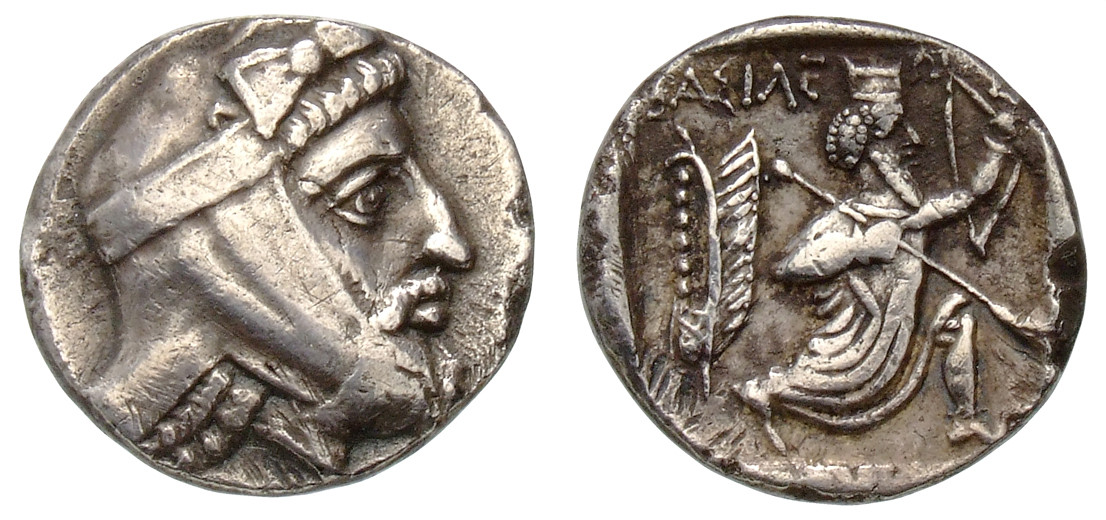
The word comes from Old Persian xšaçapāvan, “protector of the realm”, which Greeks turned into satrapēs. How Darius I organised the provinces, collected tribute and gave satraps their duties is covered on Darius’s reforms. This page is about the people. Most satraps came from the Persian high nobility, many were related to the king by blood or marriage, and in some provinces the office passed from father to son for generations. They ran their own courts, kept armies and parks, and by the 4th century often minted coins with their own portraits.
The king had ways to keep them in check: royal secretaries who reported to the court, garrison commanders appointed directly by the king, and, according to Greek writers, officials called the “King’s Eyes” who travelled the provinces. Historians debate how formal that last office was.
The first generation: Oroetes, Aryandes and Artaphernes
Oroetes of Sardis
Herodotus tells how Oroetes, satrap at Sardis under Cambyses, lured the tyrant Polycrates of Samos to the mainland with promises of gold and had him killed, around 522 BCE. During the civil war that brought Darius to power, Oroetes acted as if he were independent and murdered a royal messenger. Darius could not spare an army, so he sent a noble called Bagaeus with sealed letters. Read aloud to Oroetes’ Persian guards one by one, the letters first tested their obedience and finally ordered them to kill the satrap, which they did.
Aryandes of Egypt
Cambyses left Aryandes as governor of Egypt. Herodotus says Darius later had him executed for striking silver coins of unusual purity, as though competing with the king. The real reason was probably wider disloyalty, but the story shows how closely the king watched any sign of a satrap acting like a ruler.
Artaphernes, the king’s brother
Artaphernes, Darius’s brother, held Sardis during the Ionian Revolt, saw the lower city burned in 498 BCE and directed the reconquest. Afterwards he had the Ionian lands surveyed and set their tribute on that basis, an assessment that Herodotus says was still in force in his own day. His son, also called Artaphernes, commanded at Marathon.
Tissaphernes and Pharnabazus: rivals on the Aegean
At the end of the 5th century two satraps decided much of Greek politics. Tissaphernes held Sardis from around 413 BCE, and Pharnabazus II ruled Hellespontine Phrygia from Dascylium, as his father and grandfather had done. Both were ordered by Darius II to collect the tribute owed by the Greek cities and to help Sparta against Athens, and each tried to win the credit at the other’s expense. The story of their dealings with Sparta and Alcibiades is told on Darius II and the Peloponnesian War.
Tissaphernes is the classic Greek picture of a cunning Persian. He remained loyal to Artaxerxes II when the king’s brother Cyrus the Younger rebelled, warned the king and fought at Cunaxa in 401 BCE. Afterwards he invited the Greek mercenary generals to a meeting under a truce and had them seized and executed. War with Sparta followed, and after the Spartan king Agesilaus defeated Persian forces near Sardis in 395 BCE, Artaxerxes sent Tithraustes to replace him. Tissaphernes was beheaded. Greek writers say the queen mother Parysatis pressed for it, because she blamed him for the death of her favourite son Cyrus.
Pharnabazus comes off better in Greek sources. Xenophon describes his meeting with Agesilaus, the Persian in splendid clothes sitting down on the grass beside the plainly dressed Spartan and complaining that he had been a faithful ally only to see his parks and palaces burned. In 394 BCE he and the Athenian admiral Conon destroyed the Spartan fleet at Cnidus, and he paid for the rebuilding of the walls of Athens. He married Apame, a daughter of Artaxerxes II, and later led a long-planned but failed attempt to reconquer Egypt.
Mausolus: a local dynasty inside the empire
Caria in south-west Asia Minor was given in the 4th century to a local family, the Hecatomnids, rather than to Persians. Mausolus, satrap from 377 to 353 BCE, moved his capital to Halicarnassus, built it up as a Greek-style city and extended his power over neighbouring islands. He joined some of the revolts against the king but always returned to obedience. His tomb, finished by his sister and wife Artemisia, was so famous that every great tomb since has been called a mausoleum.
Datames and the age of revolts
Datames, the son of a Carian father and, according to Nepos, a Scythian mother, was a soldier who rose through royal service to govern Cappadocia. Cornelius Nepos wrote a Latin life of him that reads like an adventure story. In the 360s BCE he turned against Artaxerxes II and was murdered around 362 by a man pretending to join him. His revolt and those of his contemporaries are covered on the Great Satraps’ Revolt.
The last satraps: Artabazus and Mazaeus
Artabazus, of the same family as Pharnabazus, rebelled in the 350s, fled to the court of Philip II of Macedon, was pardoned and then stayed with Darius III until the king’s death. Alexander made him satrap of Bactria. Mazaeus governed Cilicia and Syria, commanded the Persian right wing at Gaugamela and then surrendered Babylon in 331 BCE. Alexander rewarded him with the governorship of the city, one of the first Persians he appointed to govern a province. Both careers show that for many noble families service to whoever ruled Asia mattered more than loyalty to one dynasty.
Persian words from this page
| ساتراپ | sâtrâp | satrap |
| شهربان | shahrbân | governor, the Persian word used for satrap |
| سارد | Sârd | Sardis |
| شاه | shâh | king |
Sources and further reading
- Herodotus, Histories 3.120–128 (Oroetes), 4.166 (Aryandes), 6.42 (Artaphernes).
- Thucydides, Book 8; Xenophon, Hellenica 3–4 and Anabasis 2.
- Cornelius Nepos, Datames.
- Encyclopaedia Britannica, “Satrap”.
- A. Kuhrt, The Persian Empire: A Corpus of Sources from the Achaemenid Period (2007).
- Pierre Briant, From Cyrus to Alexander: A History of the Persian Empire (2002).
Want to learn Persian? Get the free Starter Pack
Get the 14-page printable Starter Pack (all 32 letters, a 7-day reading plan, 100 core words and 20 survival phrases) and a short 5-email course. Free.
More in The Achaemenid Empire (550–330 BCE)
- Achaemenes, Teispes and the Early Persian Kings of Anshan
- Cyrus the Great: Birth, Legends and Rise to Power
- Cyrus Conquers Lydia: Croesus and the Battle of Thymbra
- The Persian Conquest of Ionia and Asia Minor
- Cyrus Takes Babylon (539 BCE)
- The Cyrus Cylinder
- Cyrus and the Return of the Jews
- The Death of Cyrus and the Massagetae
- Pasargadae: Cyrus’s Capital and Tomb
- The Tomb of Cyrus through History
- Cambyses II
- Cambyses Conquers Egypt: The Battle of Pelusium
- Bardiya and Gaumata: The Usurper Question
- Darius the Great Takes the Throne
- The Great Revolts of 522–521 BCE
- The Behistun Inscription
- The Persian Conquest of the Indus Valley
- Darius’s Scythian Campaign
- Darius’s Canal from the Nile to the Red Sea
- Darius’s Reforms: Satrapies, Taxes and Law
- The Royal Road and the Persian Postal System
- The Daric: Achaemenid Coinage and Economy
- The Ionian Revolt (499–493 BCE)
- The Greco-Persian Wars: An Overview
- Mardonius and the First Persian Expedition to Greece (492 BCE)
- The Battle of Marathon (490 BCE)
- The Death of Darius I and the Succession of Xerxes
- The Royal Tombs of Naqsh-e Rostam
- Xerxes I: King of Kings (486–465 BCE)
- Xerxes’ Invasion of Greece (480–479 BCE)
- The Battle of Thermopylae (480 BCE)
- The Battle of Artemisium (480 BCE)
- The Persian Capture of Athens (480–479 BCE)
- The Battle of Salamis (480 BCE)
- The Battle of Plataea and the End of the Invasion (479 BCE)
- The Palace of Darius at Susa
- Building Persepolis: How Darius and Xerxes Built Parsa
- The Persepolis Fortification and Treasury Tablets
- Herodotus and the Persians
- The Apadana Reliefs: Nations Bringing Gifts
- The Achaemenid Paradise Gardens
- The Persian Immortals and the Achaemenid Army
- The Achaemenid Navy
- Religion of the Achaemenid Kings
- Women of the Achaemenid Court
- Old Persian Language and Cuneiform
- Egypt under Persian Rule
- Babylon under Persian Rule
- Artaxerxes I
- The Peace of Callias
- Darius II and the Peloponnesian War
- Famous Satraps of the Persian Empire
- Artaxerxes II Mnemon
- Cyrus the Younger and the Battle of Cunaxa
- The King’s Peace (387 BCE)
- The Great Satraps’ Revolt
- Artaxerxes III and the Reconquest of Egypt
- Darius III, the Last Achaemenid King
- The Battle of the Granicus (334 BCE)
- The Battle of Issus (333 BCE)
- Alexander Takes Tyre, Gaza and Egypt (332 BCE)
- The Battle of Gaugamela (331 BCE)
- Ariobarzanes and the Battle of the Persian Gate
- The Burning of Persepolis (330 BCE)
- The Death of Darius III and Bessus
- The Legacy of the Achaemenid Empire