The Great Satraps’ Revolt is the name given to a wave of rebellions by Persian provincial governors in Asia Minor in the 360s BCE, late in the reign of Artaxerxes II. The leading figures were Datames in Cappadocia, Ariobarzanes in Hellespontine Phrygia, and, according to Diodorus, Orontes, Autophradates and Mausolus of Caria, with support from Egypt, Athens and Sparta. The revolts failed, mostly through betrayal, and most historians now doubt that they were ever one coordinated uprising.
| Date | c. 370s–359 BCE; peak around 366–360 BCE |
|---|---|
| King | Artaxerxes II (404–358 BCE) |
| Region | Anatolia (Cappadocia, Phrygia, Lydia, Caria, Cilicia) with links to Egypt |
| Leading rebels | Datames, Ariobarzanes, Orontes; Autophradates and Mausolus are named by Diodorus |
| Foreign support | Egypt (Pharaoh Tachos), Athens, Sparta (Agesilaus) |
| Result | Revolts crushed or abandoned; Datames and Ariobarzanes betrayed and killed |
| Main sources | Diodorus 15.90–93; Cornelius Nepos, Life of Datames |

Why the satraps were dangerous
By the fourth century BCE the satraps of Asia Minor were very different from the governors Darius I had appointed. Many held their provinces for decades and passed them to their sons. Some had their own courts and struck their own coins. Above all, they could hire Greek mercenaries, who were plentiful after decades of war in Greece, and so command armies that did not depend on the king’s levy.
The king’s methods also played a part. Artaxerxes II ruled the west by setting satraps against each other, rewarding loyalty and punishing failure. A satrap who lost favour at court, or heard that rivals were accusing him, might decide that rebellion was safer than obedience. The long reign was ending, the king’s sons were fighting over the succession, and Egypt, independent since about 404 BCE, was a ready ally for anyone who resisted the king.
Datames, the soldier who rebelled
The best-known rebel, thanks to a short biography by the Roman writer Cornelius Nepos, is Datames. His father, Camisares, was a Carian in Persian service. He began as a guard at court, distinguished himself in the war against the Cadusians, and was made governor of part of Cappadocia. Nepos tells how he captured the rebel ruler of Paphlagonia, a huge man named Thyus, and brought him before the king dressed in his own rich clothes, led like a wild animal.
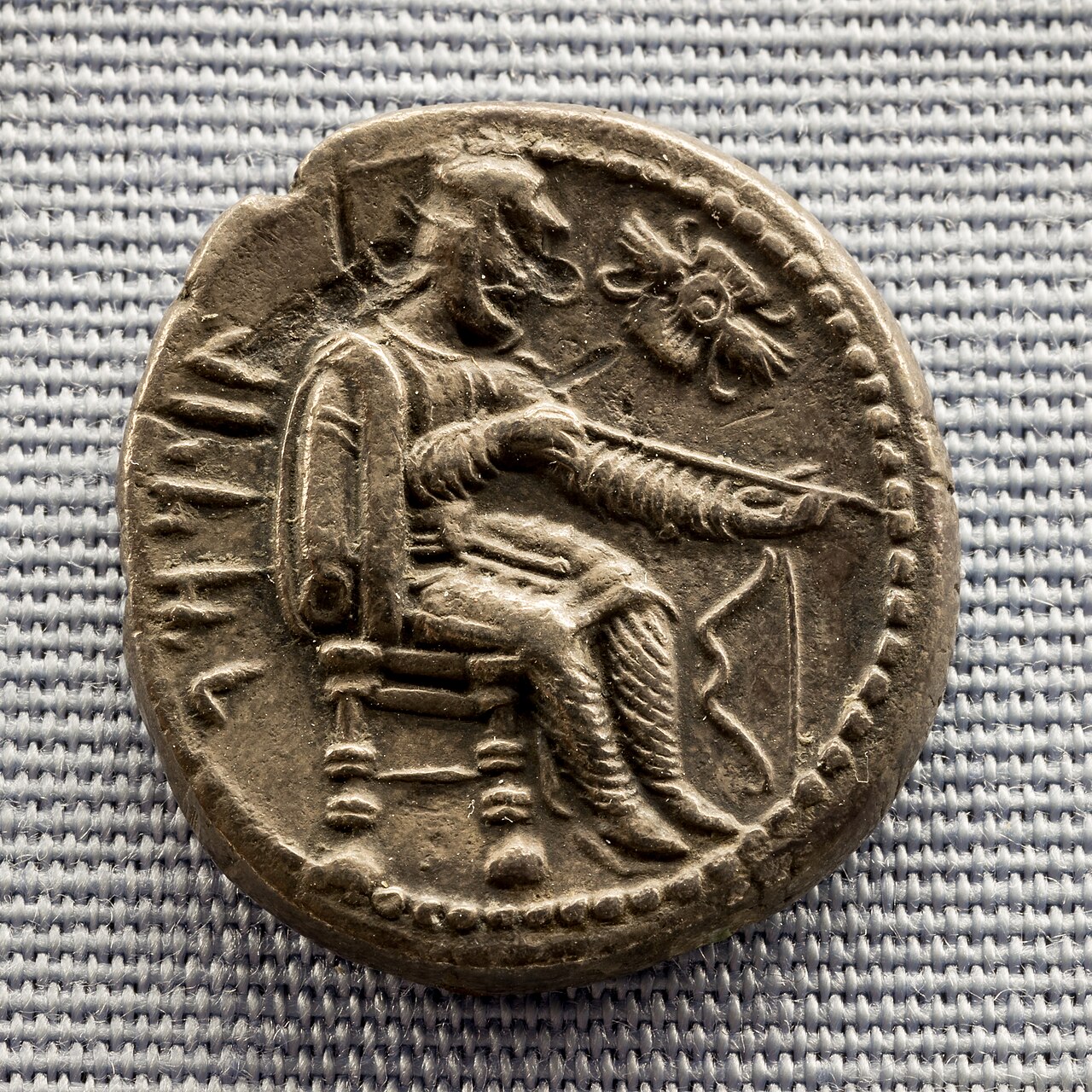
Around 373 BCE Datames was preparing the army for the reconquest of Egypt when he learned that enemies at court were working against him. He withdrew to Cappadocia and, sooner or later, broke openly with the king. Royal armies, including one under Autophradates, satrap of Lydia, failed to defeat him in the mountains of Cappadocia and Cilicia. Datames even struck silver coins in Cilicia in his own name. In the end he was killed by treachery, around 360 BCE: Mithridates, son of the rebel Ariobarzanes, pretended to join him and stabbed him at a meeting.
Ariobarzanes and the Greek connection
Ariobarzanes was satrap of Hellespontine Phrygia, with his seat at Dascylium. He had long been a friend of Athens and Sparta, and around 366 BCE he broke with the king. When Autophradates and Mausolus besieged him, an Athenian fleet under Timotheus and the old Spartan king Agesilaus came to his aid, in return for money and towns. Both Athens and Sparta, weak and short of funds, were glad to sell their services. Ariobarzanes was eventually betrayed by his own son Mithridates, the same man who killed Datames, and was handed over to the king and put to death.
Diodorus’s “great revolt”
The idea of a single Great Satraps’ Revolt comes from the Greek historian Diodorus of Sicily, writing in the first century BCE. Under the year 362/361 BCE, he describes a general uprising of the coastal peoples and satraps of Asia, allied with the Egyptian king Tachos, which cost the king half his revenues. The rebels chose Orontes, satrap of Mysia, as their leader and gave him money and an army, but Orontes betrayed them to the king in return for the governorship of the coast. Autophradates, says Diodorus, also went over to the king. In the same passage Diodorus counts Mausolus, the ruler of Caria later buried in the famous Mausoleum, among the rebels.
The Egyptian campaign of Tachos
The Egyptian pharaoh Tachos (Djedhor) used the confusion to take the war into Persian territory. In 360 BCE he invaded Phoenicia with a large army, Greek mercenaries under Agesilaus and a fleet under the Athenian Chabrias. The campaign collapsed when a relative, Nectanebo II, seized power in Egypt behind him. Tachos, abandoned by Agesilaus, fled to the Persian king, who received him.
One revolt or many?
Since a study by Michael Weiskopf in 1989, most historians read the evidence differently from Diodorus. The revolts were spread over more than a decade, began for different reasons, and often set rebels against each other: Autophradates and Mausolus fought Ariobarzanes before they were said to have joined him, and Mithridates destroyed both his father and Datames. There is no sign of a joint plan or a shared aim beyond survival. Diodorus seems to have gathered several local crises into one dramatic chapter, and his claim that the king lost half his income looks like exaggeration.
Seen this way, the revolts were the kind of trouble any large empire with powerful governors could expect, not proof that the Achaemenid state was breaking up. The satraps never threatened the heart of the empire, and none of them tried to make himself king.
Outcome
By the time Artaxerxes II died in 358 BCE, the rebels were dead, reconciled or bought off. Orontes and Mausolus kept their positions. His successor, Artaxerxes III, took the lesson to heart: an ancient commentary on Demosthenes says he ordered the satraps of the coast to disband their mercenary armies. The satrap Artabazus, son of Pharnabazus, rebelled against him in the 350s and fled to Macedon, where he lived for some years at the court of Philip II, before being pardoned. Within a generation Artaxerxes III had restored royal authority and reconquered Egypt.
For individual satraps of this period and earlier, see Famous Satraps of the Persian Empire; for the king and his reign, Artaxerxes II Mnemon.
Persian words from this page
| شورش | shuresh | revolt |
| شهربان | shahrbân | satrap |
| خیانت | khiyânat | betrayal |
| سکه | sekkeh | coin |
| مزدور | mozdur | mercenary |
| مصر | Mesr | Egypt |
Sources and further reading
- Diodorus Siculus, Library of History, Book 15.90–93.
- Cornelius Nepos, Life of Datames.
- Xenophon, Cyropaedia 8.8.4 (on Mithridates and his father).
- Michael Weiskopf, The So-Called “Great Satraps’ Revolt”, 366–360 B.C. (Historia Einzelschriften 63, Stuttgart, 1989).
- Pierre Briant, From Cyrus to Alexander: A History of the Persian Empire (2002).
- Encyclopaedia Iranica, “Datames”.
Want to learn Persian? Get the free Starter Pack
Get the 14-page printable Starter Pack (all 32 letters, a 7-day reading plan, 100 core words and 20 survival phrases) and a short 5-email course. Free.
More in The Achaemenid Empire (550–330 BCE)
- Achaemenes, Teispes and the Early Persian Kings of Anshan
- Cyrus the Great: Birth, Legends and Rise to Power
- Cyrus Conquers Lydia: Croesus and the Battle of Thymbra
- The Persian Conquest of Ionia and Asia Minor
- Cyrus Takes Babylon (539 BCE)
- The Cyrus Cylinder
- Cyrus and the Return of the Jews
- The Death of Cyrus and the Massagetae
- Pasargadae: Cyrus’s Capital and Tomb
- The Tomb of Cyrus through History
- Cambyses II
- Cambyses Conquers Egypt: The Battle of Pelusium
- Bardiya and Gaumata: The Usurper Question
- Darius the Great Takes the Throne
- The Great Revolts of 522–521 BCE
- The Behistun Inscription
- The Persian Conquest of the Indus Valley
- Darius’s Scythian Campaign
- Darius’s Canal from the Nile to the Red Sea
- Darius’s Reforms: Satrapies, Taxes and Law
- The Royal Road and the Persian Postal System
- The Daric: Achaemenid Coinage and Economy
- The Ionian Revolt (499–493 BCE)
- The Greco-Persian Wars: An Overview
- Mardonius and the First Persian Expedition to Greece (492 BCE)
- The Battle of Marathon (490 BCE)
- The Death of Darius I and the Succession of Xerxes
- The Royal Tombs of Naqsh-e Rostam
- Xerxes I: King of Kings (486–465 BCE)
- Xerxes’ Invasion of Greece (480–479 BCE)
- The Battle of Thermopylae (480 BCE)
- The Battle of Artemisium (480 BCE)
- The Persian Capture of Athens (480–479 BCE)
- The Battle of Salamis (480 BCE)
- The Battle of Plataea and the End of the Invasion (479 BCE)
- The Palace of Darius at Susa
- Building Persepolis: How Darius and Xerxes Built Parsa
- The Persepolis Fortification and Treasury Tablets
- Herodotus and the Persians
- The Apadana Reliefs: Nations Bringing Gifts
- The Achaemenid Paradise Gardens
- The Persian Immortals and the Achaemenid Army
- The Achaemenid Navy
- Religion of the Achaemenid Kings
- Women of the Achaemenid Court
- Old Persian Language and Cuneiform
- Egypt under Persian Rule
- Babylon under Persian Rule
- Artaxerxes I
- The Peace of Callias
- Darius II and the Peloponnesian War
- Famous Satraps of the Persian Empire
- Artaxerxes II Mnemon
- Cyrus the Younger and the Battle of Cunaxa
- The King’s Peace (387 BCE)
- The Great Satraps’ Revolt
- Artaxerxes III and the Reconquest of Egypt
- Darius III, the Last Achaemenid King
- The Battle of the Granicus (334 BCE)
- The Battle of Issus (333 BCE)
- Alexander Takes Tyre, Gaza and Egypt (332 BCE)
- The Battle of Gaugamela (331 BCE)
- Ariobarzanes and the Battle of the Persian Gate
- The Burning of Persepolis (330 BCE)
- The Death of Darius III and Bessus
- The Legacy of the Achaemenid Empire