The Battle of the Persian Gate was the last stand of a Persian army in the homeland of the Achaemenid kings. In January 330 BCE Ariobarzanes, satrap of Persis, blocked a narrow pass in the Zagros mountains on the road to Persepolis and threw back Alexander’s first attack. The Macedonians broke through only after a guide led them over the mountains to the defenders’ rear.
| Date | About January 330 BCE |
|---|---|
| Place | A pass in the Zagros, most likely Tang-e Meyran north-east of modern Yasuj, on the border of Kohgiluyeh and Boyer-Ahmad and Fars provinces |
| Persian commander | Ariobarzanes, satrap of Persis |
| Persian numbers | 40,000 infantry and 700 cavalry (Arrian); 25,000 infantry (Curtius, Diodorus); probably far fewer in reality |
| Result | Macedonian victory; road to Persepolis opened |
| Persian name | دروازه پارس (Darvâze-ye Pârs) |
Defending the homeland
After Gaugamela, Babylon and Susa surrendered without a fight. Persis, the province of the Persians themselves and home of the royal centres at Persepolis and Pasargadae, was different. Its satrap Ariobarzanes was probably the same man whom Arrian names among the commanders at Gaugamela. While Darius III was in Media trying to raise another army, Ariobarzanes prepared to hold the mountain road from Susa to Persepolis.
Alexander divided his army. Parmenion took the baggage and the heavy troops along the easier road to the south-east. Alexander led the fastest infantry and cavalry straight into the mountains, after first crushing the Uxians, hill peoples who demanded a toll from anyone using their passes, including, they said, the Persian king.
The trap in the pass
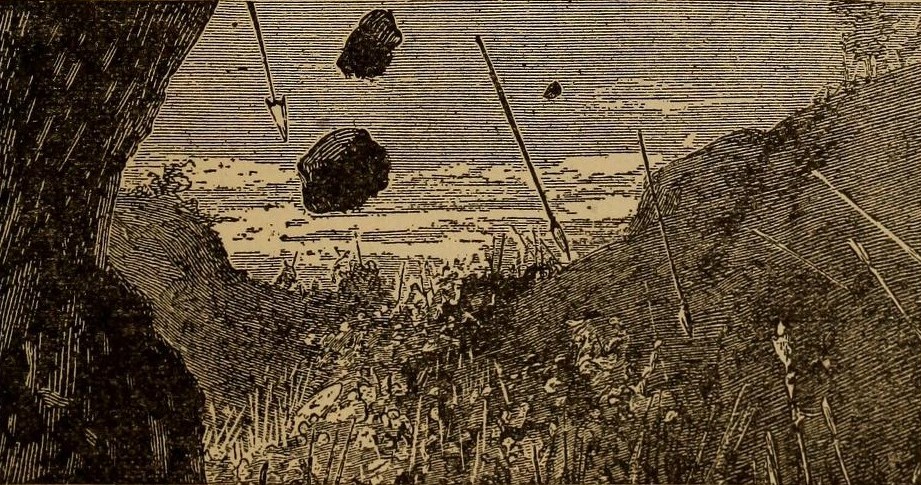
Ariobarzanes chose a place where the road ran through a long, narrow valley and built a wall across it. His men waited on the slopes above. The ancient writers say there was snow on the ground. When the Macedonians entered the defile, the Persians attacked from the heights with arrows, sling stones and boulders rolled down the slopes. Curtius describes men crushed in their ranks, unable to strike back. Alexander had to pull his troops back several kilometres, and Curtius says he even left his dead unburied, which for a Greek or Macedonian commander was a serious disgrace. It was one of the few clear reverses of his career.

The mountain path
Prisoners told Alexander there was another way round. Arrian simply says a guide was found. Curtius gives a fuller story: the guide was a Lycian who had been taken captive years before and worked as a herdsman in these mountains, and who spoke both Greek and Persian. The parallel with Ephialtes, who led the Persians round the Greek position at Thermopylae in 480 BCE, was not lost on ancient writers, and some modern scholars suspect the story was shaped to echo it.
Alexander left Craterus in the camp with part of the army and orders to keep the usual number of fires burning, so the Persians would think nothing had changed. He himself set off at night with picked troops along a difficult track through the snow. At dawn on the second day his men surprised the Persian outposts and came down behind the wall. At the agreed trumpet signal Craterus attacked from the front. Caught between the two forces, the Persians were cut down or driven over the cliffs.
The fate of Ariobarzanes
The sources disagree about how Ariobarzanes died. Arrian says he escaped into the mountains with a few horsemen. Curtius says he broke out with forty cavalry and some 5,000 infantry, tried to reach Persepolis and was shut out of the city, and then died fighting with his men. Diodorus has the defenders destroyed in the pass. The detail in Curtius may be romantic, but the gates of Persepolis really were closed to him: Tiridates, the Persian official in charge of the treasury there, had already sent word to Alexander that he would hand over the city and its wealth if Alexander arrived quickly.
That message explains Alexander’s haste after the battle. He rode on with the cavalry and reached Persepolis before the garrison could plunder the treasure. What happened there is told on the burning of Persepolis.
Locating the Persian Gate
The ancient writers give only rough directions, and several passes have been proposed. Earlier travellers and historians placed it at other passes on the mountain road between Susa and Persepolis. Field research by Henry Speck, published in 2002, and by the historian Jona Lendering supports Tang-e Meyran, a gorge north-east of Yasuj through which Iran’s Highway 78 now runs. Local scholars have argued for other sites nearby, and the question is not closed.
Persian sources and Iranian memory
As with every battle of this war, no Persian account survives. We know of Ariobarzanes only through Arrian, Curtius and Diodorus, who drew on the reports of Alexander’s officers. They still let him appear as a capable commander who gave Alexander real trouble.
In modern Iran Ariobarzanes has become a national hero, the man who defended Persis when others surrendered. Popular retellings add a sister, Youtab, who is said to have fought and died beside him. She appears in no ancient source and belongs to modern patriotic storytelling. The historical Ariobarzanes needs no additions: a satrap who chose to fight for his province with no chance of help from the king.
Persian words from this page
| آریوبرزن | Âriobarzan | Ariobarzanes |
| دروازه | darvâze | gate |
| پارس | Pârs | Persis, the Persian homeland (modern Fars) |
| تنگ | tang | gorge, narrow pass |
| زاگرس | Zâgros | the Zagros mountains |
| برف | barf | snow |
Sources and further reading
- Arrian, Anabasis of Alexander 3.17 to 3.18
- Quintus Curtius Rufus, History of Alexander 5.3 to 5.4; Diodorus of Sicily 17.68
- Henry Speck, “Alexander at the Persian Gates: A Study in Historiography and Topography”, American Journal of Ancient History n.s. 1.1 (2002)
- Jona Lendering, “Persian Gate (330 BCE)“, Livius.org
- A. B. Bosworth, Conquest and Empire: The Reign of Alexander the Great (1988)
Want to learn Persian? Get the free Starter Pack
Get the 14-page printable Starter Pack (all 32 letters, a 7-day reading plan, 100 core words and 20 survival phrases) and a short 5-email course. Free.
More in The Achaemenid Empire (550–330 BCE)
- Achaemenes, Teispes and the Early Persian Kings of Anshan
- Cyrus the Great: Birth, Legends and Rise to Power
- Cyrus Conquers Lydia: Croesus and the Battle of Thymbra
- The Persian Conquest of Ionia and Asia Minor
- Cyrus Takes Babylon (539 BCE)
- The Cyrus Cylinder
- Cyrus and the Return of the Jews
- The Death of Cyrus and the Massagetae
- Pasargadae: Cyrus’s Capital and Tomb
- The Tomb of Cyrus through History
- Cambyses II
- Cambyses Conquers Egypt: The Battle of Pelusium
- Bardiya and Gaumata: The Usurper Question
- Darius the Great Takes the Throne
- The Great Revolts of 522–521 BCE
- The Behistun Inscription
- The Persian Conquest of the Indus Valley
- Darius’s Scythian Campaign
- Darius’s Canal from the Nile to the Red Sea
- Darius’s Reforms: Satrapies, Taxes and Law
- The Royal Road and the Persian Postal System
- The Daric: Achaemenid Coinage and Economy
- The Ionian Revolt (499–493 BCE)
- The Greco-Persian Wars: An Overview
- Mardonius and the First Persian Expedition to Greece (492 BCE)
- The Battle of Marathon (490 BCE)
- The Death of Darius I and the Succession of Xerxes
- The Royal Tombs of Naqsh-e Rostam
- Xerxes I: King of Kings (486–465 BCE)
- Xerxes’ Invasion of Greece (480–479 BCE)
- The Battle of Thermopylae (480 BCE)
- The Battle of Artemisium (480 BCE)
- The Persian Capture of Athens (480–479 BCE)
- The Battle of Salamis (480 BCE)
- The Battle of Plataea and the End of the Invasion (479 BCE)
- The Palace of Darius at Susa
- Building Persepolis: How Darius and Xerxes Built Parsa
- The Persepolis Fortification and Treasury Tablets
- Herodotus and the Persians
- The Apadana Reliefs: Nations Bringing Gifts
- The Achaemenid Paradise Gardens
- The Persian Immortals and the Achaemenid Army
- The Achaemenid Navy
- Religion of the Achaemenid Kings
- Women of the Achaemenid Court
- Old Persian Language and Cuneiform
- Egypt under Persian Rule
- Babylon under Persian Rule
- Artaxerxes I
- The Peace of Callias
- Darius II and the Peloponnesian War
- Famous Satraps of the Persian Empire
- Artaxerxes II Mnemon
- Cyrus the Younger and the Battle of Cunaxa
- The King’s Peace (387 BCE)
- The Great Satraps’ Revolt
- Artaxerxes III and the Reconquest of Egypt
- Darius III, the Last Achaemenid King
- The Battle of the Granicus (334 BCE)
- The Battle of Issus (333 BCE)
- Alexander Takes Tyre, Gaza and Egypt (332 BCE)
- The Battle of Gaugamela (331 BCE)
- Ariobarzanes and the Battle of the Persian Gate
- The Burning of Persepolis (330 BCE)
- The Death of Darius III and Bessus
- The Legacy of the Achaemenid Empire