Darius I, son of Hystaspes, became king of Persia in the autumn of 522 BCE after he and six other nobles killed the ruler they called Gaumata in a Median fortress. He was not the son of a king, and his claim rested on a distant line of descent from Achaemenes, on marriages into Cyrus’s family and on the story he had carved at Behistun. He went on to rule for 36 years, until 486 BCE.
| Born | c. 550 BCE (Herodotus 1.209 makes him about 20 when Cyrus died in 530) |
|---|---|
| Father | Hystaspes (Old Persian Vishtaspa), son of Arsames |
| Became king | 29 September 522 BCE, the date of Gaumata’s death in the Behistun text |
| Reigned | 522–486 BCE |
| Old Persian name | Darayavaush, often explained as “he who holds firm the good” |
| Persian name | داریوش Dâriush |
A young officer from a side branch
Before 522 Darius was not an obvious candidate for the throne. Herodotus says he served Cambyses in Egypt as a spear-bearer, a post of honour in the king’s guard, and tells how a Samian exile, Syloson, gave him a red cloak there, a favour Darius later repaid by making Syloson ruler of Samos. His father Hystaspes was a man of standing: Herodotus calls him governor of Persis, and the Behistun inscription later shows him commanding troops in Parthia.
Darius traced his family back to Achaemenes through Ariaramnes and Arsames, his great-grandfather and grandfather. Cyrus the Great came from another branch of the same family, through Teispes. The relationship between the two lines is explained on Achaemenes, Teispes and the early Persian kings of Anshan. Gold tablets in the names of Ariaramnes and Arsames, said to have been found at Hamadan, would make them kings, but most scholars think they were made later, probably to support Darius’s line.
The conspiracy of the seven
Both Darius and Herodotus say that seven Persians acted together. The lists agree on six names and differ on one:
- Behistun: Intaphernes, Otanes, Gobryas, Hydarnes, Megabyzus and Ardumanish, with Darius.
- Herodotus: the same, but with Aspathines instead of Ardumanish.
In Herodotus, Otanes discovers the fraud and starts the plot, and Darius joins last, just arrived from Persis, then pushes the others to act at once before they are betrayed. They enter the palace, the guards let them pass because they are nobles, and they kill the Magian and his brother in a dark room. Darius hesitates to strike in case he hits Gobryas, who is wrestling the Magian, and Gobryas tells him to strike through both of them. The Behistun text is simpler: Darius “with a few men” killed Gaumata at Sikayauvati in Media.
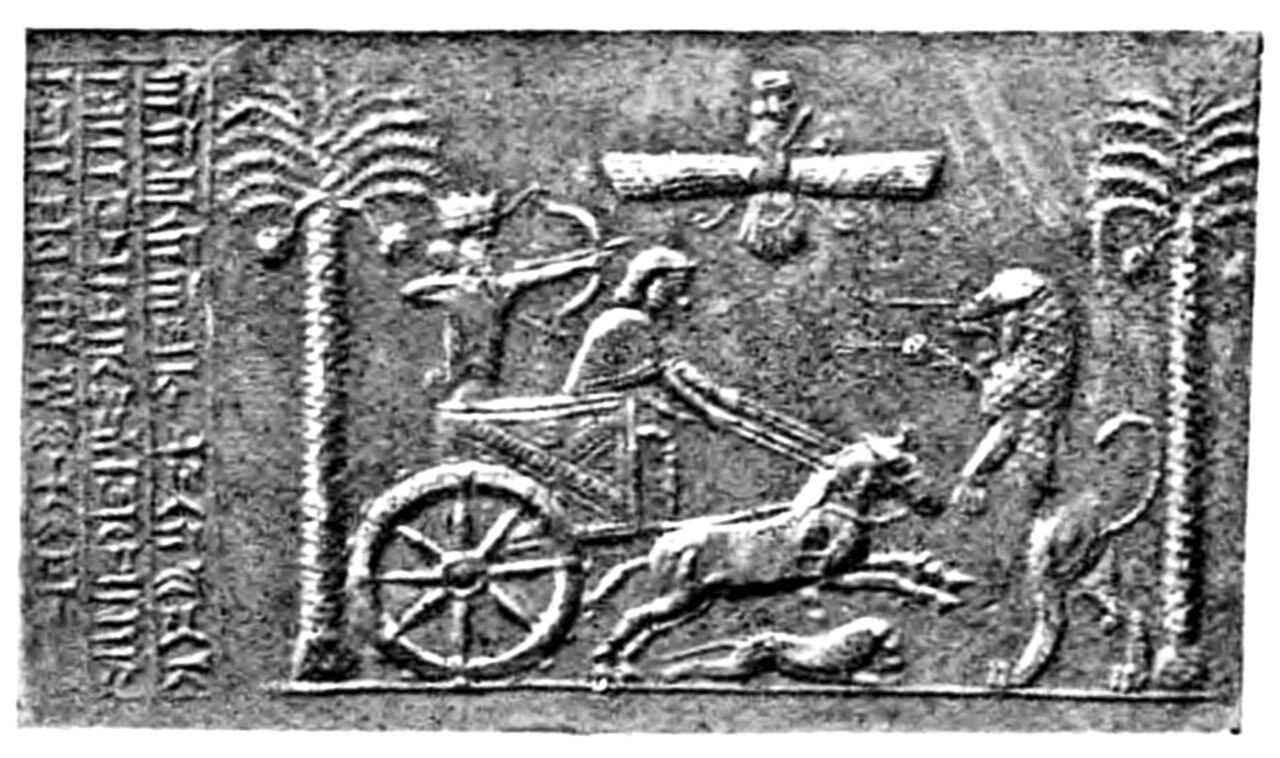

The constitutional debate
Herodotus then describes a famous debate among the conspirators about the best form of government. Otanes argues for rule by the people, Megabyzus for rule by a few of the best men, and Darius for monarchy, on the grounds that one excellent ruler is best and that Persia had been freed by one man. Four of the seven vote with Darius. Herodotus insists the debate really happened, adding that some Greeks did not believe him. Most modern historians see it as a Greek political discussion of the 5th century placed in Persian mouths.
Otanes withdrew from the contest for the throne on condition that he and his descendants would not have to obey the king, except as they chose. The others agreed that each of the seven could enter the king’s presence without being announced, unless he was with a woman, and that the king would take wives only from their families.
The horse that neighed first
The best-known story of Darius’s accession is about a horse. According to Herodotus, the remaining six agreed to ride out of the city at dawn, and the one whose horse neighed first after sunrise would be king. Darius’s groom, Oebares, arranged that his master’s stallion would be excited near a mare he knew. Herodotus gives two versions of the trick. In both, Darius’s horse neighed, thunder and lightning came from a clear sky as if by divine sign, and the other five dismounted and bowed to him.
Herodotus adds that Darius set up a stone carving of a horseman with an inscription crediting his horse and his groom for the kingship. No such monument has been found. The story may have grown from Persian royal values, in which horsemanship was a mark of a nobleman, or from a misunderstood Persian image. It sits beside, not against, Darius’s own claim that Ahura Mazda gave him the kingdom.
Making a usurper legitimate
Whatever the truth about Bardiya and Gaumata, Darius worked hard to present himself as the rightful heir. Several measures stand out:
- Genealogy. At Behistun he lists his ancestors back to Achaemenes and says that eight of his family had been kings before him, and that he was the ninth. The count is hard to reconcile with what is known and seems to fold Cyrus’s branch into his own.
- Marriages. He married Cyrus’s daughters Atossa and Artystone, Bardiya’s daughter Parmys, and Otanes’s daughter Phaidime, who had been the wife of both Cambyses and the Magian king. Their son Xerxes, born to Atossa, was a grandson of Cyrus.
- Religion. In every inscription Darius says he became king “by the favour of Ahura Mazda” and calls his enemies followers of “the Lie”. See Religion of the Achaemenid kings.
- Publicity. The Behistun text was copied and sent to the provinces. A fragment of an Aramaic version on papyrus was found at Elephantine in Egypt.
- Building the name “Achaemenid”. Darius seems to have been the one who made Achaemenes the founder of the royal house, which tied Cyrus’s family and his own together.
A shaky start
Killing Gaumata did not make Darius master of the empire. Within weeks Elam and Babylon rebelled, and soon Media, Armenia, Parthia, Margiana and Persia itself followed. Darius spent the next year fighting, a story told on the Great Revolts of 522–521 BCE. He also turned on one of his fellow conspirators: Herodotus says Intaphernes was executed, with most of his family, after he mutilated palace guards who had kept him from the king.
By around 519 BCE Darius was secure, and the reign that followed reshaped the empire’s government, roads, coinage and art. The site’s general introduction to the Persian Empire places him among the other kings.
Persian words from this page
| داریوش | Dâriush | Darius |
| ویشتاسپ | Vishtâsp | Hystaspes |
| هخامنش | Hakhâmanesh | Achaemenes |
| اسب | asb | horse |
| هفت | haft | seven |
| شاهنشاه | shâhanshâh | king of kings |
Sources and further reading
- Behistun inscription, column I and column IV, sections 68–69 (the list of helpers).
- Herodotus, Histories, Book 3, chapters 68–88, 118–119 and 139–141.
- Pierre Briant, From Cyrus to Alexander (2002), chapter 3.
- Amélie Kuhrt, The Persian Empire: A Corpus of Sources (2007).
- Encyclopaedia Iranica, “Darius iii. Darius I the Great”.
Want to learn Persian? Get the free Starter Pack
Get the 14-page printable Starter Pack (all 32 letters, a 7-day reading plan, 100 core words and 20 survival phrases) and a short 5-email course. Free.
More in The Achaemenid Empire (550–330 BCE)
- Achaemenes, Teispes and the Early Persian Kings of Anshan
- Cyrus the Great: Birth, Legends and Rise to Power
- Cyrus Conquers Lydia: Croesus and the Battle of Thymbra
- The Persian Conquest of Ionia and Asia Minor
- Cyrus Takes Babylon (539 BCE)
- The Cyrus Cylinder
- Cyrus and the Return of the Jews
- The Death of Cyrus and the Massagetae
- Pasargadae: Cyrus’s Capital and Tomb
- The Tomb of Cyrus through History
- Cambyses II
- Cambyses Conquers Egypt: The Battle of Pelusium
- Bardiya and Gaumata: The Usurper Question
- Darius the Great Takes the Throne
- The Great Revolts of 522–521 BCE
- The Behistun Inscription
- The Persian Conquest of the Indus Valley
- Darius’s Scythian Campaign
- Darius’s Canal from the Nile to the Red Sea
- Darius’s Reforms: Satrapies, Taxes and Law
- The Royal Road and the Persian Postal System
- The Daric: Achaemenid Coinage and Economy
- The Ionian Revolt (499–493 BCE)
- The Greco-Persian Wars: An Overview
- Mardonius and the First Persian Expedition to Greece (492 BCE)
- The Battle of Marathon (490 BCE)
- The Death of Darius I and the Succession of Xerxes
- The Royal Tombs of Naqsh-e Rostam
- Xerxes I: King of Kings (486–465 BCE)
- Xerxes’ Invasion of Greece (480–479 BCE)
- The Battle of Thermopylae (480 BCE)
- The Battle of Artemisium (480 BCE)
- The Persian Capture of Athens (480–479 BCE)
- The Battle of Salamis (480 BCE)
- The Battle of Plataea and the End of the Invasion (479 BCE)
- The Palace of Darius at Susa
- Building Persepolis: How Darius and Xerxes Built Parsa
- The Persepolis Fortification and Treasury Tablets
- Herodotus and the Persians
- The Apadana Reliefs: Nations Bringing Gifts
- The Achaemenid Paradise Gardens
- The Persian Immortals and the Achaemenid Army
- The Achaemenid Navy
- Religion of the Achaemenid Kings
- Women of the Achaemenid Court
- Old Persian Language and Cuneiform
- Egypt under Persian Rule
- Babylon under Persian Rule
- Artaxerxes I
- The Peace of Callias
- Darius II and the Peloponnesian War
- Famous Satraps of the Persian Empire
- Artaxerxes II Mnemon
- Cyrus the Younger and the Battle of Cunaxa
- The King’s Peace (387 BCE)
- The Great Satraps’ Revolt
- Artaxerxes III and the Reconquest of Egypt
- Darius III, the Last Achaemenid King
- The Battle of the Granicus (334 BCE)
- The Battle of Issus (333 BCE)
- Alexander Takes Tyre, Gaza and Egypt (332 BCE)
- The Battle of Gaugamela (331 BCE)
- Ariobarzanes and the Battle of the Persian Gate
- The Burning of Persepolis (330 BCE)
- The Death of Darius III and Bessus
- The Legacy of the Achaemenid Empire