In 522 BCE, while Cambyses II was away in Egypt, a man ruling as Bardiya, the younger son of Cyrus the Great, was accepted as king across much of the Persian Empire. Within seven months he was killed by seven Persian nobles led by Darius, who then declared that the king had really been a Magian priest called Gaumata impersonating a prince Cambyses had secretly murdered. Whether that is true is one of the oldest open questions in Persian history.
| Rising | 11 March 522 BCE (14 Viyakhna in the Behistun calendar) |
|---|---|
| Took the kingship | 1 July 522 BCE (9 Garmapada) |
| Killed | 29 September 522 BCE (10 Bagayadi), at the fortress of Sikayauvati in Media |
| Names | Bardiya (Old Persian); Smerdis (Herodotus); Tanyoxarkes (Ctesias); Mardos (Aeschylus, Persians) |
| Main sources | Behistun inscription, columns I.10–14; Herodotus 3.30, 3.61–79; Ctesias; Babylonian dated tablets |
Darius’s version at Behistun
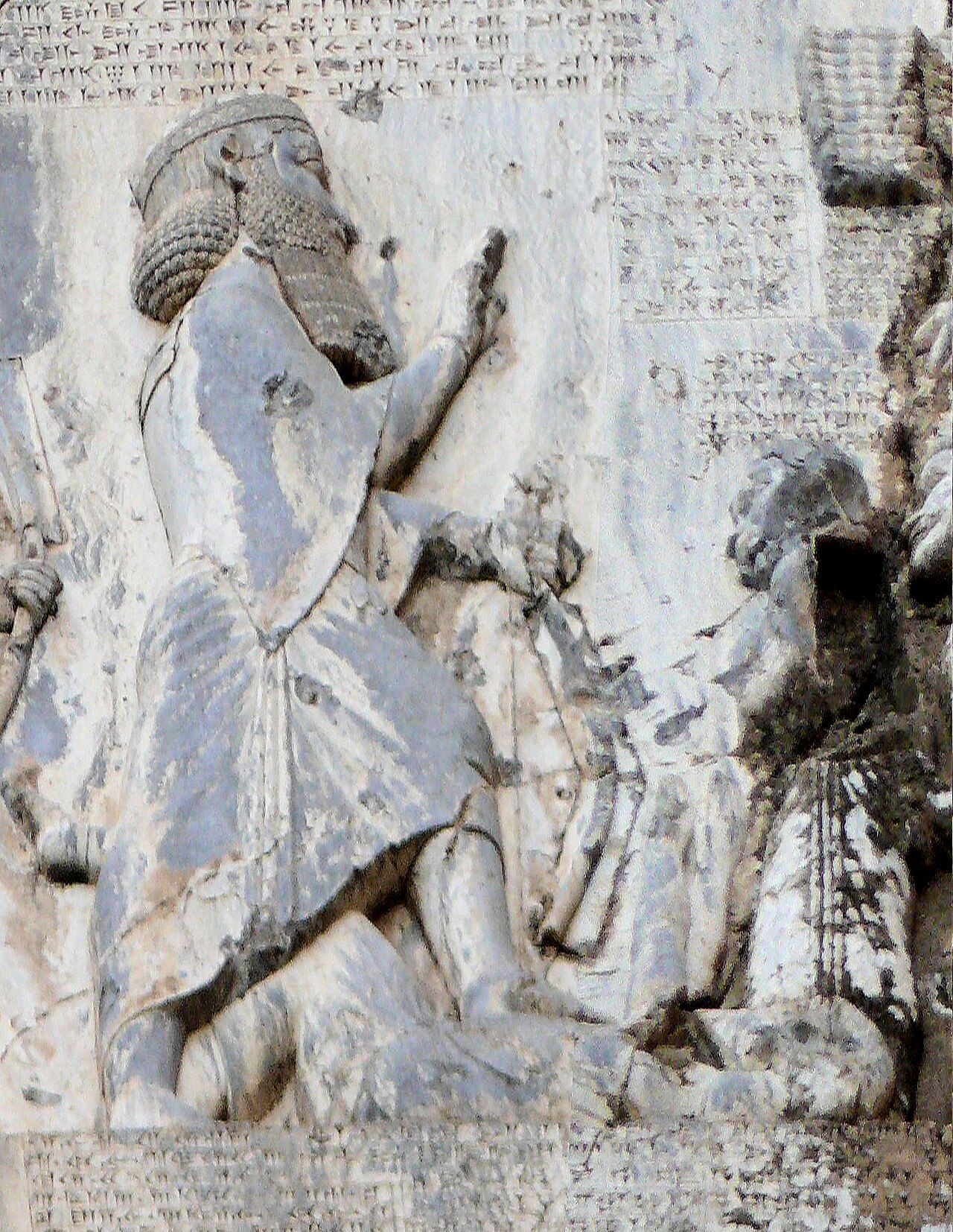
The fullest and earliest account is Darius’s own, carved on the cliff at Behistun within a year or two of the events. It is short and firm. Cambyses, it says, had a brother Bardiya “of the same mother, of the same father”, and killed him before setting out for Egypt, and the people did not know the brother was dead. While the king was abroad “the Lie became great” in the land. Then a Magian named Gaumata rose up at a place called Paishiyauvada, at a mountain called Arakadri, and told the people: “I am Bardiya, son of Cyrus, brother of Cambyses.” Persia, Media and the other lands went over to him.
No one, Darius says, dared to say anything against Gaumata, because he killed many who had known the real Bardiya. Then Darius, with a few men, killed him in Media and “took the kingdom from him”. He adds that Gaumata had destroyed places of worship and seized pastures, herds and household workers from the people, and that he, Darius, restored them.

Herodotus: the magus with no ears
Herodotus, writing about seventy years later, tells a longer and more novelistic story with the same core. Cambyses dreamed that his brother Smerdis sat on the royal throne, so he sent his trusted courtier Prexaspes to kill him. Back in Persia, a magus named Patizeithes, left in charge of the palace, put his own brother on the throne, who happened to look like the dead prince and even shared his name.
The fraud was uncovered by Otanes, a nobleman, because the new king never left the citadel or received leading Persians. Otanes’s daughter Phaidime was one of the royal wives. He asked her to feel her husband’s head while he slept: Cyrus had once cut off the magus’s ears as a punishment. She found he had none. Otanes then recruited six other nobles, and Prexaspes, who knew the truth, announced it from a tower and threw himself down. Herodotus also says the false Smerdis was popular, because he freed the subject peoples from military service and tribute for three years, and that people in Asia mourned him.
Other ancient versions
The Greek doctor Ctesias, who lived at the Persian court around 400 BCE, gives the prince the name Tanyoxarkes and the impostor the name Sphendadates. The Roman-era writer Justin has yet other names. All of them keep the idea of a Magian double, which shows how widely Darius’s story had spread, but they do not offer independent confirmation of it.
What the Babylonian tablets add
In Babylonia, business documents were dated by the reigning king. Tablets dated to “Barziya, king of Babylon, king of the lands” appear from the spring of 522 BCE, while Cambyses was still alive, and continue until the autumn. They show that the new ruler was recognised in the empire’s richest province quickly and without visible resistance. They cannot tell us who he really was.
The case for doubt
Many modern historians find Darius’s story hard to accept at face value. The main arguments are these:
- Darius was the one who benefited. He was not the son of a king, and a story that the reigning king was an impostor turned a palace killing into a rescue of the dynasty.
- The murder of the real Bardiya was secret, according to Darius himself. It is odd that a substitute could fool the royal family and the court for months.
- The physical resemblance, the shared name and the earless head look like features of a folk tale.
- Darius took Bardiya’s daughter Parmys as a wife, along with Cyrus’s daughters Atossa and Artystone, which fits a usurper building a claim to Cyrus’s line.
- Within a few months, a second “Bardiya” (Vahyazdata) rose in Persia itself, suggesting that many Persians believed the son of Cyrus was alive or wished he were.
The case for Darius
Other scholars, among them Muhammad Dandamaev, accepted the core of Darius’s account. They point out that the inscription was published across the empire, in several languages and on papyrus copies, while people who had known Bardiya were still alive. The Magi were an important Median priestly group, and a Median-backed attempt on the throne is not unlikely in itself. Herodotus’s report that Bardiya’s government cancelled tribute could also fit a ruler who needed support after seizing power, whoever he was.
Where things stand
The question cannot be settled with the evidence we have, since every surviving version goes back, directly or indirectly, to Darius’s side. Pierre Briant and many others now treat the impostor story as unproven royal propaganda while accepting that it cannot be disproved. What is clear is the result: a king recognised throughout the empire was killed by a group of nobles, and the man who emerged as king had to fight for more than a year to hold the throne. The conspiracy is told on Darius the Great Takes the Throne, and the wars that followed on the Great Revolts of 522–521 BCE.
Herodotus adds that Persians later held a yearly festival he calls the Magophonia, “the killing of the Magi”, when no Magian dared appear in public. Darius’s own inscription, the source of all this, is described on the Behistun Inscription page.
Persian words from this page
| بردیا | Bardiyâ | Bardiya |
| مغ | mogh | magus, Magian priest |
| دروغ | dorugh | lie (Old Persian drauga) |
| برادر | barâdar | brother |
| بیستون | Bisotun | Behistun |
| گوش | gush | ear |
Sources and further reading
- Behistun inscription of Darius I, Old Persian text, column I, sections 10–14; translation in Amélie Kuhrt, The Persian Empire: A Corpus of Sources (2007).
- Herodotus, Histories, Book 3, chapters 30 and 61–79.
- Ctesias, Persica, as summarised by Photius.
- Pierre Briant, From Cyrus to Alexander (2002), chapter 3.
- M. A. Dandamaev, A Political History of the Achaemenid Empire (1989).
- Encyclopaedia Iranica, “Bardiya”.
Want to learn Persian? Get the free Starter Pack
Get the 14-page printable Starter Pack (all 32 letters, a 7-day reading plan, 100 core words and 20 survival phrases) and a short 5-email course. Free.
More in The Achaemenid Empire (550–330 BCE)
- Achaemenes, Teispes and the Early Persian Kings of Anshan
- Cyrus the Great: Birth, Legends and Rise to Power
- Cyrus Conquers Lydia: Croesus and the Battle of Thymbra
- The Persian Conquest of Ionia and Asia Minor
- Cyrus Takes Babylon (539 BCE)
- The Cyrus Cylinder
- Cyrus and the Return of the Jews
- The Death of Cyrus and the Massagetae
- Pasargadae: Cyrus’s Capital and Tomb
- The Tomb of Cyrus through History
- Cambyses II
- Cambyses Conquers Egypt: The Battle of Pelusium
- Bardiya and Gaumata: The Usurper Question
- Darius the Great Takes the Throne
- The Great Revolts of 522–521 BCE
- The Behistun Inscription
- The Persian Conquest of the Indus Valley
- Darius’s Scythian Campaign
- Darius’s Canal from the Nile to the Red Sea
- Darius’s Reforms: Satrapies, Taxes and Law
- The Royal Road and the Persian Postal System
- The Daric: Achaemenid Coinage and Economy
- The Ionian Revolt (499–493 BCE)
- The Greco-Persian Wars: An Overview
- Mardonius and the First Persian Expedition to Greece (492 BCE)
- The Battle of Marathon (490 BCE)
- The Death of Darius I and the Succession of Xerxes
- The Royal Tombs of Naqsh-e Rostam
- Xerxes I: King of Kings (486–465 BCE)
- Xerxes’ Invasion of Greece (480–479 BCE)
- The Battle of Thermopylae (480 BCE)
- The Battle of Artemisium (480 BCE)
- The Persian Capture of Athens (480–479 BCE)
- The Battle of Salamis (480 BCE)
- The Battle of Plataea and the End of the Invasion (479 BCE)
- The Palace of Darius at Susa
- Building Persepolis: How Darius and Xerxes Built Parsa
- The Persepolis Fortification and Treasury Tablets
- Herodotus and the Persians
- The Apadana Reliefs: Nations Bringing Gifts
- The Achaemenid Paradise Gardens
- The Persian Immortals and the Achaemenid Army
- The Achaemenid Navy
- Religion of the Achaemenid Kings
- Women of the Achaemenid Court
- Old Persian Language and Cuneiform
- Egypt under Persian Rule
- Babylon under Persian Rule
- Artaxerxes I
- The Peace of Callias
- Darius II and the Peloponnesian War
- Famous Satraps of the Persian Empire
- Artaxerxes II Mnemon
- Cyrus the Younger and the Battle of Cunaxa
- The King’s Peace (387 BCE)
- The Great Satraps’ Revolt
- Artaxerxes III and the Reconquest of Egypt
- Darius III, the Last Achaemenid King
- The Battle of the Granicus (334 BCE)
- The Battle of Issus (333 BCE)
- Alexander Takes Tyre, Gaza and Egypt (332 BCE)
- The Battle of Gaugamela (331 BCE)
- Ariobarzanes and the Battle of the Persian Gate
- The Burning of Persepolis (330 BCE)
- The Death of Darius III and Bessus
- The Legacy of the Achaemenid Empire