The Greco-Persian Wars were a series of conflicts between the Achaemenid Empire and a number of Greek city-states, running from the Ionian Revolt of 499 BCE to the end of open fighting around 449 BCE. For the Greeks, the defeats of Persian armies at Marathon, Salamis and Plataea became founding stories. For Persia, the wars were costly campaigns on the empire’s far western edge, and the empire went on for another 150 years. This page is a short guide; each episode has its own page.
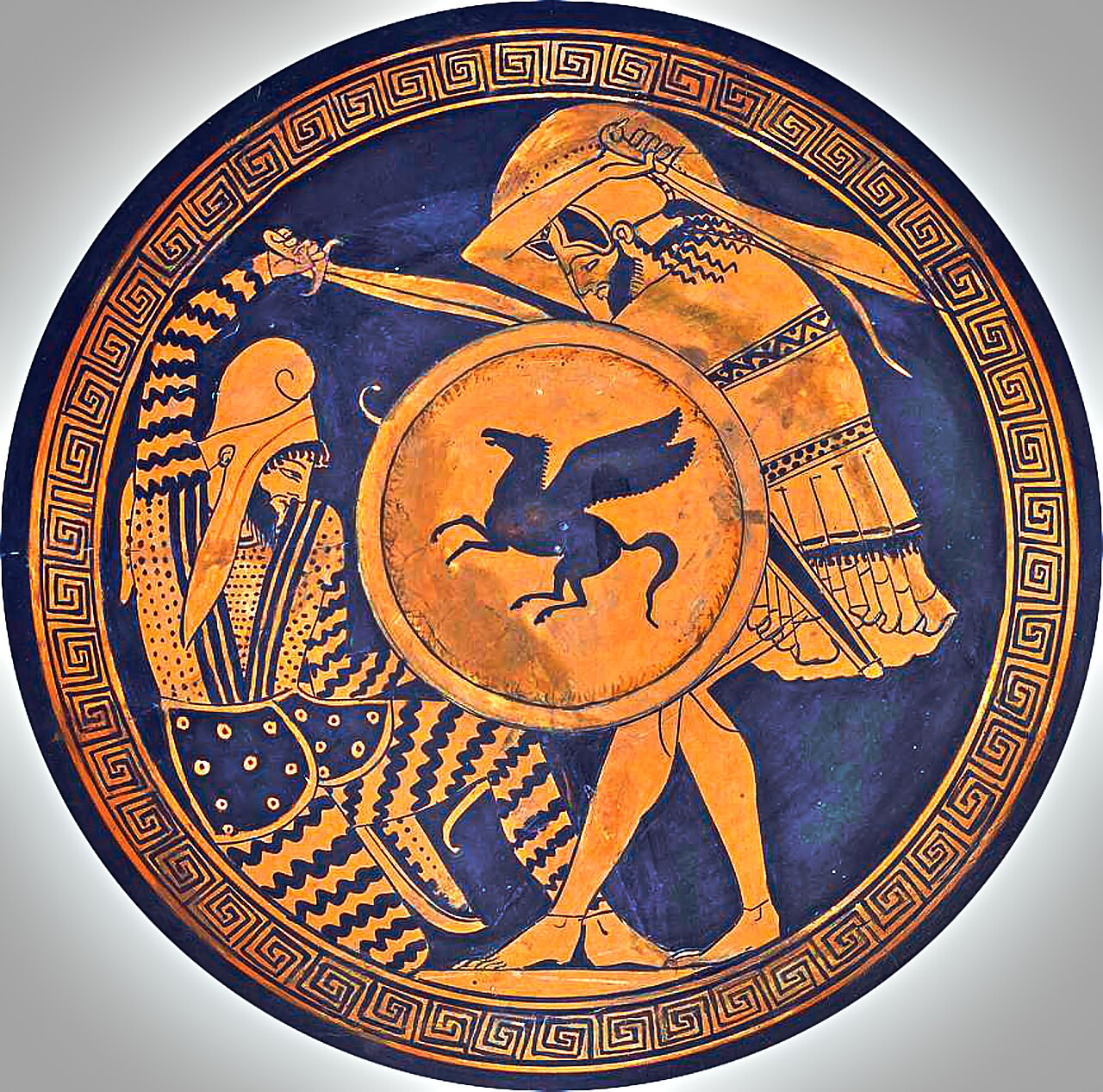

The wars at a glance
- 499–493 BCE The Ionian Revolt: Greek cities of Asia Minor rise against Persia, Athens and Eretria send ships, Sardis is burned, the revolt ends at Lade and Miletus. The Ionian Revolt
- 492 BCE Mardonius restores Persian control in Thrace and Macedon; a storm wrecks his fleet off Mount Athos. Mardonius and the first expedition
- 490 BCE Datis and Artaphernes sack Eretria, then land at Marathon and are defeated by the Athenians and Plataeans. The Battle of Marathon
- 480 BCE Xerxes crosses the Hellespont with the largest army of the age. Xerxes’ invasion
- 480 BCE Thermopylae and Artemisium are fought at the same time; the Persians break through. Thermopylae, Artemisium
- 480 BCE Athens is taken and the Acropolis burned; the Persian fleet is beaten at Salamis. The capture of Athens, Salamis
- 479 BCE Mardonius is killed at Plataea; the Greeks win again at Mycale in Ionia. Plataea and Mycale
- 478–c. 450 BCE Athens leads the Delian League against Persia; Cimon wins at the Eurymedon (c. 466); an Athenian force in Egypt is destroyed (c. 454); fighting off Cyprus (450).
- c. 449 BCE Hostilities end, according to later Greek writers by a formal treaty. The Peace of Callias
Why Persia went west
Persia did not set out to conquer Greece for its own sake. Cyrus had taken Lydia and the Greek cities of Asia Minor in the 540s BCE, and Darius had pushed into Thrace during his Scythian campaign. The mainland Greeks were neighbours on the frontier. What turned a frontier into a war was the Ionian Revolt, when Athens and Eretria sent help to the rebels and joined in burning Sardis, the seat of a Persian satrap. Herodotus says Darius ordered a servant to remind him three times at dinner, “Master, remember the Athenians.” The story may be invented, but punishing those who had helped rebels was standard Persian practice.
Two very different wars
Almost everything we know comes from the Greek side: Herodotus, writing a generation later, then Aeschylus’s play The Persians (472 BCE), Thucydides, and much later Plutarch and Diodorus. These writers turned the wars into a contest of free Greeks against a slave empire, an idea that has had a very long life in European thought.
Persian sources are silent. No royal inscription mentions Marathon or Salamis, and Persian kings did not record defeats. From Susa or Persepolis the picture looked different. The 490 BCE expedition achieved part of its aim: the islands of the Aegean were brought under Persian control and Eretria was punished. In 480 Xerxes did what he set out to do in one respect, taking and burning Athens, before the defeat at Salamis forced him to leave the war to Mardonius. Persia lost the Aegean and, over the following decades, many Greek cities of Asia Minor, but the core of the empire was untouched. Within a few generations Persian gold was deciding the outcome of wars between Greeks, as the pages on Darius II and the King’s Peace show.
Numbers and how to read them
Herodotus gives Xerxes’ army as over 1.7 million fighting men and the whole expedition as more than five million. No modern historian accepts these figures; estimates for the land army usually range from under 100,000 to about 300,000, limited by what could be fed and watered on the march. Numbers for Marathon and the naval battles are uncertain too. Each battle page sets out the figures and who gives them.
Persian commanders
The Greek accounts concentrate on Greek heroes, but the Persian side had its own careers. Mardonius, Darius’s nephew and son-in-law, led the 492 expedition and commanded the army in 479. Datis, a Mede, led the fleet in 490 with Artaphernes, the son of the satrap of Sardis. Xerxes’ brothers held commands in 480, and Artemisia, the queen of Halicarnassus, commanded ships at Salamis as a Persian subject. For the forces themselves, see the Immortals and the Achaemenid army and the Achaemenid navy.
Where to start reading
If you read only one episode, read Salamis, the battle that decided the invasion of 480. For how the Greek historian who told the story saw the Persians, see Herodotus and the Persians.
Persian words from this page
| یونان | Yunân | Greece |
| آتن | Âten | Athens |
| جنگ | jang | war |
| داریوش | Dâriush | Darius |
| خشایارشا | Khashâyârshâ | Xerxes |
Sources and further reading
- Herodotus, Histories, Books 5–9.
- Aeschylus, The Persians; Thucydides, History 1.89–118 (the years after 479).
- Pierre Briant, From Cyrus to Alexander: A History of the Persian Empire (2002), chapters on Darius and Xerxes.
- Peter Green, The Greco-Persian Wars (1996).
- Encyclopaedia Iranica, “Greece i. Greco-Persian political relations”.
Want to learn Persian? Get the free Starter Pack
Get the 14-page printable Starter Pack (all 32 letters, a 7-day reading plan, 100 core words and 20 survival phrases) and a short 5-email course. Free.
More in The Achaemenid Empire (550–330 BCE)
- Achaemenes, Teispes and the Early Persian Kings of Anshan
- Cyrus the Great: Birth, Legends and Rise to Power
- Cyrus Conquers Lydia: Croesus and the Battle of Thymbra
- The Persian Conquest of Ionia and Asia Minor
- Cyrus Takes Babylon (539 BCE)
- The Cyrus Cylinder
- Cyrus and the Return of the Jews
- The Death of Cyrus and the Massagetae
- Pasargadae: Cyrus’s Capital and Tomb
- The Tomb of Cyrus through History
- Cambyses II
- Cambyses Conquers Egypt: The Battle of Pelusium
- Bardiya and Gaumata: The Usurper Question
- Darius the Great Takes the Throne
- The Great Revolts of 522–521 BCE
- The Behistun Inscription
- The Persian Conquest of the Indus Valley
- Darius’s Scythian Campaign
- Darius’s Canal from the Nile to the Red Sea
- Darius’s Reforms: Satrapies, Taxes and Law
- The Royal Road and the Persian Postal System
- The Daric: Achaemenid Coinage and Economy
- The Ionian Revolt (499–493 BCE)
- The Greco-Persian Wars: An Overview
- Mardonius and the First Persian Expedition to Greece (492 BCE)
- The Battle of Marathon (490 BCE)
- The Death of Darius I and the Succession of Xerxes
- The Royal Tombs of Naqsh-e Rostam
- Xerxes I: King of Kings (486–465 BCE)
- Xerxes’ Invasion of Greece (480–479 BCE)
- The Battle of Thermopylae (480 BCE)
- The Battle of Artemisium (480 BCE)
- The Persian Capture of Athens (480–479 BCE)
- The Battle of Salamis (480 BCE)
- The Battle of Plataea and the End of the Invasion (479 BCE)
- The Palace of Darius at Susa
- Building Persepolis: How Darius and Xerxes Built Parsa
- The Persepolis Fortification and Treasury Tablets
- Herodotus and the Persians
- The Apadana Reliefs: Nations Bringing Gifts
- The Achaemenid Paradise Gardens
- The Persian Immortals and the Achaemenid Army
- The Achaemenid Navy
- Religion of the Achaemenid Kings
- Women of the Achaemenid Court
- Old Persian Language and Cuneiform
- Egypt under Persian Rule
- Babylon under Persian Rule
- Artaxerxes I
- The Peace of Callias
- Darius II and the Peloponnesian War
- Famous Satraps of the Persian Empire
- Artaxerxes II Mnemon
- Cyrus the Younger and the Battle of Cunaxa
- The King’s Peace (387 BCE)
- The Great Satraps’ Revolt
- Artaxerxes III and the Reconquest of Egypt
- Darius III, the Last Achaemenid King
- The Battle of the Granicus (334 BCE)
- The Battle of Issus (333 BCE)
- Alexander Takes Tyre, Gaza and Egypt (332 BCE)
- The Battle of Gaugamela (331 BCE)
- Ariobarzanes and the Battle of the Persian Gate
- The Burning of Persepolis (330 BCE)
- The Death of Darius III and Bessus
- The Legacy of the Achaemenid Empire