The Peace of Callias is a treaty that, according to later Greek writers, Athens and the Persian king Artaxerxes I agreed around 449 BCE, ending fifty years of war that had begun with the Ionian Revolt. It was named after the Athenian negotiator Callias, son of Hipponicus. Whether a formal treaty was ever signed has been argued about since the 4th century BCE, but fighting between Athens and Persia did stop at about that time.
| Date | Usually c. 449 BCE; some place it after the Battle of the Eurymedon (c. 466 BCE) |
|---|---|
| Parties | Athens and its allies; Artaxerxes I of Persia |
| Negotiated at | Susa, according to the usual reconstruction |
| Main ancient sources | Diodorus 12.4, Plutarch Cimon 13, Isocrates, Demosthenes; doubted by Theopompus; not mentioned by Thucydides |
| Result | No major Athenian–Persian fighting until the Peloponnesian War drew Persia back in |
How the fighting ended
After Xerxes’ defeat in 480–479 BCE the war did not stop. Athens led the Delian League in a long naval campaign to free the Greek cities of Asia Minor and the islands. Cimon won a double victory on land and sea at the Eurymedon river in Pamphylia, probably in the late 460s. Then Athens sent a fleet to help the Egyptian rebel Inaros, and lost it around 454 BCE, a disaster told on the page on Artaxerxes I. In 450 Cimon took a fleet to Cyprus, died during the siege of Citium, and his men won a last battle off Cypriot Salamis. Both sides had reasons to stop: Athens had lost heavily in Egypt and faced trouble in Greece, and Persia had Egypt back but could not control the Aegean.
What the treaty is said to have contained
The fullest account is in Diodorus of Sicily, writing in the 1st century BCE and probably following the 4th-century historian Ephorus. Plutarch adds detail in his life of Cimon, and says the text was included in a collection of Athenian decrees made by Craterus. The terms they report are these:
- The Greek cities of Asia would be autonomous.
- Persian satraps would not bring armies closer to the sea than three days’ journey (Plutarch has a day’s ride on horseback).
- No Persian warship would sail west of Phaselis on the southern coast of Asia Minor or beyond the Cyanean rocks at the entrance to the Black Sea (Plutarch names the Chelidonian islands as the southern limit).
- Athens would not send forces into the king’s territory.
In practice this would have meant that Persia gave up the Aegean and the coast to Athenian influence, while Athens gave up Cyprus and Egypt.
The case against: a 4th-century invention
Doubts began early. The historian Theopompus, in the 4th century BCE, declared the treaty a forgery because the copy displayed in Athens was written in the Ionic alphabet, which Athens only adopted officially in 403/402 BCE. Modern epigraphers have weakened this argument, since Ionic letters do appear in some earlier Athenian inscriptions, and a later recopying would also explain it.
The bigger problem is silence. Thucydides, who wrote a careful account of the years between the Persian and Peloponnesian Wars, never mentions a peace with Persia. Neither do Persian sources, though they say nothing about Greek affairs at all. Sceptics also note that the treaty was most loudly praised by 4th-century Athenian orators, who wanted to contrast a glorious past with the humiliating King’s Peace of 387 BCE, in which Persia dictated terms to Greece. An invented treaty of Callias, on this view, was patriotic myth.
The case for: Callias at Susa
Those who accept the treaty point to Herodotus, who was writing within living memory. In a passing remark he says that Callias son of Hipponicus was at Susa on business for the Athenians when envoys from Argos arrived to ask Artaxerxes whether their friendship with Xerxes still held. Herodotus does not say what Callias was negotiating, but he places the right man at the right court in the right reign.
The behaviour of both powers after 449 also fits some kind of agreement. Persian fleets stayed out of the Aegean for over thirty years, and Athens made no new attacks on the king’s lands. Some historians have connected the peace with changes in the Athenian tribute records around this time, though the evidence is open to other readings. Finally, Andocides says that Athens made a treaty with the king through his uncle Epilycus, probably soon after the accession of Darius II in 424 BCE. That looks like the renewal of an earlier agreement.
Where historians stand now
Views range widely. Some, following Ernst Badian, accept a peace and even suggest an earlier version after the Eurymedon, renewed in 449. Others believe there was an informal understanding, a ceasefire that both sides observed without a sworn treaty. A minority still regard the formal peace as invented. Most agree on what mattered in practice: from around 449 BCE the open war between Athens and Persia was over, and Persia turned to a cheaper method of influence, money, which it used to great effect in the Peloponnesian War. That story continues on Darius II and among the governors described on famous satraps of the Persian Empire.
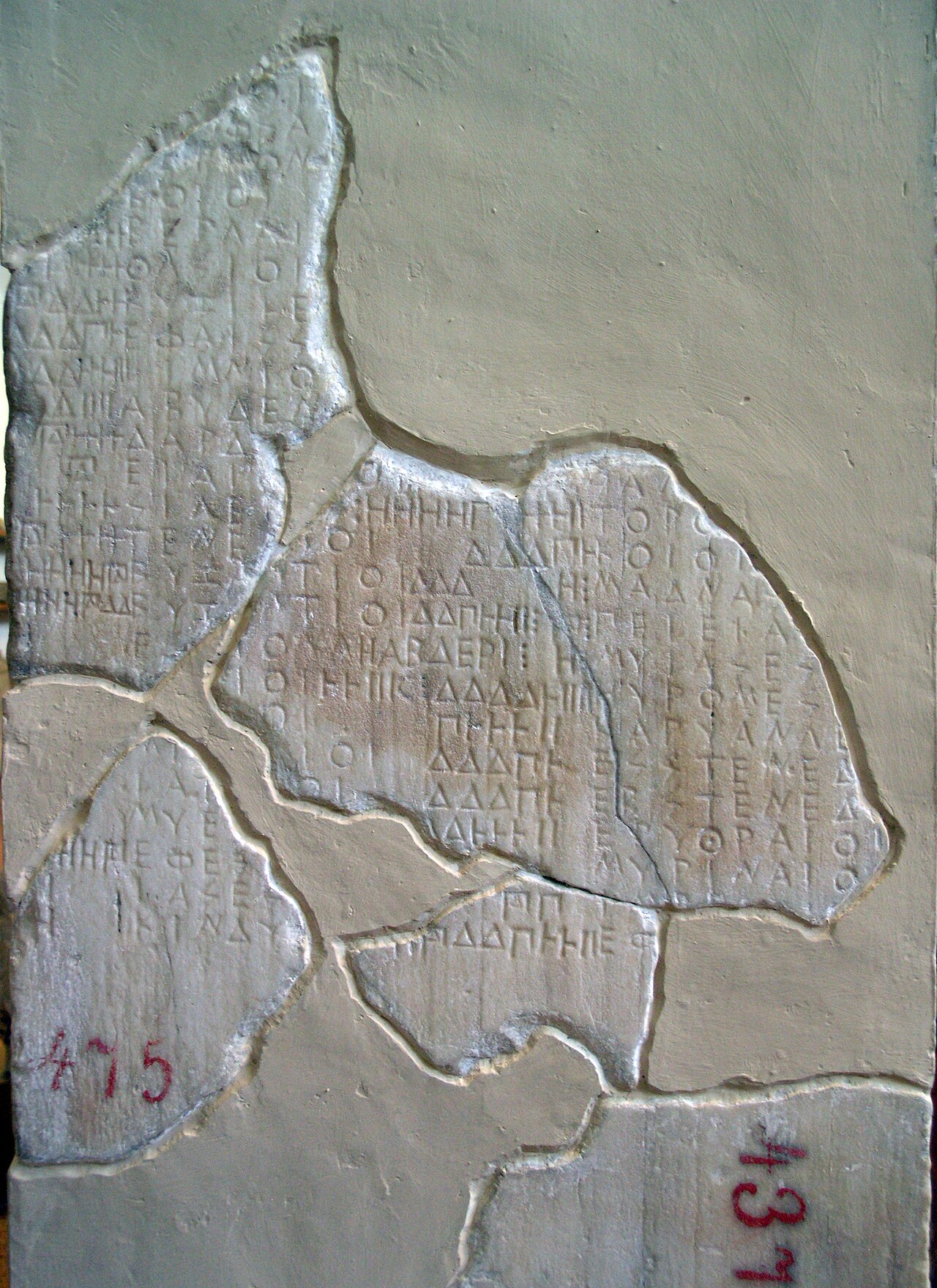

For the wars that the peace ended, see the overview of the Greco-Persian Wars.
Persian words from this page
| صلح | solh | peace |
| پیمان | peymân | treaty, pact |
| اردشیر | Ardeshir | Artaxerxes |
| شوش | Shush | Susa |
| دریا | daryâ | sea |
Sources and further reading
- Diodorus Siculus, Library of History 12.4; Plutarch, Cimon 13.
- Herodotus, Histories 7.151; Andocides, On the Peace 29.
- Ernst Badian, “The Peace of Callias”, Journal of Hellenic Studies 107 (1987), reprinted in From Plataea to Potidaea (1993).
- Russell Meiggs, The Athenian Empire (1972).
- Pierre Briant, From Cyrus to Alexander: A History of the Persian Empire (2002).
Want to learn Persian? Get the free Starter Pack
Get the 14-page printable Starter Pack (all 32 letters, a 7-day reading plan, 100 core words and 20 survival phrases) and a short 5-email course. Free.
More in The Achaemenid Empire (550–330 BCE)
- Achaemenes, Teispes and the Early Persian Kings of Anshan
- Cyrus the Great: Birth, Legends and Rise to Power
- Cyrus Conquers Lydia: Croesus and the Battle of Thymbra
- The Persian Conquest of Ionia and Asia Minor
- Cyrus Takes Babylon (539 BCE)
- The Cyrus Cylinder
- Cyrus and the Return of the Jews
- The Death of Cyrus and the Massagetae
- Pasargadae: Cyrus’s Capital and Tomb
- The Tomb of Cyrus through History
- Cambyses II
- Cambyses Conquers Egypt: The Battle of Pelusium
- Bardiya and Gaumata: The Usurper Question
- Darius the Great Takes the Throne
- The Great Revolts of 522–521 BCE
- The Behistun Inscription
- The Persian Conquest of the Indus Valley
- Darius’s Scythian Campaign
- Darius’s Canal from the Nile to the Red Sea
- Darius’s Reforms: Satrapies, Taxes and Law
- The Royal Road and the Persian Postal System
- The Daric: Achaemenid Coinage and Economy
- The Ionian Revolt (499–493 BCE)
- The Greco-Persian Wars: An Overview
- Mardonius and the First Persian Expedition to Greece (492 BCE)
- The Battle of Marathon (490 BCE)
- The Death of Darius I and the Succession of Xerxes
- The Royal Tombs of Naqsh-e Rostam
- Xerxes I: King of Kings (486–465 BCE)
- Xerxes’ Invasion of Greece (480–479 BCE)
- The Battle of Thermopylae (480 BCE)
- The Battle of Artemisium (480 BCE)
- The Persian Capture of Athens (480–479 BCE)
- The Battle of Salamis (480 BCE)
- The Battle of Plataea and the End of the Invasion (479 BCE)
- The Palace of Darius at Susa
- Building Persepolis: How Darius and Xerxes Built Parsa
- The Persepolis Fortification and Treasury Tablets
- Herodotus and the Persians
- The Apadana Reliefs: Nations Bringing Gifts
- The Achaemenid Paradise Gardens
- The Persian Immortals and the Achaemenid Army
- The Achaemenid Navy
- Religion of the Achaemenid Kings
- Women of the Achaemenid Court
- Old Persian Language and Cuneiform
- Egypt under Persian Rule
- Babylon under Persian Rule
- Artaxerxes I
- The Peace of Callias
- Darius II and the Peloponnesian War
- Famous Satraps of the Persian Empire
- Artaxerxes II Mnemon
- Cyrus the Younger and the Battle of Cunaxa
- The King’s Peace (387 BCE)
- The Great Satraps’ Revolt
- Artaxerxes III and the Reconquest of Egypt
- Darius III, the Last Achaemenid King
- The Battle of the Granicus (334 BCE)
- The Battle of Issus (333 BCE)
- Alexander Takes Tyre, Gaza and Egypt (332 BCE)
- The Battle of Gaugamela (331 BCE)
- Ariobarzanes and the Battle of the Persian Gate
- The Burning of Persepolis (330 BCE)
- The Death of Darius III and Bessus
- The Legacy of the Achaemenid Empire