After winning the civil war of 522–521 BCE, Darius I gave the Persian Empire a lasting framework: large provinces under governors called satraps, fixed annual tribute assessed for each province, royal law, standard weights and a common administrative language. Herodotus says the Persians nicknamed him “the shopkeeper” for it. Most of the system lasted until Alexander, and parts of it were taken over by his successors.
| Period | From c. 519 BCE onward, through the reign of Darius I (522–486 BCE) |
|---|---|
| Governor | Satrap, from Old Persian khshathrapavan, “protector of the kingdom (or realm)” |
| Number of provinces | Herodotus: 20 tax districts; Darius’s own lists: 23 to about 30 peoples |
| Total tribute | 14,560 Euboic talents of silver a year, according to Herodotus |
| Administrative language | Aramaic, with Elamite at Persepolis |
| Key word | Old Persian data, “law”, modern Persian داد dâd, “justice” |
Lands, peoples and satrapies
Darius’s inscriptions do not describe the empire as a map of provinces. They list peoples or lands (Old Persian dahyu): Persia, Elam, Babylonia, Assyria, Arabia, Egypt, the “peoples of the sea”, Lydia, Ionia, Media, Armenia, Cappadocia, Parthia, Bactria, Sogdiana, Gandhara, the Saka and others. The Behistun inscription counts 23; later lists at Persepolis, Susa and Naqsh-e Rostam add Indians, Libyans, Thracians and more, reaching about thirty. They are a picture of the world under the king rather than an administrative register.
In practice, the empire was run through satrapies, large provinces each led by a satrap, usually a Persian noble and often a relative of the king. Some sat in old royal capitals: Sardis for Lydia, Memphis for Egypt, Babylon for Babylonia, Bactra for Bactria. A satrapy could contain several of the peoples in the royal lists, and the borders changed over time.
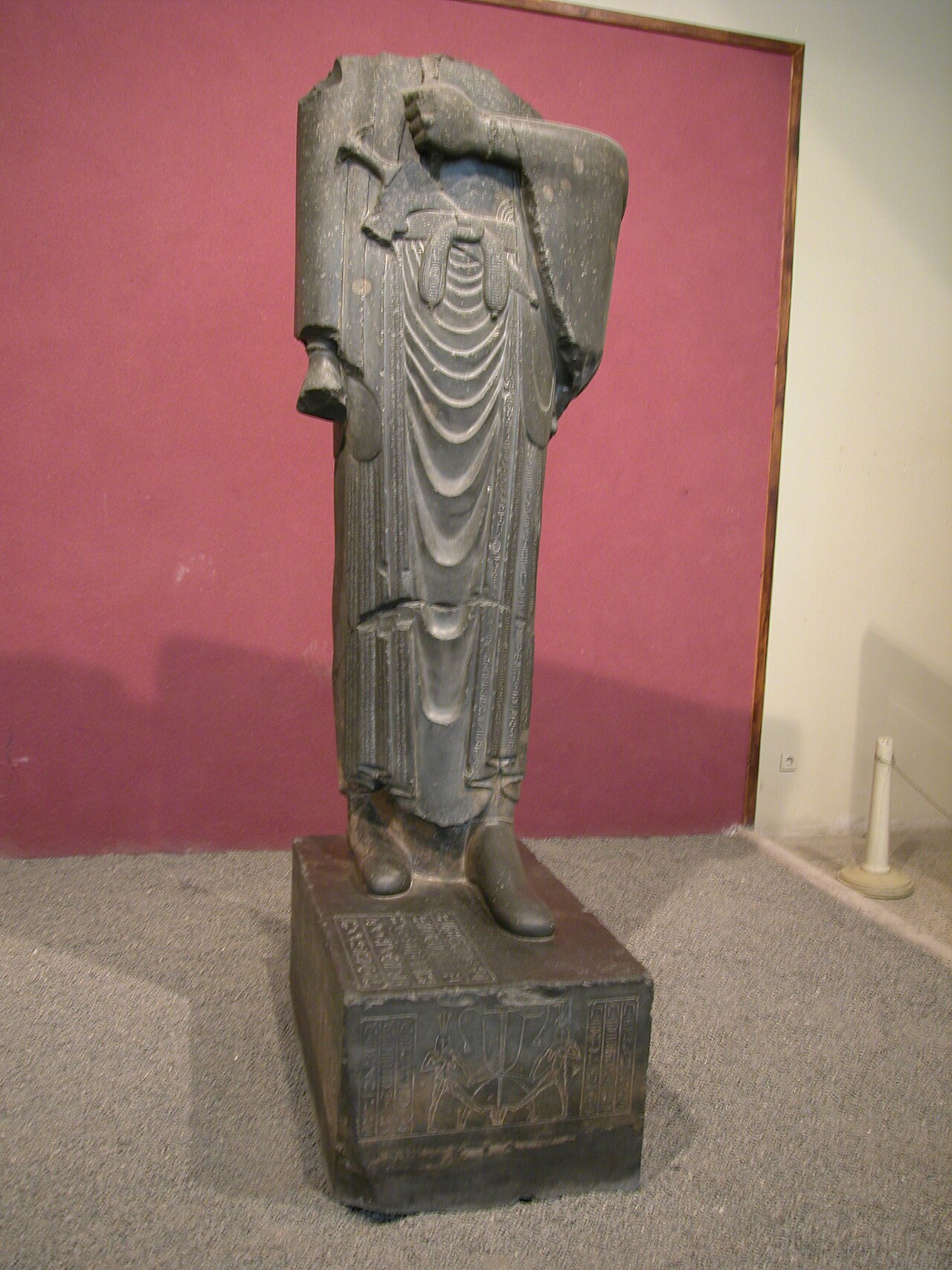

What a satrap did
A satrap was the king’s deputy in his province. He collected the tribute, kept order, judged important cases, raised troops when the king called, maintained roads and royal estates, and dealt with neighbouring peoples. He lived in a palace with a smaller version of the royal court, and many satraps built up local power over generations; the satraps of Hellespontine Phrygia at Daskyleion, for example, came from the same family for much of the 5th and 4th centuries.
The king tried to keep such men in check. Greek writers mention royal secretaries who reported directly to the court, garrison commanders who answered to the king rather than the satrap, and officials called “the King’s Eye” and “the King’s Ears”. How systematic these controls were is debated. Darius also used blunt methods: Herodotus says he had Oroetes, the satrap of Sardis, killed by his own guards after Oroetes defied him, and later executed Aryandes, satrap of Egypt.
Tribute: Herodotus’s list
Herodotus (3.89–97) gives the most detailed account of Persian taxes. He says Darius divided the empire into twenty districts and fixed the tribute of each, in silver by the Babylonian talent, except for the Indians, who paid in gold dust. Some figures:
- Ionians, Magnesians, Aeolians, Carians, Lycians and others: 400 talents.
- Lydians and Mysians: 500 talents.
- Cilicia: 500 talents and 360 white horses, one for each day of the year.
- Egypt, with Libya, Cyrene and Barca: 700 talents, plus the fishing revenue of Lake Moeris and grain for the garrison at Memphis.
- Babylon and the rest of Assyria: 1,000 talents and 500 boys to serve as eunuchs.
- Media: 450 talents. Bactria: 360 talents.
- The Indians: 360 talents of gold dust, which Herodotus calls the largest of all.
Persis, the king’s homeland, paid no tribute. Other peoples, such as the Arabs, Ethiopians and Colchians, gave “gifts” instead; the Arabs, he says, sent 1,000 talents of frankincense a year. These are the gift-bearers who seem to appear on the Apadana reliefs at Persepolis.
The list is not an official document, and historians doubt parts of it, including whether the twenty districts existed in this form under Darius. But it fits a real change: tribute was now fixed in advance, by assessment of the land, instead of being taken as each occasion demanded. That is why, Herodotus says, the Persians called Cyrus a father, Cambyses a master and Darius a shopkeeper.
Royal law
Darius often speaks of law. At Behistun he says that the lands “followed my law” (data) and that what he told them, they did. In his tomb inscription at Naqsh-e Rostam he says that he did not wish the weak to be wronged by the strong, nor the strong by the weak, and that he punished the wrongdoer according to the wrong.
This “law of the king” was not a single written code for the whole empire, as far as we know. It worked alongside local laws, which the king confirmed or had collected. An Egyptian text known as the Demotic Chronicle says that Darius ordered his satrap to assemble Egyptian priests and scholars to write down the law of Egypt as it stood up to the reign of Amasis, and that it was copied in Egyptian and in Aramaic. The book of Ezra in the Hebrew Bible speaks of “the law of your God and the law of the king” in Judah. Royal judges heard cases, and Herodotus’s story of the corrupt judge Sisamnes, flayed by Cambyses, shows how Greeks imagined their discipline.
Scribes, weights and archives
An empire of many languages needed a common written medium. The scribes of Darius used Aramaic, already widespread under the Assyrians, for letters and orders between provinces, while local records went on in Babylonian, Egyptian, Elamite or Greek. Aramaic letters of the satrap Arshama from Egypt and documents from Bactria show this network in action a century after Darius. At the centre, the Persepolis Fortification Tablets, written in Elamite in the years 509–493 BCE, record the rations, travel documents and labour of an economy run by Darius’s uncle Parnaka.
Darius also introduced inscribed standard weights in stone, giving their value in the karsha, a Persian unit, and struck the first royal coins, the gold daric and the silver siglos, covered on Achaemenid coinage and economy. Roads and couriers linked it all, as described on the Royal Road.
Was it all Darius?
Greek tradition made Darius the great organiser, and his own inscriptions encourage that view. Historians such as Pierre Briant stress that much of the system grew out of what Cyrus and Cambyses had already set up, and out of older Assyrian and Babylonian practice. What Darius added was scale, order and a royal ideology that tied the empire to the person of the king. The word for justice in modern Persian, dâd, goes back to his data.
Persian words from this page
| ساتراپ | sâtrâp | satrap |
| داد | dâd | justice (from Old Persian data, law) |
| باج | bâj | tribute, toll |
| استان | ostân | province |
| دبیر | dabir | scribe, secretary |
| شوش | Shush | Susa |
Sources and further reading
- Herodotus, Histories, Book 3, chapters 89–97, 120–128.
- Darius I, inscriptions at Behistun (DB) and Naqsh-e Rostam (DNa, DNb), in Amélie Kuhrt, The Persian Empire: A Corpus of Sources (2007).
- The Demotic Chronicle, verso, on the codification of Egyptian law.
- Pierre Briant, From Cyrus to Alexander (2002), chapters 10–12.
- Encyclopaedia Iranica, “Satrap”.
Want to learn Persian? Get the free Starter Pack
Get the 14-page printable Starter Pack (all 32 letters, a 7-day reading plan, 100 core words and 20 survival phrases) and a short 5-email course. Free.
More in The Achaemenid Empire (550–330 BCE)
- Achaemenes, Teispes and the Early Persian Kings of Anshan
- Cyrus the Great: Birth, Legends and Rise to Power
- Cyrus Conquers Lydia: Croesus and the Battle of Thymbra
- The Persian Conquest of Ionia and Asia Minor
- Cyrus Takes Babylon (539 BCE)
- The Cyrus Cylinder
- Cyrus and the Return of the Jews
- The Death of Cyrus and the Massagetae
- Pasargadae: Cyrus’s Capital and Tomb
- The Tomb of Cyrus through History
- Cambyses II
- Cambyses Conquers Egypt: The Battle of Pelusium
- Bardiya and Gaumata: The Usurper Question
- Darius the Great Takes the Throne
- The Great Revolts of 522–521 BCE
- The Behistun Inscription
- The Persian Conquest of the Indus Valley
- Darius’s Scythian Campaign
- Darius’s Canal from the Nile to the Red Sea
- Darius’s Reforms: Satrapies, Taxes and Law
- The Royal Road and the Persian Postal System
- The Daric: Achaemenid Coinage and Economy
- The Ionian Revolt (499–493 BCE)
- The Greco-Persian Wars: An Overview
- Mardonius and the First Persian Expedition to Greece (492 BCE)
- The Battle of Marathon (490 BCE)
- The Death of Darius I and the Succession of Xerxes
- The Royal Tombs of Naqsh-e Rostam
- Xerxes I: King of Kings (486–465 BCE)
- Xerxes’ Invasion of Greece (480–479 BCE)
- The Battle of Thermopylae (480 BCE)
- The Battle of Artemisium (480 BCE)
- The Persian Capture of Athens (480–479 BCE)
- The Battle of Salamis (480 BCE)
- The Battle of Plataea and the End of the Invasion (479 BCE)
- The Palace of Darius at Susa
- Building Persepolis: How Darius and Xerxes Built Parsa
- The Persepolis Fortification and Treasury Tablets
- Herodotus and the Persians
- The Apadana Reliefs: Nations Bringing Gifts
- The Achaemenid Paradise Gardens
- The Persian Immortals and the Achaemenid Army
- The Achaemenid Navy
- Religion of the Achaemenid Kings
- Women of the Achaemenid Court
- Old Persian Language and Cuneiform
- Egypt under Persian Rule
- Babylon under Persian Rule
- Artaxerxes I
- The Peace of Callias
- Darius II and the Peloponnesian War
- Famous Satraps of the Persian Empire
- Artaxerxes II Mnemon
- Cyrus the Younger and the Battle of Cunaxa
- The King’s Peace (387 BCE)
- The Great Satraps’ Revolt
- Artaxerxes III and the Reconquest of Egypt
- Darius III, the Last Achaemenid King
- The Battle of the Granicus (334 BCE)
- The Battle of Issus (333 BCE)
- Alexander Takes Tyre, Gaza and Egypt (332 BCE)
- The Battle of Gaugamela (331 BCE)
- Ariobarzanes and the Battle of the Persian Gate
- The Burning of Persepolis (330 BCE)
- The Death of Darius III and Bessus
- The Legacy of the Achaemenid Empire