In October 539 BCE Cyrus the Great defeated the Babylonian army at Opis on the Tigris, his troops entered Babylon without a battle on about 12 October, and Cyrus himself rode into the city on about 29 October. The fall of Babylon ended the last great Mesopotamian empire and gave Persia Mesopotamia, Syria and the Levant, making it the largest state the world had yet seen.
| Battle of Opis | Tashritu (September/October) 539 BCE, on the Tigris north of Babylon |
|---|---|
| Sippar taken | 14 Tashritu, about 10 October 539 BCE |
| Persian troops enter Babylon | 16 Tashritu, about 12 October 539 BCE, under Ugbaru, governor of Gutium |
| Cyrus enters Babylon | 3 Arahsamnu, about 29 October 539 BCE |
| Babylonian king | Nabonidus (r. 556–539 BCE); his son Belshazzar had governed while he was in Arabia |
| Main sources | Nabonidus Chronicle, Cyrus Cylinder, Herodotus 1.178–191, Book of Daniel, Berossus |
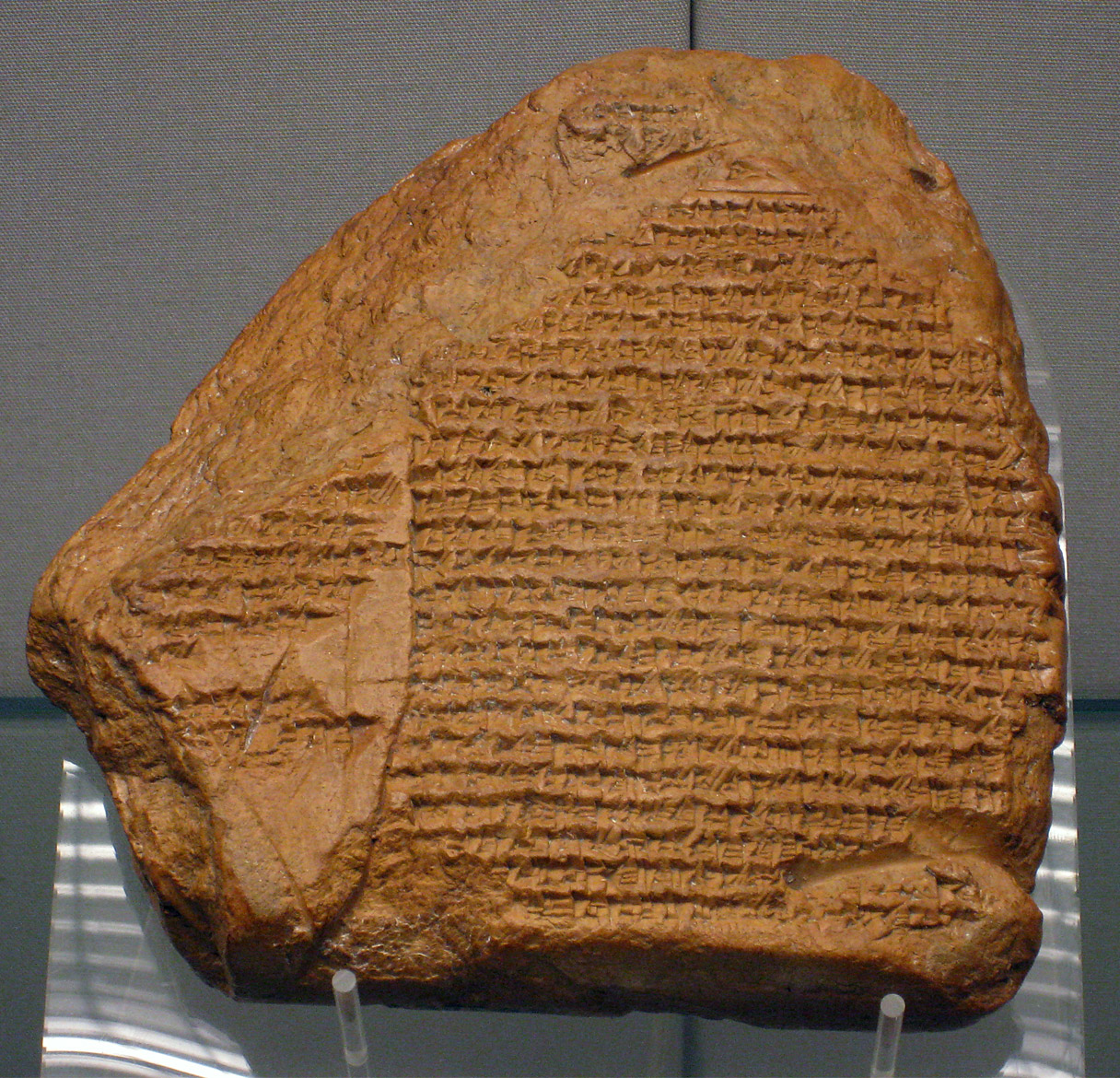

Babylon under Nabonidus
Babylon in 539 BCE was the heart of an empire that had destroyed Assyria and Jerusalem two generations earlier. Its king, Nabonidus, was an outsider: he was not from the royal family of Nebuchadnezzar, and he was deeply devoted to Sin, the moon god of Harran, his mother’s city.
For about ten years, roughly 552 to 543 BCE, Nabonidus lived at the oasis of Tayma in Arabia, leaving his son Belshazzar (Bel-sharra-usur) to govern Babylon. The Nabonidus Chronicle notes year after year that the king did not come to Babylon, so the New Year festival of Marduk, which needed the king, was not properly held. After the conquest, Babylonian priests wrote bitterly against him. The text known as the Verse Account of Nabonidus mocks him as a madman who neglected Marduk.
Those hostile writings were composed under Persian rule, and modern historians such as Paul-Alain Beaulieu treat them with care. Nabonidus was an active builder and a serious, if unusual, king. Still, his religious choices and long absence seem to have cost him support among the powerful temple elite of Babylon.
The Battle of Opis
By 539 BCE Cyrus controlled Iran, Media and Anatolia, and Babylon was surrounded on two sides. As the danger grew, Nabonidus brought the statues of gods from other Babylonian cities into the capital, apparently for safety. The Chronicle says the gods of Marad, Kish and other towns entered Babylon that year.
Cyrus advanced down the Tigris. In the month of Tashritu, the Chronicle says, he fought the army of Akkad (Babylonia) at Opis, on the Tigris near the point where it comes closest to the Euphrates. The Babylonians retreated, and Cyrus carried off plunder and killed people. This short line is important: the conquest of Babylonia began with a real and bloody battle, something the later Cyrus Cylinder leaves out entirely.
The entry into Babylon
After Opis, resistance collapsed with remarkable speed. The Chronicle gives the sequence day by day:
- 14 Tashritu (c. 10 October) Sippar is taken without a battle. Nabonidus flees.
- 16 Tashritu (c. 12 October) Ugbaru, governor of Gutium, and the army of Cyrus enter Babylon without a battle. Nabonidus, who has returned to the city, is captured.
- Following weeks Shield-bearing troops guard the gates of Esagila, Marduk’s temple, and the temple rites continue without interruption.
- 3 Arahsamnu (c. 29 October) Cyrus enters Babylon. Green branches are spread before him and peace is imposed on the city.
- Night of 11 Arahsamnu Ugbaru dies.
- Kislimu to Addaru (December 539 to March 538) The gods Nabonidus had brought to Babylon are returned to their own cities.
Cyrus’s governor, called Gubaru in the Chronicle, appointed officials in Babylon. Who Ugbaru was is not certain. One common view is that he was a Babylonian provincial governor who had changed sides, which would help explain how easily the city opened its gates. Xenophon’s “Gobryas”, a defecting Assyrian nobleman, may be a distant memory of him.
Herodotus, Daniel and the diverted river
Later stories turned the fall of Babylon into something more dramatic than the Chronicle’s dry record.
Herodotus (1.189–191) says Cyrus first punished the river Gyndes for drowning one of his sacred white horses by dividing it into 360 channels. At Babylon, he says, the Persians diverted the Euphrates into a lake so that the water in the city fell to the height of a man’s thigh, and they walked in along the riverbed. The city was so large that people in the centre were still celebrating a festival when the outskirts had already fallen. Xenophon tells a similar story. No Babylonian source mentions a siege or a diversion of the river, and the Chronicle says the city was entered without a fight.
The Book of Daniel (chapter 5) sets the end of Babylon at a feast of Belshazzar, where a hand writes on the palace wall “mene, mene, tekel, upharsin” and Daniel reads it as the king’s doom. That night, the text says, Belshazzar was killed and “Darius the Mede” took the kingdom. Historians read the chapter as a later religious narrative: Belshazzar is real, but he was never king in his own right, and no “Darius the Mede” appears in any record of the time.
Berossus, a Babylonian priest writing in Greek around 280 BCE, gives a quieter ending. Nabonidus, he says, shut himself up in Borsippa, then surrendered, and Cyrus treated him kindly and sent him to live in Carmania (Kerman) in Iran.
Why Babylon fell so easily
Historians usually point to several causes working together. Opis destroyed Babylon’s field army. Part of the Babylonian elite had reason to be unhappy with Nabonidus and may have negotiated in advance. Cyrus also had a reputation, built in Media and Lydia, for keeping local officials and institutions in place. Business archives from Babylonian families such as the Egibi firm continue almost without a break from the reign of Nabonidus into that of Cyrus, which suggests that ordinary life in the city was barely disrupted.
Pierre Briant describes the conquest as carefully prepared, both militarily and politically. The Persian version, which presents Cyrus as Marduk’s choice welcomed by a grateful people, was written afterwards and is discussed on The Cyrus Cylinder.
After the conquest
Cyrus took the old Mesopotamian titles “king of Babylon, king of the lands”. For part of 538 BCE Babylonian documents name his son Cambyses as king of Babylon, a sign that Cyrus was preparing his succession (see Cambyses II). Babylon stayed one of the empire’s capitals, and its new rulers inherited its western provinces, including Judah, whose exiles’ return is told on Cyrus and the Return of the Jews. How the city fared over the next two centuries is covered on Babylon under Persian Rule.
Persian words from this page
| بابل | Bâbel | Babylon |
| نبونید | Nabonid | Nabonidus |
| مردوک | Marduk | Marduk, god of Babylon |
| فرات | Forât | the Euphrates |
| دجله | Dejle | the Tigris |
| جشن | jashn | festival, celebration |
Sources and further reading
- The Nabonidus Chronicle (ABC 7), British Museum BM 35382, in A. K. Grayson, Assyrian and Babylonian Chronicles (1975).
- Herodotus, Histories 1.178–191; Book of Daniel, chapter 5; Berossus, quoted by Josephus, Against Apion 1.20.
- Paul-Alain Beaulieu, The Reign of Nabonidus, King of Babylon 556–539 B.C. (Yale University Press, 1989).
- Amélie Kuhrt, The Persian Empire: A Corpus of Sources from the Achaemenid Period (Routledge, 2007).
- Pierre Briant, From Cyrus to Alexander: A History of the Persian Empire (Eisenbrauns, 2002).
Want to learn Persian? Get the free Starter Pack
Get the 14-page printable Starter Pack (all 32 letters, a 7-day reading plan, 100 core words and 20 survival phrases) and a short 5-email course. Free.
More in The Achaemenid Empire (550–330 BCE)
- Achaemenes, Teispes and the Early Persian Kings of Anshan
- Cyrus the Great: Birth, Legends and Rise to Power
- Cyrus Conquers Lydia: Croesus and the Battle of Thymbra
- The Persian Conquest of Ionia and Asia Minor
- Cyrus Takes Babylon (539 BCE)
- The Cyrus Cylinder
- Cyrus and the Return of the Jews
- The Death of Cyrus and the Massagetae
- Pasargadae: Cyrus’s Capital and Tomb
- The Tomb of Cyrus through History
- Cambyses II
- Cambyses Conquers Egypt: The Battle of Pelusium
- Bardiya and Gaumata: The Usurper Question
- Darius the Great Takes the Throne
- The Great Revolts of 522–521 BCE
- The Behistun Inscription
- The Persian Conquest of the Indus Valley
- Darius’s Scythian Campaign
- Darius’s Canal from the Nile to the Red Sea
- Darius’s Reforms: Satrapies, Taxes and Law
- The Royal Road and the Persian Postal System
- The Daric: Achaemenid Coinage and Economy
- The Ionian Revolt (499–493 BCE)
- The Greco-Persian Wars: An Overview
- Mardonius and the First Persian Expedition to Greece (492 BCE)
- The Battle of Marathon (490 BCE)
- The Death of Darius I and the Succession of Xerxes
- The Royal Tombs of Naqsh-e Rostam
- Xerxes I: King of Kings (486–465 BCE)
- Xerxes’ Invasion of Greece (480–479 BCE)
- The Battle of Thermopylae (480 BCE)
- The Battle of Artemisium (480 BCE)
- The Persian Capture of Athens (480–479 BCE)
- The Battle of Salamis (480 BCE)
- The Battle of Plataea and the End of the Invasion (479 BCE)
- The Palace of Darius at Susa
- Building Persepolis: How Darius and Xerxes Built Parsa
- The Persepolis Fortification and Treasury Tablets
- Herodotus and the Persians
- The Apadana Reliefs: Nations Bringing Gifts
- The Achaemenid Paradise Gardens
- The Persian Immortals and the Achaemenid Army
- The Achaemenid Navy
- Religion of the Achaemenid Kings
- Women of the Achaemenid Court
- Old Persian Language and Cuneiform
- Egypt under Persian Rule
- Babylon under Persian Rule
- Artaxerxes I
- The Peace of Callias
- Darius II and the Peloponnesian War
- Famous Satraps of the Persian Empire
- Artaxerxes II Mnemon
- Cyrus the Younger and the Battle of Cunaxa
- The King’s Peace (387 BCE)
- The Great Satraps’ Revolt
- Artaxerxes III and the Reconquest of Egypt
- Darius III, the Last Achaemenid King
- The Battle of the Granicus (334 BCE)
- The Battle of Issus (333 BCE)
- Alexander Takes Tyre, Gaza and Egypt (332 BCE)
- The Battle of Gaugamela (331 BCE)
- Ariobarzanes and the Battle of the Persian Gate
- The Burning of Persepolis (330 BCE)
- The Death of Darius III and Bessus
- The Legacy of the Achaemenid Empire