In 492 BCE Darius I sent his young son-in-law Mardonius across the Hellespont with an army and a fleet, two years after the Ionian Revolt had been crushed. The expedition brought Thrace and the kingdom of Macedon firmly under Persian rule, but a storm off Mount Athos destroyed much of the fleet and Mardonius turned back. Greek writers remembered it as a failed attack on Athens; for the Persians it was the first step in pushing the empire’s frontier into Europe.
| Date | Spring and summer 492 BCE |
|---|---|
| Commander | Mardonius, son of Gobryas |
| King | Darius I |
| Area | Thrace, Thasos, Macedon, the Chalcidice coast |
| Main setback | Fleet wrecked off Mount Athos |
| Result | Thrace and Macedon secured; no advance into southern Greece |
| Main source | Herodotus, Histories 6.43–45 |

After the Ionian Revolt
The Ionian Revolt ended with the sack of Miletus in 494 BCE and the reconquest of the last rebel cities in 493. Two Greek states from across the Aegean, Athens and Eretria, had sent ships to help the rebels in 498 and had taken part in the burning of Sardis. Persian control of the European side of the straits, won by Darius during his Scythian campaign around 513 BCE and by his general Megabazus afterwards, had also been shaken during the revolt.
The task of restoring order went to Mardonius. He was the son of Gobryas, one of the six nobles who had helped Darius seize the throne in 522, and Herodotus says he had just married Darius’s daughter Artozostre. He was young for such a command, and his appointment shows how closely the king tied military power to his own family.
A surprising settlement in Ionia
Before crossing to Europe, Mardonius sailed along the coast of Ionia. Here Herodotus reports something he expected his Greek readers to find hard to believe: Mardonius removed the tyrants whom Persia had backed in the Ionian cities and allowed the cities to govern themselves as democracies. The tyrants had been unpopular, and several had led the revolt, so the change made practical sense. It also shows that Persian rule was more flexible than the later Greek picture of oriental despotism suggests. The cities still paid tribute, which had been reassessed by the satrap Artaphernes after the revolt.
Into Thrace and Macedon
The army then crossed the Hellespont and marched west along the Thracian coast while the fleet kept pace offshore. The island of Thasos, rich from its gold mines, submitted without a fight. On land, Herodotus says, the Macedonians were added to the peoples already subject to the king. Macedon had accepted Persian overlordship once before, around 510 BCE, under King Amyntas I; the expedition of 492 turned a loose submission into firm control.
Herodotus claims that the official targets were Athens and Eretria, but adds that this was a pretext and that the Persians meant to subdue as many Greek cities as they could. Many modern historians read the campaign more narrowly. The army reached only as far as Macedon, there is no sign that it tried to go further, and its achievements match a plan to rebuild the European province before any move south.
The storm at Mount Athos
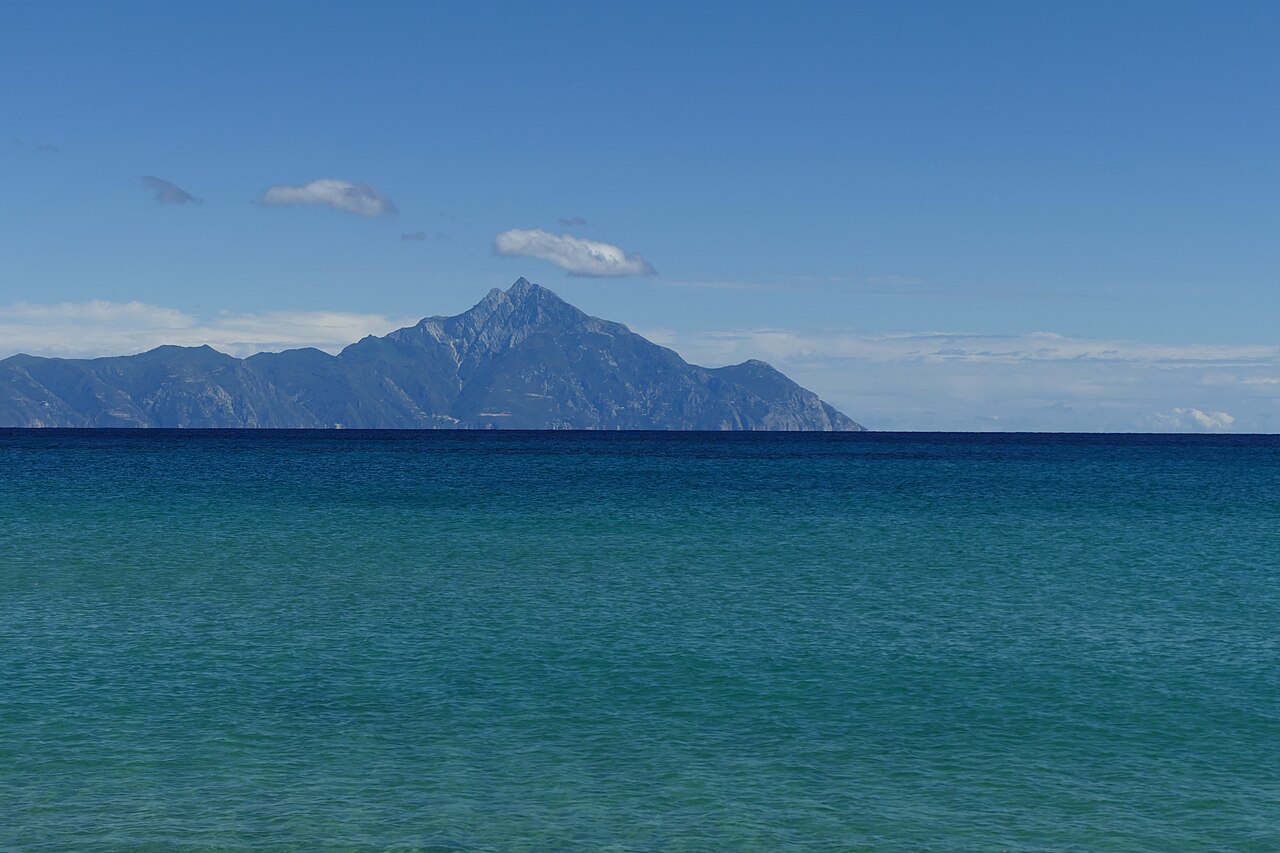
From Thasos the fleet sailed for Acanthus and tried to round the Athos peninsula, the easternmost of the three fingers of the Chalcidice. Mount Athos rises more than 2,000 metres straight out of the sea, and its cliffs offer no shelter. A strong north wind caught the ships off the headland. Herodotus says that about 300 ships and more than 20,000 men were lost, some drowned, some dashed on the rocks, some killed by the cold, and some taken by the sea creatures he believed lived in those waters. His figures cannot be checked and may be exaggerated, but the disaster was clearly serious.
The lesson was not forgotten. When Xerxes prepared his own invasion a decade later, he had a canal dug across the narrow neck of the Athos peninsula so that his fleet would never have to sail round the cape.
The night attack of the Brygi
On land, a Thracian people called the Brygi attacked the Persian camp at night, killed many men and wounded Mardonius himself. He did not leave until he had subdued them. With the fleet badly damaged and the season advanced, he then led the army back to Asia. The next year Darius gave command of the next expedition to two other men, Datis and Artaphernes, and Herodotus says this was because Mardonius had fared badly. Mardonius was not disgraced for long: he became one of Xerxes’s leading advisers and commanded the Persian army in Greece in 479 BCE, dying at the Battle of Plataea.
Earth and water
In 491 BCE Darius sent heralds to the Greek states to demand earth and water, the tokens of submission. Thasos was ordered to pull down its walls and send its ships to Abdera, and it obeyed. Many islands gave earth and water, and so did Aegina, which alarmed its rival Athens. Herodotus says, in a later book, that the Athenians threw the heralds into a pit and the Spartans threw theirs into a well, telling them to fetch earth and water from there. Killing heralds broke a rule respected across the ancient world, and the story made later conflict almost certain. The fleet that sailed in 490 BCE ended at the Battle of Marathon.
Success or failure
All of the detail above comes from Herodotus, a Greek writing some sixty years later, who saw the expedition as the first round of a Persian war against Greece. No Persian text describes the campaign. Royal inscriptions do give indirect evidence: the list of peoples on Darius’s tomb at Naqsh-e Rostam includes Skudra, usually identified with Thrace, and the “Ionians who wear the petasos” (a broad-brimmed hat), whom many scholars identify with Macedonians or the Greeks of the northern Aegean. On this evidence the expedition did what a Persian planner would have wanted. It restored the empire’s European province, which stayed in Persian hands until 479 BCE, and it gave Persia a base and allies on the edge of mainland Greece.
From the Greek side, it looked like a near miss. The broader story of the conflict, and the ways Greek and Persian perspectives differ, is set out in the overview of the Greco-Persian Wars and in Herodotus and the Persians.
Persian words from this page
| داریوش | Dâriush | Darius |
| مقدونیه | Maqduniyeh | Macedonia |
| طوفان | tufân | storm |
| کشتی | kashti | ship |
| لشکر | lashkar | army |
| خاک و آب | khâk o âb | earth and water |
Sources and further reading
- Herodotus, Histories, Book 6, chapters 43–48 and 94; Book 7, chapter 133.
- Pierre Briant, From Cyrus to Alexander: A History of the Persian Empire (2002).
- The Cambridge Ancient History, vol. 4, Persia, Greece and the Western Mediterranean c. 525 to 479 B.C. (2nd ed., 1988).
- Amélie Kuhrt, The Persian Empire: A Corpus of Sources from the Achaemenid Period (2007).
- Encyclopaedia Iranica, “Mardonius”.
Want to learn Persian? Get the free Starter Pack
Get the 14-page printable Starter Pack (all 32 letters, a 7-day reading plan, 100 core words and 20 survival phrases) and a short 5-email course. Free.
More in The Achaemenid Empire (550–330 BCE)
- Achaemenes, Teispes and the Early Persian Kings of Anshan
- Cyrus the Great: Birth, Legends and Rise to Power
- Cyrus Conquers Lydia: Croesus and the Battle of Thymbra
- The Persian Conquest of Ionia and Asia Minor
- Cyrus Takes Babylon (539 BCE)
- The Cyrus Cylinder
- Cyrus and the Return of the Jews
- The Death of Cyrus and the Massagetae
- Pasargadae: Cyrus’s Capital and Tomb
- The Tomb of Cyrus through History
- Cambyses II
- Cambyses Conquers Egypt: The Battle of Pelusium
- Bardiya and Gaumata: The Usurper Question
- Darius the Great Takes the Throne
- The Great Revolts of 522–521 BCE
- The Behistun Inscription
- The Persian Conquest of the Indus Valley
- Darius’s Scythian Campaign
- Darius’s Canal from the Nile to the Red Sea
- Darius’s Reforms: Satrapies, Taxes and Law
- The Royal Road and the Persian Postal System
- The Daric: Achaemenid Coinage and Economy
- The Ionian Revolt (499–493 BCE)
- The Greco-Persian Wars: An Overview
- Mardonius and the First Persian Expedition to Greece (492 BCE)
- The Battle of Marathon (490 BCE)
- The Death of Darius I and the Succession of Xerxes
- The Royal Tombs of Naqsh-e Rostam
- Xerxes I: King of Kings (486–465 BCE)
- Xerxes’ Invasion of Greece (480–479 BCE)
- The Battle of Thermopylae (480 BCE)
- The Battle of Artemisium (480 BCE)
- The Persian Capture of Athens (480–479 BCE)
- The Battle of Salamis (480 BCE)
- The Battle of Plataea and the End of the Invasion (479 BCE)
- The Palace of Darius at Susa
- Building Persepolis: How Darius and Xerxes Built Parsa
- The Persepolis Fortification and Treasury Tablets
- Herodotus and the Persians
- The Apadana Reliefs: Nations Bringing Gifts
- The Achaemenid Paradise Gardens
- The Persian Immortals and the Achaemenid Army
- The Achaemenid Navy
- Religion of the Achaemenid Kings
- Women of the Achaemenid Court
- Old Persian Language and Cuneiform
- Egypt under Persian Rule
- Babylon under Persian Rule
- Artaxerxes I
- The Peace of Callias
- Darius II and the Peloponnesian War
- Famous Satraps of the Persian Empire
- Artaxerxes II Mnemon
- Cyrus the Younger and the Battle of Cunaxa
- The King’s Peace (387 BCE)
- The Great Satraps’ Revolt
- Artaxerxes III and the Reconquest of Egypt
- Darius III, the Last Achaemenid King
- The Battle of the Granicus (334 BCE)
- The Battle of Issus (333 BCE)
- Alexander Takes Tyre, Gaza and Egypt (332 BCE)
- The Battle of Gaugamela (331 BCE)
- Ariobarzanes and the Battle of the Persian Gate
- The Burning of Persepolis (330 BCE)
- The Death of Darius III and Bessus
- The Legacy of the Achaemenid Empire