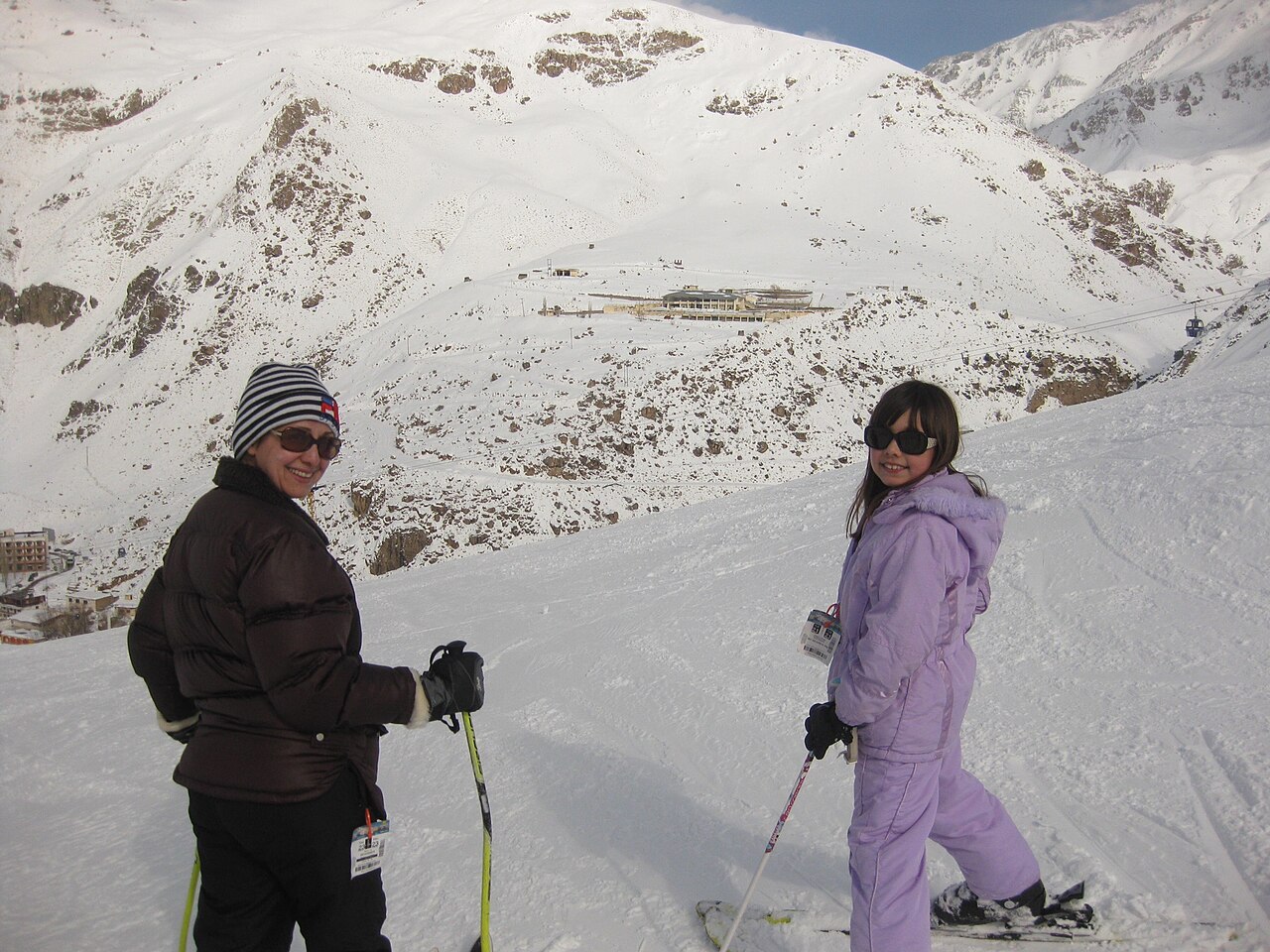
Iran has some of the highest ski slopes in Asia outside the Himalaya, and the best known are Dizin (دیزین) and Shemshak (شمشک) in the Alborz mountains north of Tehran. Dizin, opened in the late 1960s, has lifts reaching about 3,600 metres and a season that often runs from December into May; Shemshak, nearby, is smaller and steeper and popular with experienced skiers.
| Dizin | Lifts to about 3,600 m; gondolas, chairlifts and surface lifts; recognised by the International Ski Federation (FIS) for international races |
|---|---|
| Shemshak | Steeper, shorter runs, closer to Tehran; known for moguls and night skiing |
| Distance | Roughly 60 to 70 km north of Tehran, but mountain roads make it 1.5 to 3 hours |
| Season | Usually December to April, often into May at Dizin |
| Other resorts | Darbandsar, Tochal (above Tehran), Ab Ali, Alvares (Sabalan), Pooladkaf (Fars) |

How skiing came to Iran
Skiing is usually said to have reached Iran in the 1930s, brought by Iranians returning from study in Europe and by European engineers working in the country, among them men building the Trans-Iranian Railway. The first slopes were simple hills with rope tows near Tehran. In the following decades the sport grew among the capital’s middle and upper classes, and in the 1960s and 1970s the major resorts of the Alborz were built with chairlifts, gondolas and hotels.
After the 1979 revolution the resorts kept operating, and skiing remained one of the most popular winter pastimes for Tehranis. Iran has sent alpine skiers to the Winter Olympics, and its slopes attract a small but steady number of foreign visitors who come for deep, dry snow at high altitude. For Iran’s wider sporting life, see Sports in Iran.
Dizin
Dizin lies on the north side of the main Alborz crest, which helps it hold snow late into spring. Its base is already above 2,600 metres, and the top lifts reach about 3,600 metres, so the snow is usually dry and the views over the surrounding peaks, including Damavand on clear days, are wide.
The ski area spreads across broad, open slopes above the tree line, with long cruising runs for intermediates and off-piste bowls for experts. There are hotels, chalets and restaurants at the base. Dizin is the resort the Iranian federation uses for national and international competitions.
Shemshak and Darbandsar
Shemshak is on the Tehran side of the range, in a steep valley above Fasham. Its runs are shorter but steeper, and its mogul fields and night skiing have made it the favourite of many Tehran skiers. The village of Shemshak itself has many private chalets and apartments. Just next door, the small resort of Darbandsar has gentler slopes suited to families and beginners.
Both are close enough to Tehran for day trips, but traffic on winter weekends can be heavy.
Tochal and other resorts
Above Tehran, the Tochal gondola climbs to a ski area at around 3,700 metres, which often has the longest season of all. Further afield, Ab Ali on the road to Damavand is one of the oldest resorts, Alvares on the slopes of Mount Sabalan serves Ardabil, and Pooladkaf in the Zagros of Fars is the main resort in the south.
Practical notes and safety
- Roads: Dizin can be reached from Tehran via Fasham and Shemshak, or from the north via the Karaj to Chalus road. Mountain roads can close in heavy snow; check conditions and carry chains.
- Altitude: Dizin’s top is higher than most Alpine resorts. Take it easy on the first day and drink plenty of water.
- Avalanches: off-piste terrain in the Alborz can be dangerous after heavy snowfall. Ski off-piste only with local knowledge, avalanche equipment and a partner.
- Equipment: skis and boots can be rented at the main resorts, but quality varies; experienced skiers often bring their own boots.
- Rules: dress and conduct rules apply on the slopes as elsewhere in Iran, and enforcement varies; follow local guidance.
- Prices and lift times: these change from season to season; check current information from the resorts.
- For general safety, follow your own government’s current travel advice for Iran, and see Practical Tips for Travelling to Iran.
In summer the same valleys are good walking country, with high meadows below the bare peaks.
Persian words from this page
| اسکی | eski | skiing |
| پیست | pist | ski slope, piste |
| برف | barf | snow |
| بهمن | bahman | avalanche (also a month of the Persian calendar) |
| تلهکابین | tele-kâbin | gondola |
| زمستان | zemestân | winter |
Sources and further reading
- International Ski and Snowboard Federation (FIS), homologated courses list, Iran.
- Ski Federation of the Islamic Republic of Iran, resort information.
- W. B. Fisher (ed.), The Cambridge History of Iran, vol. 1, The Land of Iran (Cambridge, 1968), on the climate and snowfall of the Alborz.
Want to learn Persian? Get the free Starter Pack
Get the 14-page printable Starter Pack (all 32 letters, a 7-day reading plan, 100 core words and 20 survival phrases) and a short 5-email course. Free.
More in Top Places to Visit in Iran
- Naqsh-e Jahan Square
- Shah (Imam) Mosque, Isfahan
- Sheikh Lotfollah Mosque
- Ali Qapu Palace
- Jameh Mosque of Isfahan
- Si-o-se Pol and Khaju Bridge
- Vank Cathedral
- Hasht Behesht Palace
- Naqsh-e Rostam
- Eram Garden, Shiraz
- Nasir al-Molk (Pink) Mosque
- Tomb of Hafez (Hafezieh)
- Tomb of Saadi (Saadieh)
- Shah Cheragh Shrine
- Arg of Karim Khan
- Fin Garden, Kashan
- Historic Houses of Kashan
- Jameh Mosque of Yazd
- Yazd Fire Temple and Towers of Silence
- Dowlatabad Garden and Windcatcher
- Amir Chakhmaq Complex
- Golestan Palace
- National Museum of Iran
- Treasury of National Jewels
- Tehran Grand Bazaar
- Milad Tower
- Imam Reza Shrine, Mashhad
- Tomb of Ferdowsi, Tus
- Tomb of Omar Khayyam, Neyshabur
- Tomb of Avicenna, Hamadan
- Ganjnameh Inscriptions, Hamadan
- Behistun (Bisotun): Visiting the Site
- Taq-e Bostan: Visiting the Site
- Tabriz Historic Bazaar
- Takht-e Soleyman
- Armenian Monastic Ensembles of Iran
- Sheikh Safi al-Din Shrine, Ardabil
- Dome of Soltaniyeh
- Alamut Castle
- Falak-ol-Aflak Castle
- Shushtar Historical Hydraulic System
- Chogha Zanbil: Visiting the Ziggurat
- Susa Archaeological Site
- Arg-e Bam
- Ganjali Khan Complex, Kerman
- Shazdeh Garden, Mahan
- Rayen Castle
- Dasht-e Lut (Lut Desert)
- Maranjab Desert and Caravanserai
- Varzaneh Desert
- Mount Damavand
- Hyrcanian Forests
- Lake Urmia
- Badab-e Surt Springs
- Ali Sadr Cave
- The Kaluts of Shahdad
- Qeshm Geopark
- Hormuz Island Colours
- Visiting Persepolis: A Day Trip from Shiraz
- Visiting Pasargadae
- Persian Caravanserais
- The Qanat of Gonabad
- Meymand Village
- Sasanian Sites of Fars: Firuzabad, Bishapur and Sarvestan
- Gonbad-e Qabus: Visiting the Tower
- Zayandeh Rud and Isfahan’s Bridges
- Tochal and Darband: Hiking Above Tehran
- Mount Sabalan
- Skiing in Iran: Dizin and Shemshak
- Golestan National Park