Tochal (توچال) is the 3,964-metre mountain that rises directly behind Tehran, part of the Alborz range, and Darband (دربند) is the old village at its foot where many of the walking routes begin. On Friday mornings thousands of Tehranis climb from Darband and neighbouring valleys, from a stroll past riverside tea houses to a full day’s hike to the summit ridge, making these some of the most used mountain paths in Iran.
| Summit | Tochal, 3,964 m, on a ridge about 12 km long |
|---|---|
| Range | Central Alborz, north of Tehran |
| Main trailheads | Darband, Darakeh, Velenjak, Jamshidieh park |
| Gondola | From Velenjak (about 1,900 m) to a top station at about 3,740 m |
| Other peaks | Shah-Neshin (3,875 m), Kolakchal (3,350 m), Palangchal (3,520 m) |
Our blog has two longer guides to the leisure side of these places: Tochal Peak, on the gondola, ski slopes and resort, and Darband, on its restaurants and history. This page is about walking: how the mountain is laid out, which routes people take, and how to stay safe.

A mountain inside a city
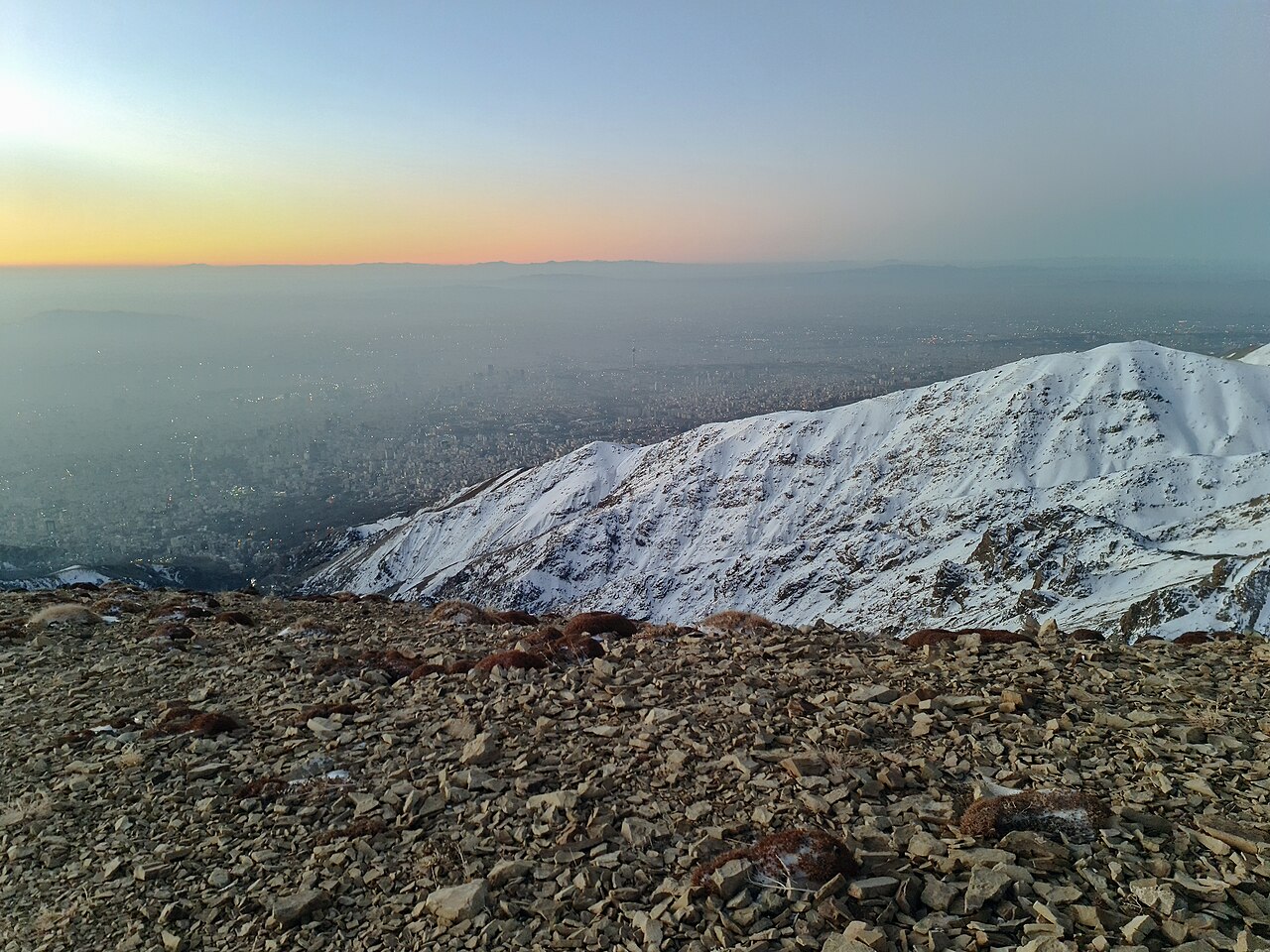
Few capitals have a mountain like this on their doorstep. The northern suburbs of Tehran climb to around 1,700 or 1,800 metres, and from there the southern face of Tochal rises another two kilometres, steep, rocky and snow-covered for much of the year. From the top on a clear day you see the whole city spread across the plain to the south and, to the east, the white cone of Damavand.
The mountain is cut by a series of valleys that run down into the city: Darakeh to the west, Velenjak, Darband in the middle, and Golabdarreh and Darabad further east. Each has a stream, a path, and its own string of cafes and shelters. Tehranis treat these valleys as their weekend park, and mountain walking (کوهنوردی, kuhnavardi) is one of the city’s most popular pastimes.
Darband: the gateway
Darband was once a separate village above Tajrish in the Shemiran district, where wealthier Tehranis spent the summer to escape the heat of the city. The name means a pass or gateway, and it fits: here the river comes out of a narrow valley onto the plain. Today it is inside the city limits, and the first stretch of the path is lined with restaurants, tea houses and stalls selling dried fruit and pickles, with platforms built over the rushing stream.
Near the start of the path is the Zahir od-Dowleh cemetery, where the poets Iraj Mirza and Forough Farrokhzad are buried, a quiet stop for readers of Persian poetry.
The main routes
Darband to Shirpala
The classic walk follows the Darband valley past the last cafes and then climbs, steadily and steeply, up the south ridge to the Shirpala shelter (پناهگاه شیرپلا). For most fit walkers this is a half-day out and back, with views over the city growing wider as you climb. Many people go no further.
Shirpala to the summit
Above Shirpala the path continues up the south ridge past the Siahsang hut towards the main ridge and the summit. This is the usual route from Tehran to the top of Tochal and is a long, hard day on foot, with a big height gain and thin air near the top. Some hikers go up on foot and take the gondola down from the top station, which lies a short distance from the summit.
Darakeh and the western peaks
From Darakeh, west of Darband, a path climbs past waterfalls and shelters towards Palangchal and the western end of the ridge. It is a little less crowded than Darband and has some of the most attractive valley scenery on the mountain.
Safety on Tochal
Tochal looks friendly from the city, but it is a high mountain and people die on it most years, usually in winter.
- Weather changes fast. Even in spring and autumn, wind, fog and snow can arrive within an hour on the upper ridge.
- In winter the upper slopes carry deep snow and avalanche risk. Do not go above the shelters without winter experience and equipment, or a qualified guide.
- Start early, carry water, warm layers and a headlamp, and turn back if you are running late.
- Stay on marked paths. Shortcuts down side gullies lead to cliffs.
- Tell someone your route. Mobile coverage is good on the lower slopes but patchy higher up.
- Gondola times and operation depend on weather and season; check before relying on it for the descent.
- For general security conditions, follow your own government’s current travel advice for Iran.
For more of the capital, see Tehran and the best places to visit in Tehran. Experienced mountaineers often use Tochal as acclimatisation before climbing Damavand.
Persian words from this page
| کوه | kuh | mountain |
| قله | qolle | peak, summit |
| دربند | darband | pass, gateway |
| کوهنوردی | kuhnavardi | mountain walking, hiking |
| پناهگاه | panâhgâh | mountain shelter, refuge |
| آبشار | âbshâr | waterfall |
| تلهکابین | tele-kâbin | gondola, cable car |
Sources and further reading
- Encyclopaedia Iranica, “Damāvand”, for the Alborz setting.
- Mountaineering and Sport Climbing Federation of Iran, route and safety information for the Tehran mountains.
- W. B. Fisher (ed.), The Cambridge History of Iran, vol. 1, The Land of Iran (Cambridge, 1968), on the Alborz.
Want to learn Persian? Get the free Starter Pack
Get the 14-page printable Starter Pack (all 32 letters, a 7-day reading plan, 100 core words and 20 survival phrases) and a short 5-email course. Free.
More in Top Places to Visit in Iran
- Naqsh-e Jahan Square
- Shah (Imam) Mosque, Isfahan
- Sheikh Lotfollah Mosque
- Ali Qapu Palace
- Jameh Mosque of Isfahan
- Si-o-se Pol and Khaju Bridge
- Vank Cathedral
- Hasht Behesht Palace
- Naqsh-e Rostam
- Eram Garden, Shiraz
- Nasir al-Molk (Pink) Mosque
- Tomb of Hafez (Hafezieh)
- Tomb of Saadi (Saadieh)
- Shah Cheragh Shrine
- Arg of Karim Khan
- Fin Garden, Kashan
- Historic Houses of Kashan
- Jameh Mosque of Yazd
- Yazd Fire Temple and Towers of Silence
- Dowlatabad Garden and Windcatcher
- Amir Chakhmaq Complex
- Golestan Palace
- National Museum of Iran
- Treasury of National Jewels
- Tehran Grand Bazaar
- Milad Tower
- Imam Reza Shrine, Mashhad
- Tomb of Ferdowsi, Tus
- Tomb of Omar Khayyam, Neyshabur
- Tomb of Avicenna, Hamadan
- Ganjnameh Inscriptions, Hamadan
- Behistun (Bisotun): Visiting the Site
- Taq-e Bostan: Visiting the Site
- Tabriz Historic Bazaar
- Takht-e Soleyman
- Armenian Monastic Ensembles of Iran
- Sheikh Safi al-Din Shrine, Ardabil
- Dome of Soltaniyeh
- Alamut Castle
- Falak-ol-Aflak Castle
- Shushtar Historical Hydraulic System
- Chogha Zanbil: Visiting the Ziggurat
- Susa Archaeological Site
- Arg-e Bam
- Ganjali Khan Complex, Kerman
- Shazdeh Garden, Mahan
- Rayen Castle
- Dasht-e Lut (Lut Desert)
- Maranjab Desert and Caravanserai
- Varzaneh Desert
- Mount Damavand
- Hyrcanian Forests
- Lake Urmia
- Badab-e Surt Springs
- Ali Sadr Cave
- The Kaluts of Shahdad
- Qeshm Geopark
- Hormuz Island Colours
- Visiting Persepolis: A Day Trip from Shiraz
- Visiting Pasargadae
- Persian Caravanserais
- The Qanat of Gonabad
- Meymand Village
- Sasanian Sites of Fars: Firuzabad, Bishapur and Sarvestan
- Gonbad-e Qabus: Visiting the Tower
- Zayandeh Rud and Isfahan’s Bridges
- Tochal and Darband: Hiking Above Tehran
- Mount Sabalan
- Skiing in Iran: Dizin and Shemshak
- Golestan National Park