Qeshm Geopark (ژئوپارک قشم) is a UNESCO Global Geopark covering Qeshm Island, the largest island in the Persian Gulf, and its neighbouring waters. Joined to the global network in 2006 as the first geopark in the Middle East, removed in 2013 and readmitted in 2017, it protects eroded canyons, a salt mountain with one of the world’s longest salt caves, mangrove forest and turtle beaches.
| Persian name | Zhe’opârk-e Qeshm |
|---|---|
| Location | Qeshm Island, Strait of Hormuz, Hormozgan province |
| Status | Global Geoparks Network 2006; removed early 2013; readmitted May 2017 as a UNESCO Global Geopark |
| Area | About 300 km² at first; about 2,063 km² after the 2017 extension, including Hengam island and the Hara mangroves |
| Key geosites | Stars Valley, Chahkooh Canyon, Valley of Statues, Namakdan salt dome and cave, Hara forest |
| Best season | November to March |
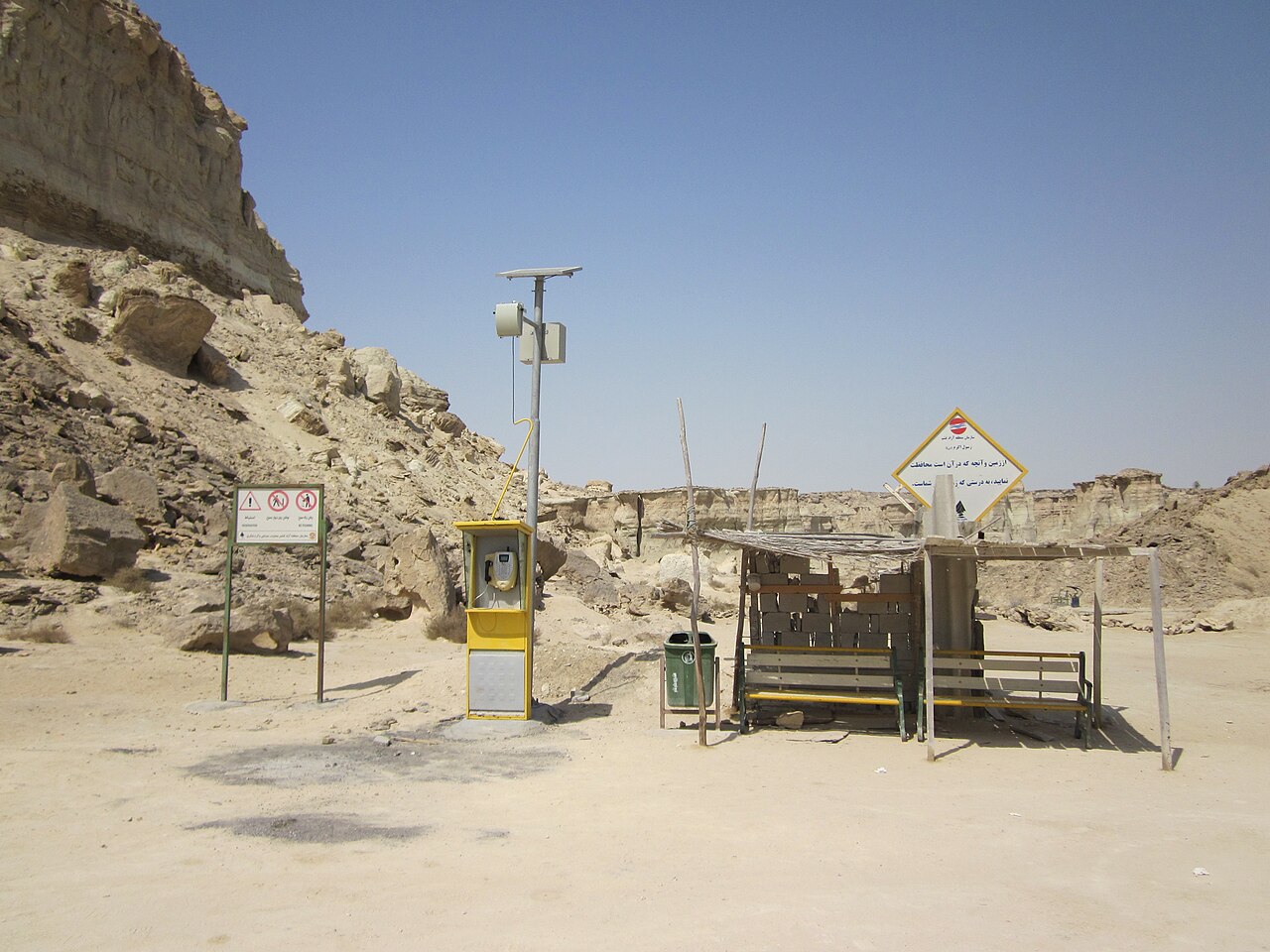

An island that shows its geology
Qeshm is young land. Most of the island is made of soft marine marls, silts and sandstones laid down in the last few million years, then squeezed into folds as the Arabian plate pushes against Iran and raises the Zagros. With almost no plant cover and rare but violent rainstorms, these soft rocks erode quickly into gullies, pillars and canyons, and the layers are laid bare like a cut cake. In the south-west, older rock breaks through: a salt dome, a plug of salt hundreds of millions of years old that has risen through the younger beds.
A geopark is not a strict reserve. It is an area where geology is used for education and local livelihoods, and UNESCO reviews each geopark every four years. Qeshm’s 2013 removal followed criticism of weak protection and visitor facilities; the 2017 return came after the management plan, signage and community work were revised. Our Qeshm Island page covers the island’s towns, people and how to get there; this page takes the geosites one by one.
The main geosites
Stars Valley
Stars Valley (دره ستارهها, Dare-ye Setâre-hâ, also called Dare-ye Setâregân), near the village of Berkeh Khalaf in the east of the island, is a maze of spires, ribs and narrow gullies cut into pale silt and sandstone. Wind and the run-off from occasional storms carved it. Local tradition says a star fell here and shattered the ground, which is where the name comes from. It is best in the low light of late afternoon, and paths loop through the most striking parts.
Chahkooh Canyon
Chahkooh (چاهکوه, “well-mountain”) is a narrow gorge whose smooth, curving walls were sculpted by flash floods. At its mouth and on the plateau above are wells cut into the rock by local people to catch and store rain, the origin of the name. Walking into the gorge you pass from glare into shade, between walls patterned with holes and honeycomb weathering.
Valley of Statues
In the Valley of Statues (دره تندیسها) erosion has left isolated rock forms that visitors read as faces, animals and figures. It is a good example of how differences in hardness between layers decide which shapes survive.
Namakdan salt dome and cave
The Namakdan (نمکدان, “salt cellar”) mountain in the south-west is the island’s highest point at about 397 m. It is a salt dome, and water seeping through it has dissolved the Namakdan cave, about 6.5 to 6.6 km long and among the longest salt caves known. Salt stalactites, crusts and pools of brine line the passages. The cave is a protected geosite; visits to its entrance chamber are usually guided, and deeper parts are for specialists only.
Hara forest
On the north coast, in the channel between Qeshm and the mainland, grows Iran’s largest mangrove forest of grey mangrove, called harâ (حرا) in Persian. Boat trips run through the creeks at high tide. Herons, egrets and migratory waders feed on the mudflats, and the forest is a nursery for fish and shrimp.
Other sites
The geopark also takes in Kharbas caves, chambers cut into a cliff; the bird wetlands and mudflats of the coast; the beaches at Shibderaz where hawksbill turtles nest in spring; Hengam island and the waters where dolphins are often seen; and Laft, an old port village of windcatchers and water cisterns.
Practical notes and safety
- Visit between November and March. Summers are extremely hot and humid.
- Canyons such as Chahkooh flood in minutes after heavy rain, even rain falling far away. Do not enter gorges if storms are around.
- Distances on the island are long and public transport limited; most visitors hire a car with driver or join tours.
- At Shibderaz, keep away from nests, use no lights at night near turtles, and follow local volunteers’ instructions. On dolphin trips, ask boatmen to keep a distance.
- Take nothing from geosites, including salt crystals. Check current access arrangements locally and follow your own government’s travel advice for Iran.
Qeshm is a short boat ride from Bandar Abbas and from Hormuz Island, whose own salt dome produces the colours described on Hormuz Island colours.
Persian words from this page
| دره | darre | valley |
| ستاره | setâre | star |
| تنگه | tange | gorge; strait |
| نمکدان | namakdân | salt cellar |
| حرا | harâ | grey mangrove |
| لاکپشت | lâkposht | turtle |
| جزیره | jazire | island |
Sources and further reading
- UNESCO, Global Geoparks Network, “Qeshm Island UNESCO Global Geopark” (Iran).
- Qeshm Free Area Organization, Qeshm Geopark geosite information.
- “Qeshm” and Persian Wikipedia “ژئوپارک قشم”, consulted 2026, for the dates of listing, removal and readmission.
- Global Geoparks Network (2013) and UNESCO Global Geoparks Council (2017) decisions on Qeshm.
Want to learn Persian? Get the free Starter Pack
Get the 14-page printable Starter Pack (all 32 letters, a 7-day reading plan, 100 core words and 20 survival phrases) and a short 5-email course. Free.
More in Top Places to Visit in Iran
- Naqsh-e Jahan Square
- Shah (Imam) Mosque, Isfahan
- Sheikh Lotfollah Mosque
- Ali Qapu Palace
- Jameh Mosque of Isfahan
- Si-o-se Pol and Khaju Bridge
- Vank Cathedral
- Hasht Behesht Palace
- Naqsh-e Rostam
- Eram Garden, Shiraz
- Nasir al-Molk (Pink) Mosque
- Tomb of Hafez (Hafezieh)
- Tomb of Saadi (Saadieh)
- Shah Cheragh Shrine
- Arg of Karim Khan
- Fin Garden, Kashan
- Historic Houses of Kashan
- Jameh Mosque of Yazd
- Yazd Fire Temple and Towers of Silence
- Dowlatabad Garden and Windcatcher
- Amir Chakhmaq Complex
- Golestan Palace
- National Museum of Iran
- Treasury of National Jewels
- Tehran Grand Bazaar
- Milad Tower
- Imam Reza Shrine, Mashhad
- Tomb of Ferdowsi, Tus
- Tomb of Omar Khayyam, Neyshabur
- Tomb of Avicenna, Hamadan
- Ganjnameh Inscriptions, Hamadan
- Behistun (Bisotun): Visiting the Site
- Taq-e Bostan: Visiting the Site
- Tabriz Historic Bazaar
- Takht-e Soleyman
- Armenian Monastic Ensembles of Iran
- Sheikh Safi al-Din Shrine, Ardabil
- Dome of Soltaniyeh
- Alamut Castle
- Falak-ol-Aflak Castle
- Shushtar Historical Hydraulic System
- Chogha Zanbil: Visiting the Ziggurat
- Susa Archaeological Site
- Arg-e Bam
- Ganjali Khan Complex, Kerman
- Shazdeh Garden, Mahan
- Rayen Castle
- Dasht-e Lut (Lut Desert)
- Maranjab Desert and Caravanserai
- Varzaneh Desert
- Mount Damavand
- Hyrcanian Forests
- Lake Urmia
- Badab-e Surt Springs
- Ali Sadr Cave
- The Kaluts of Shahdad
- Qeshm Geopark
- Hormuz Island Colours
- Visiting Persepolis: A Day Trip from Shiraz
- Visiting Pasargadae
- Persian Caravanserais
- The Qanat of Gonabad
- Meymand Village
- Sasanian Sites of Fars: Firuzabad, Bishapur and Sarvestan
- Gonbad-e Qabus: Visiting the Tower
- Zayandeh Rud and Isfahan’s Bridges
- Tochal and Darband: Hiking Above Tehran
- Mount Sabalan
- Skiing in Iran: Dizin and Shemshak
- Golestan National Park