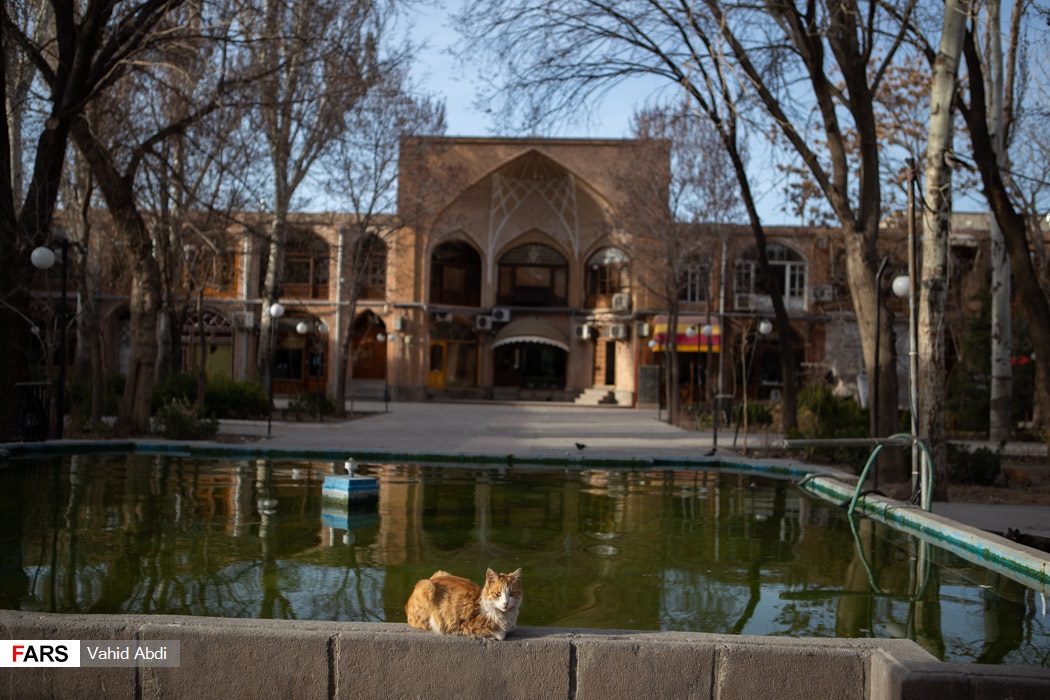
The Tabriz Historic Bazaar Complex (بازار تبریز, Bâzâr-e Tabriz) is a network of covered brick lanes, caravanserais, domed halls, mosques and schools in the centre of Tabriz, often described as one of the largest covered bazaars in the world. A market has stood here for many centuries on the trade routes between Asia and Europe, the buildings you see were largely rebuilt after an earthquake in 1780, and the whole complex became a UNESCO World Heritage Site in 2010.
| Location | Central Tabriz, East Azerbaijan province |
|---|---|
| Main period | Rebuilt after the 1780 earthquake, mostly Zand and Qajar |
| Area | About 29 ha inscribed by UNESCO, with a much larger buffer zone |
| UNESCO | Inscribed 2010 (site 1346) |
| Award | Aga Khan Award for Architecture, 2013, for its rehabilitation |

A market for the world
Tabriz sits where roads from Anatolia, the Caucasus, Mesopotamia and the Iranian plateau meet, and its bazaar grew rich on that position. Medieval writers from al-Muqaddasi in the 10th century to Yaqut, Ibn Battuta and Hamdallah Mustawfi describe its markets, and Marco Polo, passing through in the late 13th century, called Tabriz a great city of trade where merchants from many lands met.
The peak came twice. Under the Mongol Ilkhans, Tabriz was the capital of an empire stretching from Anatolia to Afghanistan, a story told on our page Tabriz under the Ilkhans. Then in the 16th century it was the first capital of the Safavids. Even after the court moved to Qazvin and Isfahan, the bazaar remained the main market of north-western Iran, trading with Ottoman and Russian merchants.
Earthquakes repeatedly destroyed the city. After the great earthquake of 1780 most of the bazaar was rebuilt in brick, and that late 18th- and 19th-century fabric is what survives today. UNESCO singles out how the buildings were funded and run: through religious endowments (vaqf) and tax exemptions that kept merchants, craftsmen and schools working together.
The bazaar’s merchants also played a political role. During the Constitutional Revolution, Tabriz held out against the shah’s forces in 1908–1909, and the bazaar was at the heart of that resistance; see The Siege of Tabriz and Sattar Khan.
How the bazaar is organised
The complex is not a single building but a whole quarter. Its parts have their own names:
- Râsteh (lanes): long covered streets lined with small shops, each lane traditionally given to one trade.
- Timcheh: domed halls, often very tall, used for wholesale trade.
- Sarâ and kârvânsarâ: two-storey courtyards with storerooms and offices, where caravans once unloaded.
- Dâlân: passages linking lanes and courtyards.
- Mosques, madrasas and bathhouses built into the same fabric, including the Jameh Mosque of Tabriz on the edge of the bazaar.
What to look at
Amir Bazaar
The Amir Bazaar is the gold and jewellery quarter, built in the Qajar period around a series of courtyards. Its shopfronts and vaults are among the most carefully restored in the complex.
The carpet halls
Tabriz is one of the great carpet cities of Iran, and the Mozaffarieh timcheh, a late Qajar hall with a high brick dome, is where many carpet dealers trade. Rugs are stacked by size and knot count, and dealers are often happy to explain the differences between Tabriz, Heriz and other weaves.
Domes and brickwork
Walk slowly and look up. The vaults and domes use many different brick patterns, and at the crossings light falls from openings in the domes. Some of the halls, such as the great domed timchehs, are among the finest brick interiors in Iran.
Trades and food
Other lanes are given to shoes, copper, spices, dried fruit, nuts and sweets. Look for local specialities such as qorabiyeh almond cakes, and for the tea houses tucked into the courtyards.
Muharram
The bazaar is also a religious space. During the month of Muharram, and especially on Tasua and Ashura, it hosts mourning ceremonies, with lanes draped in black and processions passing through.
Practical notes
- When: mornings on working days are best. Most shops close on Fridays and religious holidays, and during Muharram the atmosphere changes completely. Check current information.
- Language: most people in the bazaar speak Azerbaijani Turkish among themselves and Persian with visitors.
- Buying carpets: take your time, compare, and ask about origin and knot density. Bargaining is normal and polite.
- Photos: ask before photographing people or the inside of shops.
- Safety: follow your own government’s travel advice for Iran.
For the rest of the city, including the Blue Mosque and the Arg, see our guide to Tabriz, and compare this bazaar with the Grand Bazaar of Tehran.
Persian words from this page
| تبریز | Tabriz | Tabriz |
| راسته | râsteh | bazaar lane of one trade |
| تیمچه | timcheh | domed trading hall |
| کاروانسرا | kârvânsarâ | caravanserai |
| فرش | farsh | carpet |
| وقف | vaqf | religious endowment |
| طلا | talâ | gold |
Sources and further reading
- UNESCO World Heritage Centre, “Tabriz Historic Bazaar Complex” (inscribed 2010).
- Encyclopaedia Iranica, “BĀZĀR ii. Organization and Function“.
- Aga Khan Award for Architecture, 2013 cycle, “Rehabilitation of Tabriz Bazaar”.
- Marco Polo, The Description of the World, the chapter on Tabriz.
Want to learn Persian? Get the free Starter Pack
Get the 14-page printable Starter Pack (all 32 letters, a 7-day reading plan, 100 core words and 20 survival phrases) and a short 5-email course. Free.
More in Top Places to Visit in Iran
- Naqsh-e Jahan Square
- Shah (Imam) Mosque, Isfahan
- Sheikh Lotfollah Mosque
- Ali Qapu Palace
- Jameh Mosque of Isfahan
- Si-o-se Pol and Khaju Bridge
- Vank Cathedral
- Hasht Behesht Palace
- Naqsh-e Rostam
- Eram Garden, Shiraz
- Nasir al-Molk (Pink) Mosque
- Tomb of Hafez (Hafezieh)
- Tomb of Saadi (Saadieh)
- Shah Cheragh Shrine
- Arg of Karim Khan
- Fin Garden, Kashan
- Historic Houses of Kashan
- Jameh Mosque of Yazd
- Yazd Fire Temple and Towers of Silence
- Dowlatabad Garden and Windcatcher
- Amir Chakhmaq Complex
- Golestan Palace
- National Museum of Iran
- Treasury of National Jewels
- Tehran Grand Bazaar
- Milad Tower
- Imam Reza Shrine, Mashhad
- Tomb of Ferdowsi, Tus
- Tomb of Omar Khayyam, Neyshabur
- Tomb of Avicenna, Hamadan
- Ganjnameh Inscriptions, Hamadan
- Behistun (Bisotun): Visiting the Site
- Taq-e Bostan: Visiting the Site
- Tabriz Historic Bazaar
- Takht-e Soleyman
- Armenian Monastic Ensembles of Iran
- Sheikh Safi al-Din Shrine, Ardabil
- Dome of Soltaniyeh
- Alamut Castle
- Falak-ol-Aflak Castle
- Shushtar Historical Hydraulic System
- Chogha Zanbil: Visiting the Ziggurat
- Susa Archaeological Site
- Arg-e Bam
- Ganjali Khan Complex, Kerman
- Shazdeh Garden, Mahan
- Rayen Castle
- Dasht-e Lut (Lut Desert)
- Maranjab Desert and Caravanserai
- Varzaneh Desert
- Mount Damavand
- Hyrcanian Forests
- Lake Urmia
- Badab-e Surt Springs
- Ali Sadr Cave
- The Kaluts of Shahdad
- Qeshm Geopark
- Hormuz Island Colours
- Visiting Persepolis: A Day Trip from Shiraz
- Visiting Pasargadae
- Persian Caravanserais
- The Qanat of Gonabad
- Meymand Village
- Sasanian Sites of Fars: Firuzabad, Bishapur and Sarvestan
- Gonbad-e Qabus: Visiting the Tower
- Zayandeh Rud and Isfahan’s Bridges
- Tochal and Darband: Hiking Above Tehran
- Mount Sabalan
- Skiing in Iran: Dizin and Shemshak
- Golestan National Park