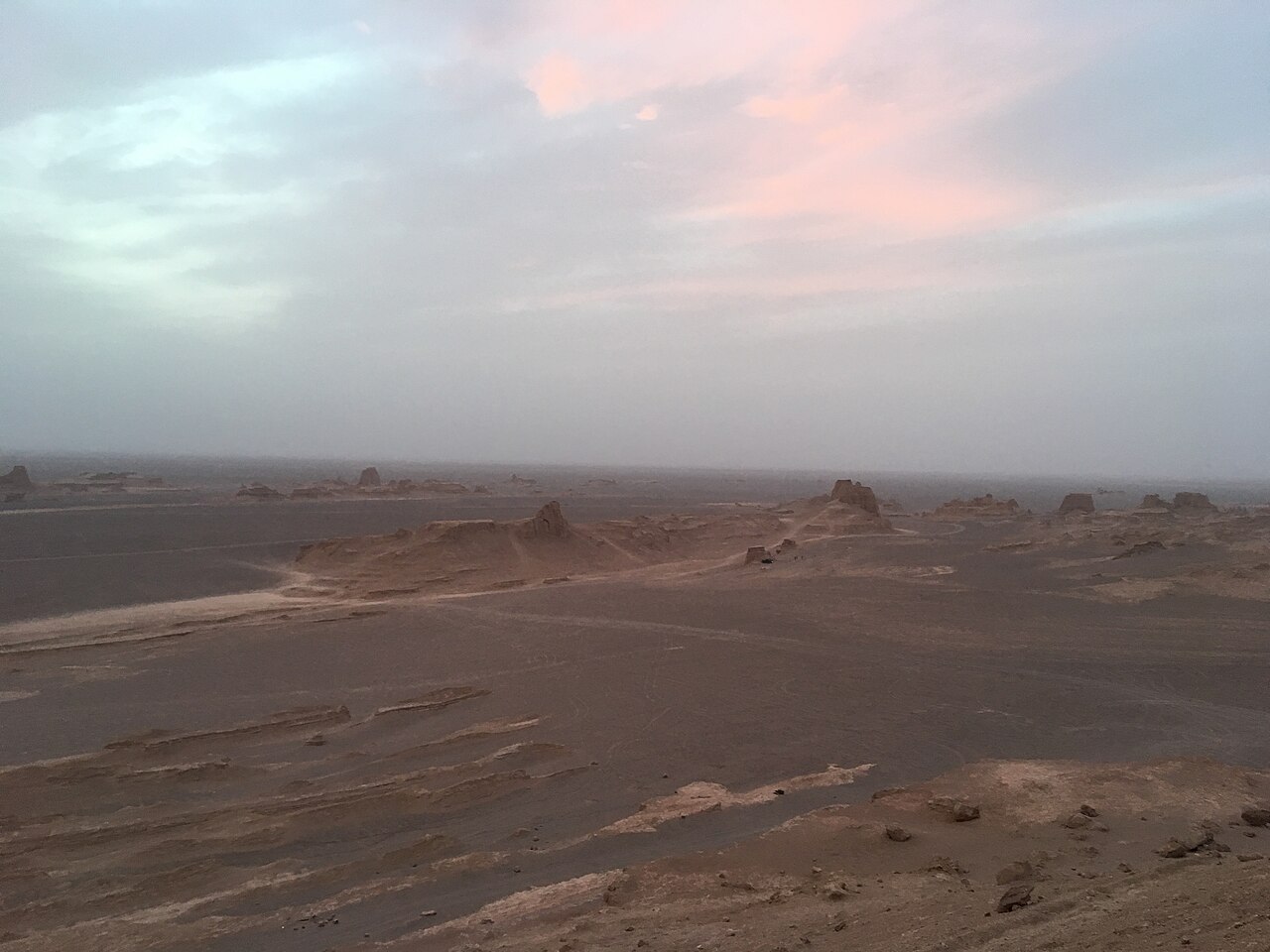
The Kaluts of Shahdad (کلوتهای شهداد) are giant wind-carved ridges in the western Lut Desert, east of the oasis town of Shahdad in Kerman province. Known to geologists as yardangs, they stand in long parallel rows like the walls of a ruined city, some up to 155 metres high, and they are the main reason UNESCO inscribed the Lut Desert as a World Heritage Site in 2016.
| Persian name | Kalut-hâ-ye Shahdâd; locally kalut, plural kalut-hâ |
|---|---|
| Location | Western Dasht-e Lut, east and north-east of Shahdad, Kerman province |
| Landform | Yardangs: ridges carved from soft lake and river sediments by wind-blown sand |
| Size | Up to about 155 m high; single ridges traceable for more than 40 km (UNESCO) |
| UNESCO | Part of the Lut Desert World Heritage Site, inscribed 2016 |
| Season to visit | November to March |

What a kalut is
A yardang is a ridge of rock or hardened sediment sculpted by wind. The word comes from Turkic via explorers in Central Asia; in Iran the local name is kalut. The kaluts of the Lut are the largest and finest examples known anywhere, and UNESCO describes them as the world’s best examples of aeolian, that is wind-made, yardang landforms.
The raw material is old: layers of silt, clay and sand laid down in lakes and river plains when this basin was wetter, then dried and partly cemented. The tool is the wind. Between June and October a steep pressure difference sets up across eastern Iran and strong winds blow from the north-north-west, day after day, for months. They pick up sand and drive it along the ground at high speed. Sandblasting cuts corridors through the softer layers; the tougher parts survive as ridges, rounded and streamlined on the windward end and tapering downwind, like upturned boat hulls.
Because the wind blows from one direction so steadily, ridges and corridors run parallel to it, so from the air the kalut field looks combed. Yardangs cover about a third of the Lut World Heritage property. Elsewhere in the same desert the wind has stripped the ground to stony pavements of polished, faceted pebbles, and in the north-west a black basalt plateau, Gandom Beryan, absorbs so much sun that it is among the hottest surfaces on Earth: land surface temperatures of up to 70.7 °C have been recorded within the property.
Shahdad, oasis and Bronze Age town
Shahdad (شهداد) is a palm and citrus oasis at the foot of the mountains, where streams from the Kerman ranges reach the desert edge. It is the gateway to the kaluts and has a much longer history than its size suggests. Excavations led by the Iranian archaeologist Ali Hakemi from the late 1960s uncovered a Bronze Age settlement and cemetery of the third millennium BCE, with metalwork, pottery and some of the earliest large statues in clay known from Iran. Shahdad belongs to the same world of eastern Iranian Bronze Age cities as Jiroft and Shahr-e Sukhteh.
Around the town you also see nebkas, mounds of sand held together by tamarisk bushes, and the Shur river, a salty stream that crosses the desert and leaves white crust on its banks.
What to see in the kalut field
- The kalut “city”. The road east from Shahdad towards Nehbandan runs straight into the kalut field. Within a short drive, ridges rise on both sides. The usual stop is a viewpoint where you can climb a low kalut and look out over rows of them fading into haze.
- Sunset and sunrise. Low light turns the mud walls gold and casts long shadows down the corridors. The ridges look most like ruined castles at this time, which is how local people have long described them.
- Night sky. With almost no light pollution and dry air, the Lut is one of the best places in Iran for stars.
- The Shur river and salt crust. Where the river crosses near the kaluts, its banks glitter with salt.
- Desert camps. Ecolodges and camps near Shahdad offer overnight stays and guided trips deeper into the desert.
Safety in the Lut
This is one of the hottest and emptiest places on Earth, and it does not forgive mistakes.
- Season. Visit from about November to March. From late spring to autumn, daytime heat is life-threatening and the strong summer winds bring sandstorms.
- Never go alone. Use an experienced local guide and a well-maintained 4×4, ideally travelling with a second vehicle. Leaving the asphalt without one is dangerous.
- Water. Carry far more water than you expect to drink, plus shade, hats and sunscreen. There are no services between the oasis and the far side of the desert.
- Climbing. Kalut walls are soft mud that crumbles and collapses. Do not climb steep faces or stand on overhangs.
- Restrictions. Parts of the eastern Lut are close to border regions where movement may be restricted. Check current conditions locally and follow your own government’s travel advice for Iran.
The desert as a whole, its heat records, dunes and stony plains, is covered on the Dasht-e Lut page. Shahdad is a day trip from Kerman, usually by way of Mahan and the Shazdeh Garden.
Persian words from this page
| کلوت | kalut | yardang, wind-carved ridge |
| لوت | Lut | the Lut desert; bare land |
| دشت | dasht | plain |
| باد | bâd | wind |
| گرما | garmâ | heat |
| رود شور | Rud-e Shur | the Shur (salt) river |
Sources and further reading
- UNESCO World Heritage Centre, “Lut Desert”, whc.unesco.org/en/list/1505.
- Encyclopaedia Iranica, “Dašt-e Lut”.
- Ali Hakemi, Shahdad: Archaeological Excavations of a Bronze Age Center in Iran (IsMEO, Rome, 1997).
- A. S. Goudie, “Mega-yardangs: a global analysis”, Geography Compass (2007), on yardangs worldwide.
Want to learn Persian? Get the free Starter Pack
Get the 14-page printable Starter Pack (all 32 letters, a 7-day reading plan, 100 core words and 20 survival phrases) and a short 5-email course. Free.
More in Top Places to Visit in Iran
- Naqsh-e Jahan Square
- Shah (Imam) Mosque, Isfahan
- Sheikh Lotfollah Mosque
- Ali Qapu Palace
- Jameh Mosque of Isfahan
- Si-o-se Pol and Khaju Bridge
- Vank Cathedral
- Hasht Behesht Palace
- Naqsh-e Rostam
- Eram Garden, Shiraz
- Nasir al-Molk (Pink) Mosque
- Tomb of Hafez (Hafezieh)
- Tomb of Saadi (Saadieh)
- Shah Cheragh Shrine
- Arg of Karim Khan
- Fin Garden, Kashan
- Historic Houses of Kashan
- Jameh Mosque of Yazd
- Yazd Fire Temple and Towers of Silence
- Dowlatabad Garden and Windcatcher
- Amir Chakhmaq Complex
- Golestan Palace
- National Museum of Iran
- Treasury of National Jewels
- Tehran Grand Bazaar
- Milad Tower
- Imam Reza Shrine, Mashhad
- Tomb of Ferdowsi, Tus
- Tomb of Omar Khayyam, Neyshabur
- Tomb of Avicenna, Hamadan
- Ganjnameh Inscriptions, Hamadan
- Behistun (Bisotun): Visiting the Site
- Taq-e Bostan: Visiting the Site
- Tabriz Historic Bazaar
- Takht-e Soleyman
- Armenian Monastic Ensembles of Iran
- Sheikh Safi al-Din Shrine, Ardabil
- Dome of Soltaniyeh
- Alamut Castle
- Falak-ol-Aflak Castle
- Shushtar Historical Hydraulic System
- Chogha Zanbil: Visiting the Ziggurat
- Susa Archaeological Site
- Arg-e Bam
- Ganjali Khan Complex, Kerman
- Shazdeh Garden, Mahan
- Rayen Castle
- Dasht-e Lut (Lut Desert)
- Maranjab Desert and Caravanserai
- Varzaneh Desert
- Mount Damavand
- Hyrcanian Forests
- Lake Urmia
- Badab-e Surt Springs
- Ali Sadr Cave
- The Kaluts of Shahdad
- Qeshm Geopark
- Hormuz Island Colours
- Visiting Persepolis: A Day Trip from Shiraz
- Visiting Pasargadae
- Persian Caravanserais
- The Qanat of Gonabad
- Meymand Village
- Sasanian Sites of Fars: Firuzabad, Bishapur and Sarvestan
- Gonbad-e Qabus: Visiting the Tower
- Zayandeh Rud and Isfahan’s Bridges
- Tochal and Darband: Hiking Above Tehran
- Mount Sabalan
- Skiing in Iran: Dizin and Shemshak
- Golestan National Park