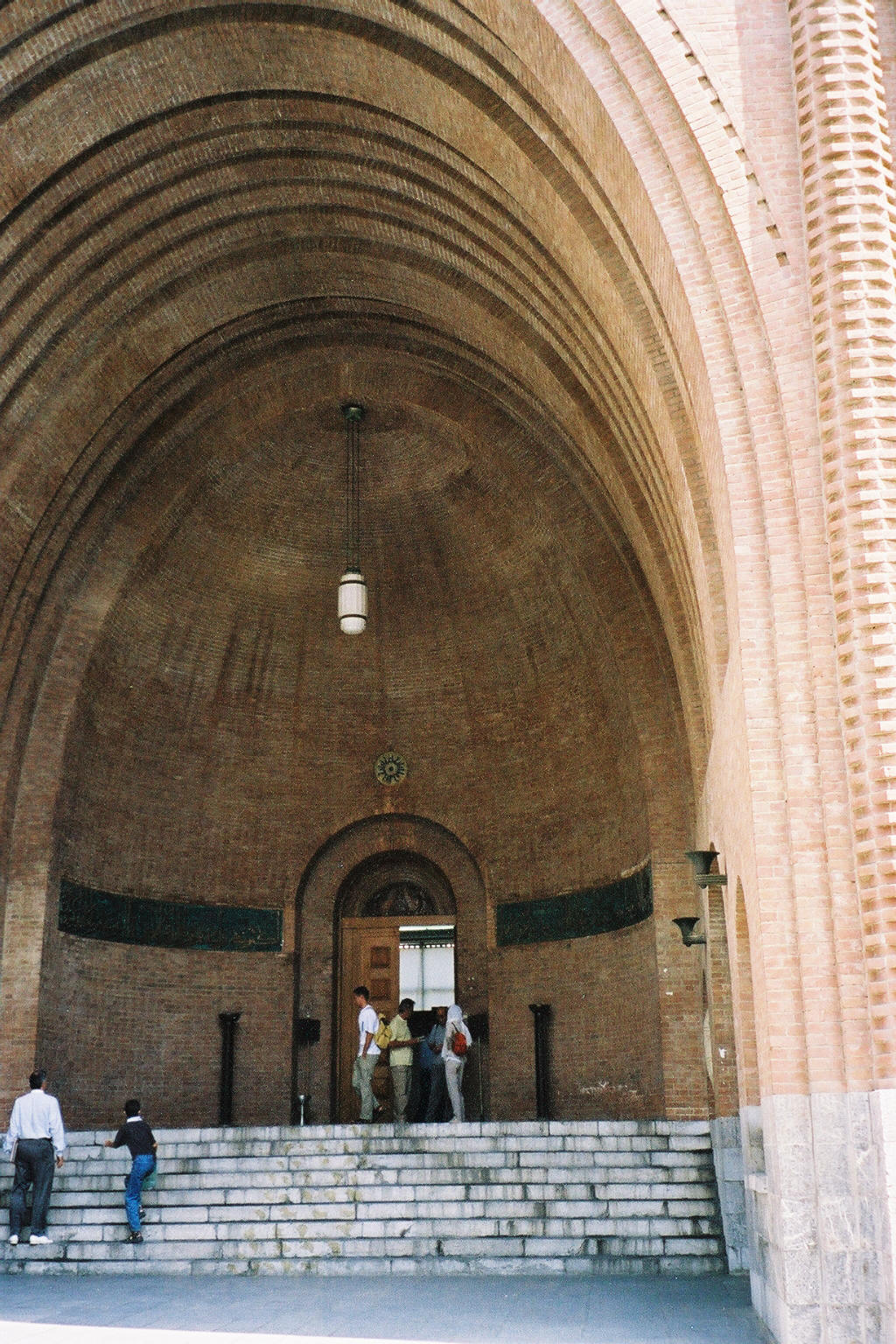
The National Museum of Iran (موزه ملی ایران) in central Tehran holds the country’s main collection of archaeology, from Palaeolithic stone tools to Qajar ceramics. It has two buildings: the Museum of Ancient Iran, opened in 1937 in a brick building designed by André Godard, and the Museum of the Islamic Era beside it. For anyone travelling to Persepolis, Susa or Pasargadae, this is where many of the objects found there are kept.
| Persian name | Muze-ye Melli-ye Irân; the old building is also called Muze-ye Irân-e Bâstân |
|---|---|
| Opened | 1937 (Museum of Ancient Iran) |
| Architects | André Godard with Maxime Siroux; built by Abbas Ali Memar and Morad Tabrizi |
| Two museums | Museum of Ancient Iran (prehistory to the Sasanians); Museum of the Islamic Era |
| Location | Si-e Tir Street, near Imam Khomeini Square, central Tehran |

How the museum came about
For most of the 19th century, finds from Iranian soil left the country. French archaeologists, led from 1897 by Jacques de Morgan, held exclusive rights to dig in Iran, and the best objects from Susa went to the Louvre. Iranian officials began collecting antiquities in the early 20th century, first in a single room and later in a Qajar mansion.
In 1927 the Iranian government ended the French monopoly, keeping their rights only at Susa. As part of the new arrangement, a French architect, André Godard, came to Tehran in 1929 to set up an antiquities service and a national museum. The building, designed by Godard with Maxime Siroux, went up in 1935–1937. Its great entrance arch of red brick imitates the vault of the Sasanian palace at Ctesiphon, a choice that tied the new national museum to Iran’s pre-Islamic past, in line with the cultural politics of Reza Shah’s reforms.
A second building in white stone, for the Islamic-period collections, was added later in the grounds. It has been closed and reopened several times for refurbishment.
Museum of Ancient Iran: what to look for
Prehistory and Elam
The ground floor runs in rough time order. Early cases hold stone tools from cave sites in the Zagros, some tens of thousands of years old. Then come the painted pottery of Tepe Sialk near Kashan and of early Susa, from the 5th and 4th millennia BCE, with long-necked birds, ibexes and geometric bands. Elamite objects from Susa and Chogha Zanbil follow, including clay tablets and bronzes. Our history page on Elam gives the background.
The Achaemenids
The central hall is dominated by finds from Persepolis and Susa:
- A large audience relief from the Persepolis Treasury, showing a seated king receiving an official, with the crown prince behind him. Its twin remains in place at Persepolis.
- A colossal stone column capital in the form of bulls, from the palace columns.
- The headless statue of Darius I found at Susa in 1972, carved in Egypt, with inscriptions in Egyptian hieroglyphs and in Old Persian, Elamite and Babylonian cuneiform. On its base are figures of the peoples of the empire.
- Gold and silver foundation tablets from the Apadana at Persepolis, inscribed in the name of Darius.
- Clay administrative tablets from Persepolis, including some of those returned from the University of Chicago, where they had been lent for study since the 1930s. See the Persepolis tablets.
Parthians and Sasanians
The best-known Parthian piece is the bronze statue of a nobleman found at Shami in the Bakhtiari mountains, a life-size figure with a heavy moustache, belted tunic and trousers. Nearby are Sasanian stucco panels, coins and silver. In 2023 a Sasanian stone relief that had been smuggled out of Iran decades earlier and seized in Britain was returned and put on display.
The Salt Men
One of the most visited cases holds remains of one of the “Salt Men”, miners preserved by salt in the Chehrabad mine near Zanjan. The first was found in 1993, with his long hair, beard, iron knives and a leather boot. Others found later date to different periods, from the Achaemenid era onwards.
Museum of the Islamic Era
The Islamic galleries show how the arts of Iran continued and changed after the 7th century: early Qurans written in Kufic script, lustre ceramics from Kashan and Rey, Seljuk and Ilkhanid tiles, carved stucco mihrabs, metalwork and textiles, and objects from the shrine of Sheikh Safi at Ardabil. The collection is a good preparation for the tilework of Isfahan and Yazd.
Exhibitions and loans
The museum has hosted several high-profile loans. The best known came in 2010, when the British Museum lent the Cyrus Cylinder for four months, and around half a million people came to see it.
Visiting
- Allow two to three hours for the Ancient Iran building alone. Labels are in Persian and English, but some are brief, so a guidebook or guide adds a lot.
- The Glass and Ceramics Museum (Abgineh) and other museums are a short ride away. Our Tehran page lists them.
- Galleries are sometimes closed for rearrangement. Opening hours and ticket prices change, and the two buildings may be ticketed separately. Check current official information, and see your own government’s travel advice for Iran.
Persian words from this page
| موزه | muze | museum |
| ملی | melli | national |
| ایران باستان | Irân-e bâstân | ancient Iran |
| دوران اسلامی | dowrân-e eslâmi | the Islamic era |
| سفال | sofâl | pottery |
| مرد نمکی | mard-e namaki | Salt Man |
| تخت جمشید | Takht-e Jamshid | Persepolis |
Sources and further reading
- Encyclopaedia Iranica, “TEHRAN” (on the city’s museums).
- John Curtis and Nigel Tallis (eds.), Forgotten Empire: The World of Ancient Persia (British Museum Press, 2005), with many objects from the National Museum.
- Thomas Stöllner and others, publications of the Chehrabad Salt Men project (Deutsches Bergbau-Museum Bochum).
- Neil MacGregor, A History of the World in 100 Objects (Allen Lane, 2010), chapter on the Cyrus Cylinder.
Want to learn Persian? Get the free Starter Pack
Get the 14-page printable Starter Pack (all 32 letters, a 7-day reading plan, 100 core words and 20 survival phrases) and a short 5-email course. Free.
More in Top Places to Visit in Iran
- Naqsh-e Jahan Square
- Shah (Imam) Mosque, Isfahan
- Sheikh Lotfollah Mosque
- Ali Qapu Palace
- Jameh Mosque of Isfahan
- Si-o-se Pol and Khaju Bridge
- Vank Cathedral
- Hasht Behesht Palace
- Naqsh-e Rostam
- Eram Garden, Shiraz
- Nasir al-Molk (Pink) Mosque
- Tomb of Hafez (Hafezieh)
- Tomb of Saadi (Saadieh)
- Shah Cheragh Shrine
- Arg of Karim Khan
- Fin Garden, Kashan
- Historic Houses of Kashan
- Jameh Mosque of Yazd
- Yazd Fire Temple and Towers of Silence
- Dowlatabad Garden and Windcatcher
- Amir Chakhmaq Complex
- Golestan Palace
- National Museum of Iran
- Treasury of National Jewels
- Tehran Grand Bazaar
- Milad Tower
- Imam Reza Shrine, Mashhad
- Tomb of Ferdowsi, Tus
- Tomb of Omar Khayyam, Neyshabur
- Tomb of Avicenna, Hamadan
- Ganjnameh Inscriptions, Hamadan
- Behistun (Bisotun): Visiting the Site
- Taq-e Bostan: Visiting the Site
- Tabriz Historic Bazaar
- Takht-e Soleyman
- Armenian Monastic Ensembles of Iran
- Sheikh Safi al-Din Shrine, Ardabil
- Dome of Soltaniyeh
- Alamut Castle
- Falak-ol-Aflak Castle
- Shushtar Historical Hydraulic System
- Chogha Zanbil: Visiting the Ziggurat
- Susa Archaeological Site
- Arg-e Bam
- Ganjali Khan Complex, Kerman
- Shazdeh Garden, Mahan
- Rayen Castle
- Dasht-e Lut (Lut Desert)
- Maranjab Desert and Caravanserai
- Varzaneh Desert
- Mount Damavand
- Hyrcanian Forests
- Lake Urmia
- Badab-e Surt Springs
- Ali Sadr Cave
- The Kaluts of Shahdad
- Qeshm Geopark
- Hormuz Island Colours
- Visiting Persepolis: A Day Trip from Shiraz
- Visiting Pasargadae
- Persian Caravanserais
- The Qanat of Gonabad
- Meymand Village
- Sasanian Sites of Fars: Firuzabad, Bishapur and Sarvestan
- Gonbad-e Qabus: Visiting the Tower
- Zayandeh Rud and Isfahan’s Bridges
- Tochal and Darband: Hiking Above Tehran
- Mount Sabalan
- Skiing in Iran: Dizin and Shemshak
- Golestan National Park