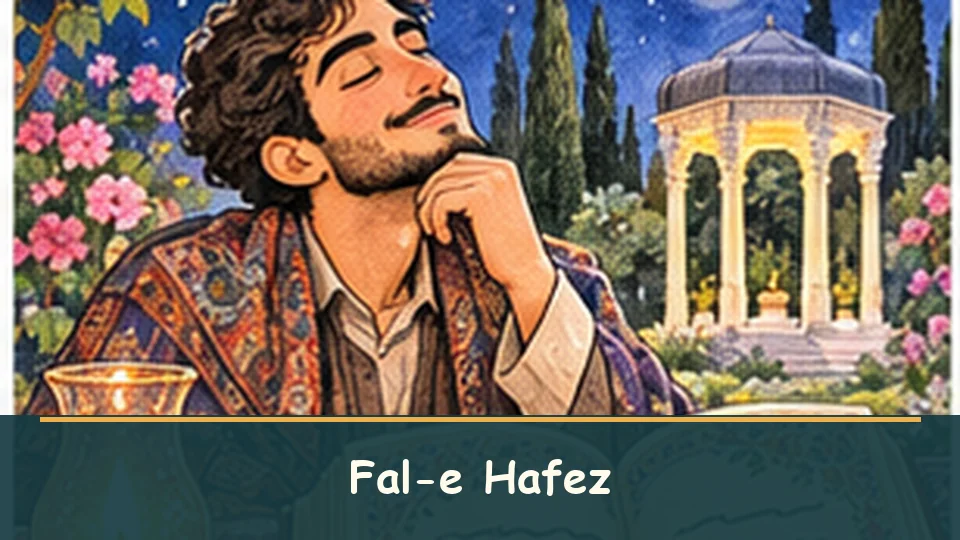
Take a fâl-e Hâfez online: make a silent wish (niyyat), press the button, and a ghazal of Hafez opens for you, in the original Persian with transliteration, a plain English translation and a short traditional reading of your fâl. Tap any word to see what it means, so the fortune also becomes a Persian lesson.
- 1 Niyyat
- 2 Call on Hafez
- 3 Open
Make your niyyat
Close your eyes and think of one question or wish. Do not type it or say it aloud: in the Iranian tradition the نیت (niyyat, intention) stays in your heart.
Call on Hafez
Many Iranians say these words before they open the Divan:
The ghazal is chosen at random from all 495 ghazals of the Divan, as if you opened the book with your eyes closed.
No Persian voice was found on this device, so the Listen buttons are hidden. Use the transliteration line to read the poem aloud.
How this ghazal is built
The last couplet (gold border) carries the poet’s pen name, the takhallos.
What this fâl tells you
A traditional-style reading for fun and reflection, not a prediction. Hafez is read in many ways; the poem itself is the real answer.Keyboard: T transliteration, E English, G glosses, V vowel marks, N new fâl, Esc close the word card.
Every ghazal has its own link, so you can share a fâl or come back to it later. Search by number, Persian or English.
495 ghazals
Words you save from the word cards are kept in this browser. Copy the list into your notes or a flashcard app.
What is fâl-e Hâfez?
فال حافظ (fâl-e Hâfez) is the Iranian custom of asking Hafez a question. You make a silent wish, open his دیوان (divân, collected poems) at random, and read the ghazal on that page as his answer. فال (fâl) means an omen or a fortune, and “taking” one is فال گرفتن (fâl gereftan). Families do it on شب یلدا (shab-e Yaldâ, the longest night of the year), at Nowruz, at Hafez’s tomb in Shiraz, or whenever someone needs a little encouragement. For most people it is a mix of fun, hope and love of poetry, and that is how this page treats it.
Want the full ritual, the extra prayer some families say, and phrases for a fâl night? Read our step-by-step Fal-e Hafez guide.
How Iranians take a fâl
- Niyyat. Hold your question or wish in your heart. Nobody needs to know it, not even the person who opens the book for you.
- Call on Hafez. Many people say ای حافظ شیرازی! تو محرم هر رازی (“O Hafez of Shiraz, you are the keeper of every secret”). Wording and additions vary from family to family.
- Open the Divan. With eyes closed, open the book anywhere. Here, the button does this for you.
- Read and interpret. Someone reads the whole ghazal aloud, and everyone looks for the couplets that seem to speak to the wish. Many families pay special attention to the first and the last couplet. The reading is always kind: almost any ghazal can be heard as hope.
Who was Hafez?
Hafez (حافظ, Hâfez) is the pen name of Shams al-Din Mohammad, a 14th-century poet of Shiraz, who died there in 1389 or 1390. A hâfez is someone who knows the Quran by heart. He is loved above all for his ghazals, short lyric poems about love, wine, hope and hypocrisy, which Iranians still quote every day. His tomb, the حافظیه (Hâfeziye), stands in a garden in Shiraz. The Persian text here follows Ganjoor, the online library of Persian poetry, which numbers 495 ghazals; the number on each ghazal is Ganjoor’s.
How to read a ghazal
A ghazal has a few parts, and once you can name them, Hafez becomes much easier to follow. Open “How this ghazal is built” in the reader to see them in each poem.
| Term | What it is | Example from ghazal 255 |
|---|---|---|
| بیت beyt | A couplet. Each beyt usually makes a complete statement, which is why people quote single couplets. | 10 couplets |
| مصراع mesrâ’ | One of the two half-lines of a beyt. | یوسف گمگشته بازآید به کنعان، غم مخور |
| قافیه qâfiye | The rhyme, which ends both half-lines of the first couplet and the second half-line of every other one. | kan’ân, golestân, sâmân |
| ردیف radif | A word or phrase repeated after the rhyme in every couplet. Not every ghazal has one. | غم مخور gham makhor, “do not grieve” |
| تخلص takhallos | The poet’s pen name, usually in the last couplet, often as advice to himself. | حافظا Hâfezâ, “O Hafez” |
Tips for learners: read each couplet twice, first for the picture (the cupbearer, the rose, Joseph in Canaan) and then for what it might mean. Turn on Word glosses to see a short meaning under every word, as in a word-by-word Quran reader. Words marked as classical show their modern Persian equivalent in the word card, for example ز → از or دوش → دیشب. Mark the words you know, and watch your “already know” score rise from poem to poem.
Want to read Hafez aloud with confidence? How to Read Hafez’s Ghazals with Phonetics gives you ghazals with full pronunciation, so you can recite them at your next Yalda night.
See the bookRelated tools and lessons
- Fal-e Hafez: the full step-by-step guide
- Persian reading lesson: Hafez
- Persian reading lesson: Yalda night
- Learn famous Persian poems
- Nowruz, the Persian New Year
- Persian reader with tap-to-translate
- Read Persian without vowels
- Persian flashcards
- Persian–English dictionary
- All free Persian tools
All 495 ghazals of Hafez
Each ghazal has its own page with the Persian text, transliteration, English translation and fâl reading.
- 1. الا یا ایها الساقی ادر کأسا و ناولها
- 2. صلاح کار کجا و من خراب کجا؟
- 3. اگر آن ترک شیرازی به دست آرد دل ما را
- 4. صبا به لطف بگو آن غزال رعنا را
- 5. دل میرود ز دستم صاحبدلان خدا را
- 6. به ملازمان سلطان، که رساند این دعا را؟
- 7. صوفی بیا که آینه، صافیست جام را
- 8. ساقیا برخیز و درده جام را
- 9. رونق عهد شباب است دگر بستان را
- 10. دوش از مسجد سوی میخانه آمد پیر ما
- 11. ساقی به نور باده برافروز جام ما
- 12. ای فروغ ماه حسن، از روی رخشان شما
- 13. میدمد صبح و کله بست سحاب
- 14. گفتم ای سلطان خوبان رحم کن بر این غریب
- 15. ای شاهد قدسی، که کشد بند نقابت؟
- 16. خمی که ابروی شوخ تو در کمان انداخت
- 17. سینه از آتش دل، در غم جانانه بسوخت
- 18. ساقیا آمدن عید مبارک بادت
- 19. ای نسیم سحر آرامگه یار کجاست؟
- 20. روزه یکسو شد و عید آمد و دلها برخاست
- 21. دل و دینم شد و دلبر به ملامت برخاست
- 22. چو بشنوی سخن اهل دل، مگو که خطاست
- 23. خیال روی تو در هر طریق همره ماست
- 24. مطلب طاعت و پیمان و صلاح از من مست
- 25. شکفته شد گل حمرا و گشت بلبل مست
- 26. زلفآشفته و خویکرده و خندانلب و مست
- 27. در دیر مغان آمد، یارم قدحی در دست
- 28. به جان خواجه و حق قدیم و عهد درست
- 29. ما را ز خیال تو چه پروای شراب است؟
- 30. زلفت هزار دل به یکی تار مو ببست
- 31. آن شب قدری که گویند اهل خلوت امشب است
- 32. خدا چو صورت ابروی دلگشای تو بست
- 33. خلوت گزیده را به تماشا چه حاجت است
- 34. رواق منظر چشم من آشیانهٔ توست
- 35. برو به کار خود ای واعظ این چه فریادست؟
- 36. تا سر زلف تو در دست نسیم افتادست
- 37. بیا که قصر امل سخت سستبنیادست
- 38. بی مهر رخت روز مرا نور نماندست
- 39. باغ مرا چه حاجت سرو و صنوبر است؟
- 40. المنة لله که در میکده، باز است
- 41. اگر چه باده فرح بخش و باد گلبیز است
- 42. حال دل با تو گفتنم، هوس است
- 43. صحن بستان ذوقبخش و صحبت یاران خوش است
- 44. کنون که بر کف گل، جام بادهٔ صاف است
- 45. در این زمانه، رفیقی که خالی از خلل است
- 46. گل در بر و می در کف و معشوق به کام است
- 47. به کوی میکده هر سالکی که ره دانست
- 48. صوفی از پرتو می راز نهانی دانست
- 49. روضهٔ خلد برین خلوت درویشان است
- 50. به دام زلف تو دل مبتلای خویشتن است
- 51. لعل سیراب بهخونتشنه، لب یار من است
- 52. روزگاریست که سودای بتان، دین من است
- 53. منم که گوشهٔ میخانه، خانقاه من است
- 54. ز گریه مردم چشمم نشسته در خون است
- 55. خم زلف تو دام کفر و دین است
- 56. دل سراپردهٔ محبت اوست
- 57. آن سیهچرده که شیرینی عالم با اوست
- 58. سر ارادت ما و آستان حضرت دوست
- 59. دارم امید عاطفتی از جناب دوست
- 60. آن پیک نامور که رسید از دیار دوست
- 61. صبا اگر گذری افتدت به کشور دوست
- 62. مرحبا ای پیک مشتاقان بده پیغام دوست
- 63. روی تو کس ندید و هزارت رقیب هست
- 64. اگر چه عرض هنر پیش یار بیادبیست
- 65. خوشتر ز عیش و صحبت و باغ و بهار چیست؟
- 66. بنال بلبل اگر با منت سر یاریست
- 67. یا رب! این شمع دلافروز ز کاشانهٔ کیست؟
- 68. ماهم این هفته برون رفت و به چشمم سالیست
- 69. کس نیست که افتادهٔ آن زلف دوتا نیست
- 70. مردم دیدهٔ ما جز به رخت ناظر نیست
- 71. زاهد ظاهرپرست از حال ما، آگاه نیست
- 72. راهیست راه عشق که هیچش کناره نیست
- 73. روشن از پرتو رویت نظری نیست که نیست
- 74. حاصل کارگه کون و مکان این همه نیست
- 75. خواب آن نرگس فتان تو، بیچیزی نیست
- 76. جز آستان توام در جهان، پناهی نیست
- 77. بلبلی، برگ گلی خوشرنگ در منقار داشت
- 78. دیدی که یار، جز سر جور و ستم نداشت
- 79. کنون که میدمد از بوستان، نسیم بهشت
- 80. عیب رندان مکن ای زاهد پاکیزهسرشت!
- 81. صبحدم مرغ چمن با گل نوخاسته گفت
- 82. آن ترک پری چهره که دوش از بر ما رفت
- 83. گر ز دست زلف مشکینت خطایی رفت رفت
- 84. ساقی بیار باده که ماه صیام رفت
- 85. شربتی از لب لعلش نچشیدیم و برفت
- 86. ساقی بیا که یار ز رخ پرده برگرفت
- 87. حسنت به اتفاق ملاحت جهان گرفت
- 88. شنیدهام سخنی خوش که پیر کنعان گفت
- 89. یا رب سببی ساز که یارم به سلامت
- 90. ای هدهد صبا به سبا میفرستمت
- 91. ای غایب از نظر به خدا میسپارمت
- 92. میر من خوش میروی کاندر سر و پا میرمت
- 93. چه لطف بود که ناگاه رشحهٔ قلمت
- 94. زآن یار دلنوازم، شکری است با شکایت
- 95. مدامم مست میدارد، نسیم جعد گیسویت
- 96. درد ما را نیست درمان الغیاث
- 97. تویی که بر سر خوبان کشوری چون تاج
- 98. اگر به مذهب تو خون عاشق است مباح
- 99. دل من در هوای روی فرخ
- 100. دی پیر میفروش که ذکرش به خیر باد
- 101. شراب و عیش نهان چیست؟ کار بیبنیاد
- 102. دوش آگهی ز یار سفر کرده داد باد
- 103. روز وصل دوستداران یاد باد
- 104. جمالت آفتاب هر نظر باد
- 105. صوفی ار باده به اندازه خورد نوشش باد
- 106. تنت به ناز طبیبان نیازمند مباد
- 107. حسن تو همیشه در فزون باد
- 108. خسروا گوی فلک در خم چوگان تو باد
- 109. دیر است که دلدار پیامی نفرستاد
- 110. پیرانه سرم عشق جوانی به سر افتاد
- 111. عکس روی تو چو در آینهٔ جام افتاد
- 112. آن که رخسار تو را رنگ گل و نسرین داد
- 113. بنفشه دوش به گل گفت و خوش نشانی داد
- 114. همای اوج سعادت به دام ما افتد
- 115. درخت دوستی بنشان که کام دل به بار آرد
- 116. کسی که حسن و خط دوست در نظر دارد
- 117. دل ما به دور رویت ز چمن فراغ دارد
- 118. آن کس که به دست جام دارد
- 119. دلی که غیبنمای است و جام جم دارد
- 120. بتی دارم که گرد گل ز سنبل سایهبان دارد
- 121. هر آن کاو خاطر مجموع و یار نازنین دارد
- 122. هر آنکه جانب اهل خدا نگه دارد
- 123. مطرب عشق عجب ساز و نوایی دارد
- 124. آن که از سنبل او، غالیه تابی دارد
- 125. شاهد آن نیست که مویی و میانی دارد
- 126. جان، بیجمال جانان میل جهان ندارد
- 127. روشنی طلعت تو ماه ندارد
- 128. نیست در شهر نگاری که دل ما ببرد
- 129. اگر نه باده غم دل ز یاد ما ببرد
- 130. سحر بلبل حکایت با صبا کرد
- 131. بیا که ترک فلک خوان روزه غارت کرد
- 132. به آب روشن می، عارفی طهارت کرد
- 133. صوفی نهاد دام و سر حقه، باز کرد
- 134. بلبلی خون دلی خورد و گلی حاصل کرد
- 135. چو باد، عزم سر کوی یار خواهم کرد
- 136. دست در حلقهٔ آن زلف دوتا نتوان کرد
- 137. دل از من برد و روی از من نهان کرد
- 138. یاد باد آن که ز ما وقت سفر یاد نکرد
- 139. رو بر رهش نهادم و بر من گذر نکرد
- 140. دلبر برفت و دلشدگان را خبر نکرد
- 141. دیدی ای دل که غم عشق دگربار چه کرد؟
- 142. دوستان دختر رز توبه ز مستوری کرد
- 143. سالها دل طلب جام جم از ما میکرد
- 144. به سر جام جم آنگه نظر توانی کرد
- 145. چه مستی است ندانم که رو به ما آورد
- 146. صبا وقت سحر بویی ز زلف یار میآورد
- 147. برید باد صبا دوشم آگهی آورد
- 148. یارم چو قدح به دست گیرد
- 149. دلم جز مهر مهرویان، طریقی بر نمیگیرد
- 150. ساقی ار باده از این دست به جام اندازد
- 151. دمی با غم به سر بردن، جهان یک سر نمیارزد
- 152. در ازل پرتو حسنت ز تجلی دم زد
- 153. سحر چون خسرو خاور، علم بر کوهساران زد
- 154. راهی بزن که آهی بر ساز آن توان زد
- 155. اگر روم ز پیاش فتنهها برانگیزد
- 156. به حسن و خلق و وفا کس به یار ما نرسد
- 157. هر که را با خط سبزت سر سودا باشد
- 158. من و انکار شراب! این چه حکایت باشد؟
- 159. نقد صوفی نه همه صافی بیغش باشد
- 160. خوش است خلوت اگر یار یار من باشد
- 161. کی شعر تر انگیزد خاطر که حزین باشد
- 162. خوش آمد گل وز آن خوشتر نباشد
- 163. گل بیرخ یار خوش نباشد
- 164. نفس باد صبا مشکفشان خواهد شد
- 165. مرا مهر سیه چشمان ز سر بیرون نخواهد شد
- 166. روز هجران و شب فرقت یار آخر شد
- 167. ستارهای بدرخشید و ماه مجلس شد
- 168. گداخت جان که شود کار دل تمام و نشد
- 169. یاری اندر کس نمیبینیم، یاران را چه شد؟
- 170. زاهد خلوتنشین، دوش به میخانه شد
- 171. دوش از جناب آصف، پیک بشارت آمد
- 172. عشق تو نهال حیرت آمد
- 173. در نمازم خم ابروی تو با یاد آمد
- 174. مژده ای دل که دگر باد صبا بازآمد
- 175. صبا به تهنیت پیر میفروش آمد
- 176. سحرم دولت بیدار به بالین آمد
- 177. نه هر که چهره برافروخت دلبری داند
- 178. هر که شد محرم دل در حرم یار بماند
- 179. رسید مژده که ایام غم نخواهد ماند
- 180. ای پستهٔ تو خنده زده بر حدیث قند
- 181. بعد از این دست من و دامن آن سرو بلند
- 182. حسب حالی ننوشتی و شد ایامی چند
- 183. دوش وقت سحر، از غصه نجاتم دادند
- 184. دوش دیدم که ملائک در میخانه زدند
- 185. نقدها را بود آیا که عیاری گیرند؟
- 186. گر میفروش، حاجت رندان روا کند
- 187. دلا! بسوز! که سوز تو، کارها بکند
- 188. مرا به رندی و عشق، آن فضول، عیب کند
- 189. طایر دولت اگر باز گذاری بکند
- 190. کلک مشکین تو، روزی که ز ما یاد کند
- 191. آن، کیست کز روی کرم، با ما وفاداری کند؟
- 192. سرو چمان من چرا میل چمن نمیکند؟
- 193. در نظربازی ما، بیخبران، حیرانند
- 194. سمنبویان، غبار غم چو بنشینند؛ بنشانند
- 195. غلام نرگس مست تو، تاجداراناند
- 196. آنان که خاک را به نظر کیمیا کنند
- 197. شاهدان گر دلبری زین سان کنند
- 198. گفتم کی ام دهان و لبت کامران کنند؟
- 199. واعظان کاین جلوه در محراب و منبر میکنند
- 200. دانی که چنگ و عود چه تقریر میکنند؟
- 201. شراب بیغش و ساقی خوش دو دام رهند
- 202. بود آیا که در میکدهها بگشایند؟
- 203. سالها دفتر ما در گرو صهبا بود
- 204. یاد باد آن که نهانت نظری با ما بود
- 205. تا ز میخانه و می نام و نشان خواهد بود
- 206. پیش از اینت بیش از این اندیشهٔ عشاق بود
- 207. یاد باد آن که سر کوی توام منزل بود
- 208. خستگان را چو طلب باشد و قوت نبود
- 209. قتل این خسته به شمشیر تو تقدیر نبود
- 210. دوش در حلقهٔ ما قصهٔ گیسوی تو بود
- 211. دوش میآمد و رخساره برافروخته بود
- 212. یک دو جامم دی سحرگه اتفاق افتاده بود
- 213. گوهر مخزن اسرار همان است که بود
- 214. دیدم به خواب خوش که به دستم پیاله بود
- 215. به کوی میکده یا رب سحر چه مشغله بود؟
- 216. آن یار کز او خانهٔ ما جای پری بود
- 217. مسلمانان مرا وقتی دلی بود
- 218. در ازل هر کو به فیض دولت ارزانی بود
- 219. کنون که در چمن آمد گل از عدم به وجود
- 220. از دیده خون دل همه بر روی ما رود
- 221. چو دست بر سر زلفش زنم به تاب رود
- 222. از سر کوی تو هر کو به ملالت برود
- 223. هرگزم نقش تو از لوح دل و جان نرود
- 224. خوشا دلی که مدام از پی نظر نرود
- 225. ساقی حدیث سرو و گل و لاله میرود
- 226. ترسم که اشک، در غم ما پردهدر شود
- 227. گر چه بر واعظ شهر این سخن آسان نشود
- 228. گر من از باغ تو یک میوه بچینم چه شود؟
- 229. بخت از دهان دوست نشانم نمیدهد
- 230. اگر به بادهٔ مشکین دلم کشد، شاید
- 231. گفتم غم تو دارم گفتا غمت سرآید
- 232. بر سر آنم که گر ز دست برآید
- 233. دست از طلب ندارم تا کام من برآید
- 234. چو آفتاب می از مشرق پیاله برآید
- 235. زهی خجسته زمانی که یار بازآید
- 236. اگر آن طایر قدسی ز درم بازآید
- 237. نفس برآمد و کام از تو بر نمیآید
- 238. جهان بر ابروی عید از هلال وسمه کشید
- 239. رسید مژده که آمد بهار و سبزه دمید
- 240. ابر آذاری برآمد باد نوروزی وزید
- 241. معاشران ز حریف شبانه یاد آرید
- 242. بیا که رایت منصور پادشاه رسید
- 243. بوی خوش تو هر که ز باد صبا شنید
- 244. معاشران! گره از زلف یار باز کنید
- 245. الا ای طوطی گویای اسرار!
- 246. عید است و آخر گل و یاران در انتظار
- 247. صبا ز منزل جانان گذر دریغ مدار
- 248. ای صبا نکهتی از کوی فلانی به من آر
- 249. ای صبا نکهتی از خاک ره یار بیار
- 250. روی بنمای و وجود خودم از یاد ببر
- 251. شب وصل است و طی شد نامهٔ هجر
- 252. گر بود عمر، به میخانه رسم بار دگر
- 253. ای خرم از فروغ رخت لاله زار عمر
- 254. دیگر ز شاخ سرو سهی بلبل صبور
- 255. یوسف گمگشته بازآید به کنعان، غم مخور
- 256. نصیحتی کنمت بشنو و بهانه مگیر
- 257. روی بنما و مرا گو که ز جان دل برگیر
- 258. هزار شکر که دیدم به کام خویشت باز
- 259. منم که دیده به دیدار دوست کردم باز
- 260. ای سرو ناز حسن که خوش میروی به ناز
- 261. درآ که در دل خسته، توان درآید باز
- 262. حال خونین دلان که گوید باز؟
- 263. بیا و کشتی ما در شط شراب انداز
- 264. خیز و در کاسهٔ زر آب طربناک انداز
- 265. برنیامد از تمنای لبت کامم هنوز
- 266. دلم رمیدهٔ لولیوشیست شورانگیز
- 267. ای صبا گر بگذری بر ساحل رود ارس
- 268. گلعذاری ز گلستان جهان ما را بس
- 269. دلا، رفیق سفر بخت نیکخواهت بس
- 270. درد عشقی کشیدهام که مپرس
- 271. دارم از زلف سیاهش گله چندان که مپرس
- 272. باز آی و دل تنگ مرا مونس جان باش
- 273. اگر رفیق شفیقی، درست پیمان باش
- 274. به دور لاله، قدح گیر و بیریا میباش
- 275. صوفی گلی بچین و مرقع به خار بخش
- 276. باغبان گر پنجروزی صحبت گل بایدش
- 277. فکر بلبل همه آن است که گل شد یارش
- 278. شراب تلخ میخواهم که مردافکن بود زورش
- 279. خوشا شیراز و وضع بیمثالش
- 280. چو بر شکست صبا زلف عنبرافشانش
- 281. یا رب این نوگل خندان که سپردی به منش
- 282. ببرد از من قرار و طاقت و هوش
- 283. سحر ز هاتف غیبم رسید مژده به گوش
- 284. هاتفی از گوشهٔ میخانه دوش
- 285. در عهد پادشاه خطابخش جرم پوش
- 286. دوش با من گفت پنهان کاردانی تیزهوش
- 287. ای همه شکل تو مطبوع و همه جای تو خوش
- 288. کنار آب و پای بید و طبع شعر و یاری خوش
- 289. مجمع خوبی و لطف است عذار چو مهش
- 290. دلم رمیده شد و غافلم من درویش
- 291. ما آزمودهایم در این شهر بخت خویش
- 292. قسم به حشمت و جاه و جلال شاه شجاع
- 293. بامدادان که ز خلوتگه کاخ ابداع
- 294. در وفای عشق تو، مشهور خوبانم چو شمع
- 295. سحر به بوی گلستان دمی شدم در باغ
- 296. طالع اگر مدد دهد، دامنش آورم به کف
- 297. زبان خامه ندارد سر بیان فراق
- 298. مقام امن و می بیغش و رفیق شفیق
- 299. اگر شراب خوری جرعهای فشان بر خاک
- 300. هزار دشمنم ار میکنند قصد هلاک
- 301. ای دل ریش مرا با لب تو حق نمک
- 302. خوش خبر باشی ای نسیم شمال
- 303. شممت روح وداد و شمت برق وصال
- 304. دارای جهان نصرت دین خسرو کامل
- 305. به وقت گل شدم از توبهٔ شراب خجل
- 306. اگر به کوی تو باشد مرا مجال وصول
- 307. هر نکتهای که گفتم در وصف آن شمایل
- 308. ای رخت چون خلد و لعلت سلسبیل
- 309. عشقبازی و جوانی و شراب لعلفام
- 310. مرحبا طایر فرخ پی فرخنده پیام
- 311. عاشق روی جوانی خوش نوخاستهام
- 312. بشری اذ السلامة حلت بذی سلم
- 313. بازآی ساقیا که هواخواه خدمتم
- 314. دوش بیماری چشم تو ببرد از دستم
- 315. به غیر از آن که بشد دین و دانش از دستم
- 316. زلف بر باد مده تا ندهی بر بادم
- 317. فاش میگویم و از گفتهٔ خود دلشادم
- 318. مرا میبینی و هر دم زیادت میکنی دردم
- 319. سالها پیروی مذهب رندان کردم
- 320. دیشب به سیل اشک ره خواب میزدم
- 321. هر چند پیر و خستهدل و ناتوان شدم
- 322. خیال نقش تو در کارگاه دیده کشیدم
- 323. ز دست کوته خود زیر بارم
- 324. گرچه افتاد ز زلفش گرهی در کارم
- 325. گر دست دهد خاک کف پای نگارم
- 326. در نهانخانهٔ عشرت صنمی خوش دارم
- 327. مرا عهدیست با جانان که تا جان در بدن دارم
- 328. من که باشم که بر آن خاطر عاطر گذرم؟
- 329. جوزا سحر نهاد حمایل برابرم
- 330. تو همچو صبحی و من شمع خلوت سحرم
- 331. به تیغم گر کشد، دستش نگیرم
- 332. مزن بر دل ز نوک غمزه تیرم
- 333. نماز شام غریبان چو گریه آغازم
- 334. گر دست رسد در سر زلفین تو بازم
- 335. در خرابات مغان گر گذر افتد بازم
- 336. مژدهٔ وصل تو کو کز سر جان برخیزم
- 337. چرا نه در پی عزم دیار خود باشم
- 338. من دوستدار روی خوش و موی دلکشم
- 339. خیال روی تو چون بگذرد به گلشن چشم
- 340. من که از آتش دل چون خم می در جوشم
- 341. گر من از سرزنش مدعیان اندیشم
- 342. حجاب چهرهٔ جان میشود غبار تنم
- 343. چل سال بیش رفت که من لاف میزنم
- 344. عمریست تا من در طلب، هر روز گامی میزنم
- 345. بی تو ای سرو روان، با گل و گلشن چه کنم؟
- 346. من نه آن رندم که ترک شاهد و ساغر کنم
- 347. صنما با غم عشق تو چه تدبیر کنم؟
- 348. دیده دریا کنم و صبر به صحرا فکنم
- 349. دوش سودای رخش گفتم ز سر بیرون کنم
- 350. به عزم توبه سحر گفتم استخاره کنم
- 351. حاشا که من به موسم گل ترک می کنم
- 352. روزگاری شد که در میخانه خدمت میکنم
- 353. من ترک عشق شاهد و ساغر نمیکنم
- 354. به مژگان سیه کردی هزاران رخنه در دینم
- 355. حالیا مصلحت وقت در آن میبینم
- 356. گرم از دست برخیزد که با دلدار بنشینم
- 357. در خرابات مغان نور خدا میبینم
- 358. غم زمانه که هیچش کران نمیبینم
- 359. خرم آن روز کز این منزل ویران بروم
- 360. گر از این منزل ویران به سوی خانه روم
- 361. آن که پامال جفا کرد چو خاک راهم
- 362. دیدار شد میسر و بوس و کنار هم
- 363. دردم از یار است و درمان نیز هم
- 364. ما بیغمان مست دل از دست دادهایم
- 365. عمریست تا به راه غمت رو نهادهایم
- 366. ما بدین در نه پی حشمت و جاه آمدهایم
- 367. فتوی پیر مغان دارم و قولیست قدیم
- 368. خیز تا از در میخانه گشادی طلبیم
- 369. ما ز یاران چشم یاری داشتیم
- 370. صلاح از ما چه میجویی؟ که مستان را صلا گفتیم
- 371. ما درس سحر در ره میخانه نهادیم
- 372. بگذار تا ز شارع میخانه بگذریم
- 373. خیز تا خرقه صوفی به خرابات بریم
- 374. بیا تا گل برافشانیم و می در ساغر اندازیم
- 375. صوفی بیا که خرقه سالوس برکشیم
- 376. دوستان وقت گل آن به که به عشرت کوشیم
- 377. ما شبی دست برآریم و دعایی بکنیم
- 378. ما نگوییم بد و میل به ناحق نکنیم
- 379. سرم خوش است و به بانگ بلند میگویم
- 380. بارها گفتهام و بار دگر میگویم
- 381. گرچه ما بندگان پادشهیم
- 382. فاتحهای چو آمدی بر سر خستهای بخوان
- 383. چندان که گفتم غم با طبیبان
- 384. میسوزم از فراقت روی از جفا بگردان
- 385. یا رب آن آهوی مشکین به ختن باز رسان
- 386. خدا را کم نشین با خرقه پوشان
- 387. شاه شمشادقدان، خسرو شیریندهنان
- 388. بهار و گل طربانگیز گشت و توبهشکن
- 389. چو گل هر دم به بویت جامه در تن
- 390. افسر سلطان گل پیدا شد از طرف چمن
- 391. خوشتر از فکر می و جام چه خواهد بودن؟
- 392. دانی که چیست دولت؟ دیدار یار دیدن
- 393. منم که شهره شهرم به عشق ورزیدن
- 394. ای روی ماهمنظر تو نوبهار حسن
- 395. گلبرگ را ز سنبل مشکین، نقاب کن
- 396. صبح است ساقیا قدحی پرشراب کن
- 397. ز در در آ و شبستان ما منور کن
- 398. ای نور چشم من سخنی هست گوش کن
- 399. کرشمهای کن و بازار ساحری بشکن
- 400. بالابلند عشوهگر نقشباز من
- 401. چون شوم خاک رهش دامن بیفشاند ز من
- 402. نکتهای دلکش بگویم خال آن مهرو ببین
- 403. شراب لعلکش و روی مهجبینان بین
- 404. میفکن بر صف رندان نظری بهتر از این
- 405. به جان پیر خرابات و حق صحبت او
- 406. گفتا برون شدی به تماشای ماه نو
- 407. مزرع سبز فلک دیدم و داس مه نو
- 408. ای آفتاب آینه دار جمال تو
- 409. ای خونبهای نافه چین خاک راه تو
- 410. ای قبای پادشاهی، راست بر بالای تو
- 411. تاب بنفشه میدهد طرهٔ مشکسای تو
- 412. مرا چشمیست خونافشان ز دست آن کمانابرو
- 413. خط عذار یار که بگرفت ماه از او
- 414. گلبن عیش میدمد ساقی گلعذار کو؟
- 415. ای پیک راستان خبر یار ما بگو
- 416. خنک نسیم معنبر شمامهای دلخواه
- 417. عیشم مدام است، از لعل دلخواه
- 418. گر تیغ بارد در کوی آن ماه
- 419. وصال او ز عمر جاودان به
- 420. ناگهان پرده برانداختهای، یعنی چه؟
- 421. در سرای مغان رفته بود و آبزده
- 422. ای که با سلسلهٔ زلف دراز آمدهای
- 423. دوش رفتم به در میکده خوابآلوده
- 424. از من جدا مشو که توام نور دیدهای
- 425. دامنکشان همی شد در شرب زرکشیده
- 426. از خون دل نوشتم، نزدیک دوست نامه
- 427. چراغ روی تو را شمع گشت پروانه
- 428. سحرگاهان، که مخمور شبانه
- 429. ساقی بیا که شد قدح لاله پر ز می
- 430. به صوت بلبل و قمری اگر ننوشی می
- 431. لبش میبوسم و در میکشم می
- 432. مخمور جام عشقم، ساقی بده شرابی
- 433. ای که بر ماه از خط مشکین نقاب انداختی
- 434. ای دل مباش یک دم خالی ز عشق و مستی
- 435. با مدعی مگویید، اسرار عشق و مستی
- 436. آن غالیهخط گر سوی ما نامه نوشتی
- 437. ای قصهٔ بهشت ز کویت حکایتی
- 438. سبت سلمی بصدغیها فؤادي
- 439. دیدم به خواب دوش که ماهی برآمدی
- 440. سحر با باد میگفتم حدیث آرزومندی
- 441. چه بودی ار دل آن ماه مهربان بودی؟
- 442. به جان او که گرم دسترس به جان بودی
- 443. چو سرو اگر بخرامی دمی به گلزاری
- 444. شهریست پر ظریفان وز هر طرف نگاری
- 445. تو را که هر چه مراد است در جهان داری
- 446. صبا تو نکهت آن زلف مشک بو داری
- 447. بیا با ما مورز این کینهداری
- 448. ای که در کوی خرابات مقامی داری
- 449. ای که مهجوری عشاق روا میداری
- 450. روزگاریست که ما را نگران میداری
- 451. خوش کرد یاوری فلکت روز داوری
- 452. طفیل هستی عشقند آدمی و پری
- 453. ای که دایم به خویش مغروری
- 454. ز کوی یار میآید نسیم باد نوروزی
- 455. عمر بگذشت به بیحاصلی و بوالهوسی
- 456. نوبهار است در آن کوش که خوشدل باشی
- 457. هزار جهد بکردم که یار من باشی
- 458. ای دل آن دم که خراب از می گلگون باشی
- 459. زین خوش رقم که بر گل رخسار میکشی
- 460. سلیمی منذ حلت بالعراق
- 461. کتبت قصة شوقی و مدمعی باکی
- 462. یا مبسما یحاکي درجا من اللآلي
- 463. سلام الله ما کر اللیالي
- 464. بگرفت کار حسنت چون عشق من کمالی
- 465. رفتم به باغ صبحدمی تا چنم گلی
- 466. این خرقه که من دارم در رهن شراب اولی
- 467. زان می عشق، کز او پخته شود هر خامی
- 468. که برد به نزد شاهان ز من گدا پیامی؟
- 469. أتت روائح رند الحمی و زاد غرامی
- 470. سینه مالامال درد است ای دریغا مرهمی
- 471. ز دلبرم که رساند نوازش قلمی
- 472. احمد الله علی معدلة السلطان
- 473. وقت را غنیمت دان آن قدر که بتوانی
- 474. هواخواه توام جانا و میدانم که میدانی
- 475. گفتند خلایق که تویی یوسف ثانی
- 476. نسیم صبح سعادت! بدان نشان که تو دانی
- 477. دو یار زیرک و از بادهٔ کهن دو منی
- 478. نوش کن جام شراب یک منی
- 479. صبح است و ژاله میچکد از ابر بهمنی
- 480. ای که در کشتن ما هیچ مدارا نکنی
- 481. بشنو این نکته که خود را ز غم آزاده کنی
- 482. ای دل! به کوی عشق گذاری نمیکنی
- 483. سحرگه ره روی در سرزمینی
- 484. تو مگر بر لب آبی به هوس بنشینی
- 485. ساقیا سایهٔ ابر است و بهار و لب جوی
- 486. بلبل، ز شاخ سرو، به گلبانگ پهلوی
- 487. ای بیخبر بکوش که صاحبخبر شوی
- 488. سحرم هاتف میخانه به دولتخواهی
- 489. ای در رخ تو پیدا انوار پادشاهی
- 490. در همه دیر مغان نیست چو من شیدایی
- 491. به چشم کردهام ابروی ماهسیمایی
- 492. سلامی چو بوی خوش آشنایی
- 493. ای پادشه خوبان! داد از غم تنهایی
- 494. ای دل! گر از آن چاه زنخدان به درآیی
- 495. می خواه و گلافشان کن، از دهر چه میجویی؟
FAQ
Is the Persian text authentic?
Yes. Every couplet is copied from Ganjoor, the standard online library of Persian poetry, including Ganjoor’s own vowel marks and punctuation, and each poem shows its Ganjoor number. The English translations, transliterations, word glosses and fâl readings were written for this page.
Is the fâl chosen really at random?
Yes. The button picks one of all 495 ghazals in Ganjoor’s edition of the Divan using your browser’s random number generator, the online version of opening the book with your eyes closed. Every ghazal comes with transliteration, an English translation, word-by-word glosses and a traditional reading.
Does fâl-e Hâfez predict the future?
No one can promise that. Most Iranians take a fâl for comfort, fun and reflection, and many say the poem helps them think about their question in a new way. Please treat the readings here as tradition and entertainment, not advice.
Why do only some words have vowel marks?
The marks you see are the ones Ganjoor prints to help readers with uncommon words; they are not complete. Switch off Vowel marks to read the text as Iranians usually see it, and use the transliteration line for the full pronunciation.
Can I share my fâl?
Yes. Press “Copy my fâl” to copy the first couplet, its translation, the reading and a link that opens the same ghazal (each ghazal has a link like #gh=255).
Love Persian poetry? Learn to read it: free Starter Pack
Get the 14-page printable Starter Pack (all 32 letters, a 7-day reading plan, 100 core words and 20 survival phrases) and a short 5-email course. Free.